Red-Billed Starling or Tristram’s Starling?
Here's how to tell the difference
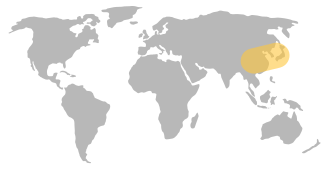

Red-Billed Starling

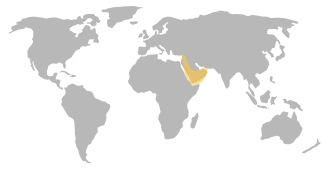
Tristram’s Starling
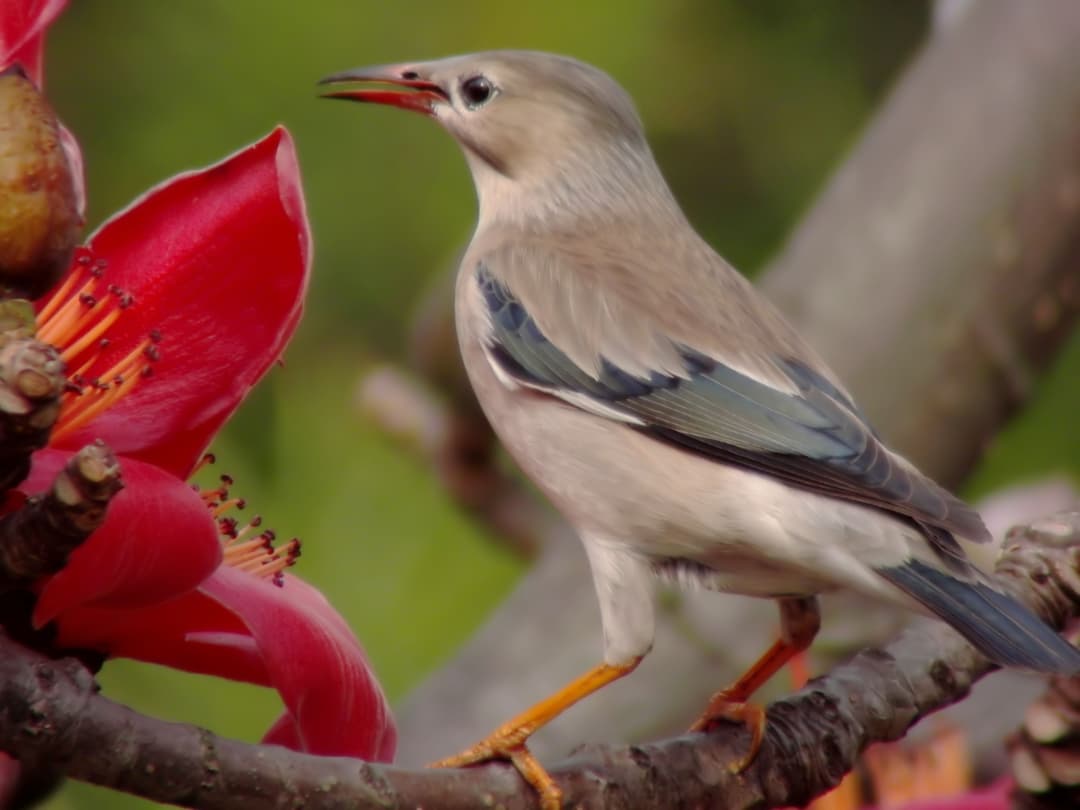
Red-Billed Starling
Spodiopsar sericeus
General appearance
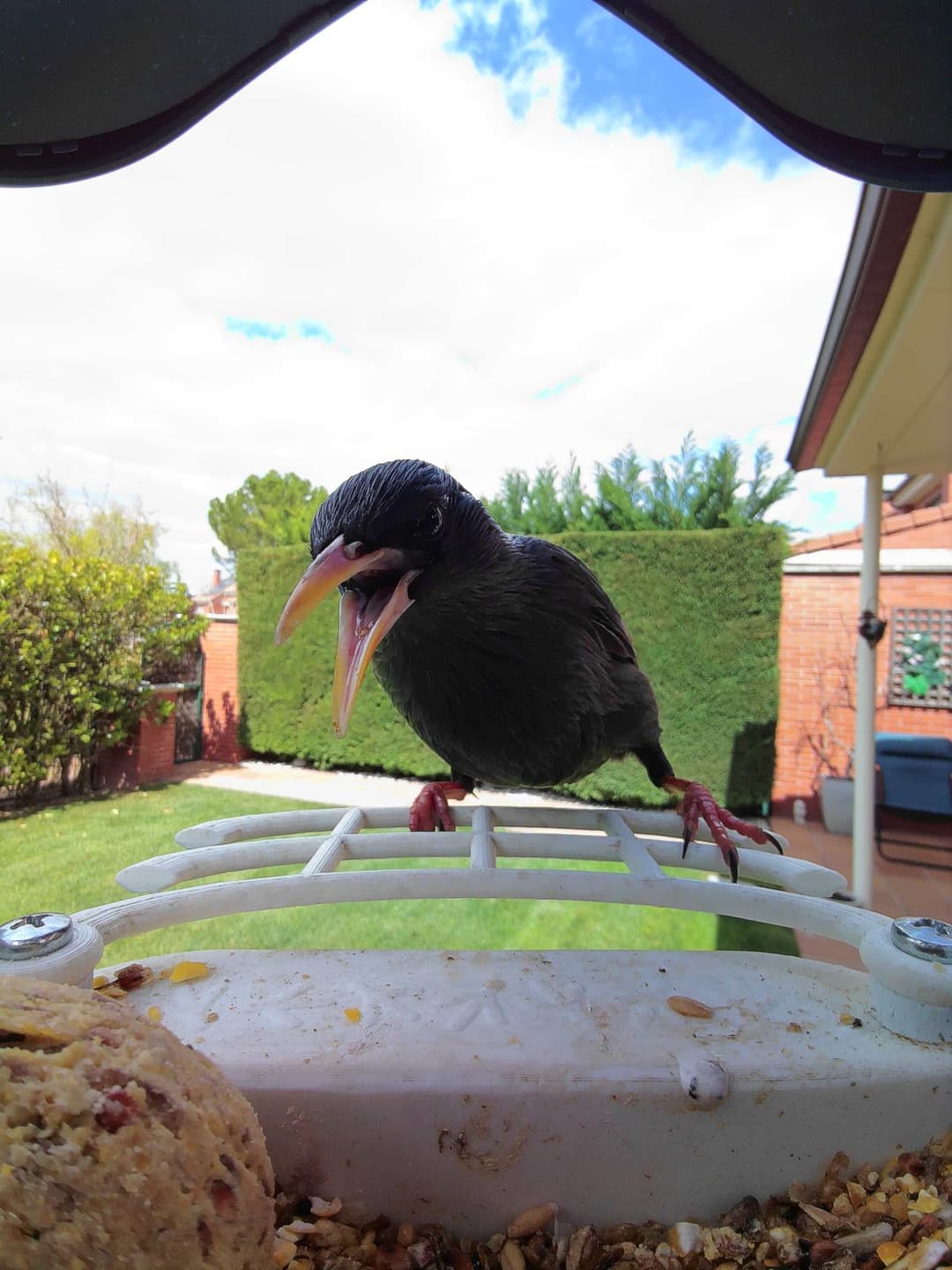
The Red-Billed Starling is a medium-sized bird known for its glossy, black plumage that sometimes shimmers under light, and a starkly contrasting red bill. Adults typically measure between 20 to 25 cm, with strong legs, robust bodies, and a relatively short tail. Its eyes are usually dark brown. The species is quick on foot and displays dexterous flying skills.
Male vs female
Male and female Red-Billed Starlings are surprisingly similar in appearance, with both sexes boasting glossy black plumage and a bright red bill. However, the males tend to be slightly larger than the females. Females may also show a lighter coloration around the bill during breeding season, acting as a possible identifier.
Juvenile
Juvenile Red-Billed Starlings lack the glossy sheen seen in adults and have a darker, brownish-black plumage. Their bills are usually darker, not becoming fully red until they reach adulthood. Juveniles' eyes appear to be more of a dull grey than the rich brown seen in adults. Despite their lack of striking coloration, their overall structure greatly resembles that of adults.
Size
8.3 - 9.4 in/2.3 oz
There's more to learn about Red-Billed Starling
View full detailsTristram’s Starling
Onychognathus tristramii
Also known as: Tristram's Grackle
General appearance
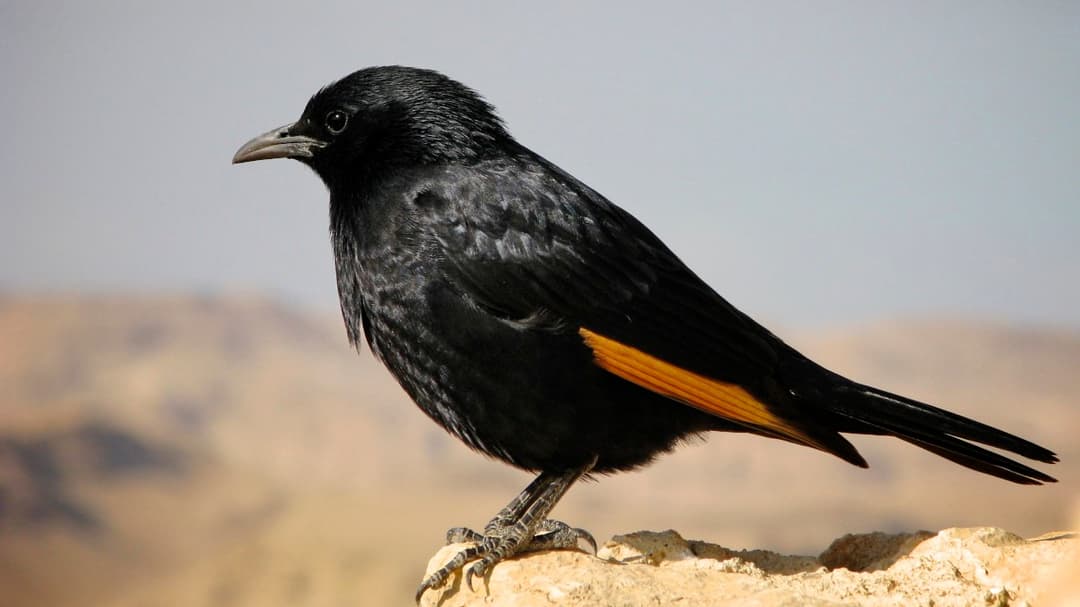
The Tristram’s starling, also known as the Tristram’s grackle, is a vibrantly coloured species of bird. The starlings display a glossy, black body complemented by distinct orange patches on the wing. The length of the bird varies from 25 to 30 cm. The wings are triangular and broad-tipped, providing a silhouette that aids in identification. Its eyes are also notably yellow.
Male vs female
Male and female Tristram’s starlings are fairly similar in appearance. Both sexes display the characteristic black and orange plumage. Minor differences can be seen in the size and the wing markings. Males are slightly larger and have a broader patch of orange on their wings compared to females. There are no known seasonal variations in appearance for either males or females.
Juvenile
Juvenile Tristram’s starlings have a different coloration from the adults. Instead of the glossy black body, juveniles have a dusky brown coloration. The typical orange wing patches are absent or not as vivid in young birds. The changes in coloration occur gradually as they mature into adults.
Size
9.4 - 9.8 in/4.1 - 4.6 oz
There's more to learn about Tristram’s Starling
View full detailsHow to tell the Red-Billed Starling from the Tristram’s Starling
Visual differences
The Red-Billed Starling (8-9.5 inches long, 2.3 oz) features glossy black plumage with a red bill, dark brown eyes, and lacks wing color accents. Tristram's Starling (9.5-11.8 inches, 4-4.6 oz) is larger, with glossy black bodies, distinct orange wing patches, and yellow eyes. Both species' males are slightly larger, but Tristram's has broader orange patches for males. Juveniles of both species differ from adults: Red-Billed with darker plumage and Tristram's with dusky brown bodies and muted wing colors.
Key differences and behavior
Red-Billed and Tristram’s Starlings exhibit key behavioral differences. Red-Billed Starlings from China adapt to mountainous and urban areas, forming large, sociable winter roosts, whereas Tristram’s Starlings, native to the Middle East, frequent deserts and urban areas, exhibiting resourcefulness by riding livestock and engaging closely with humans. Breeding involves both species sharing incubation, but Red-Billed Starlings opt for tree cavities or urban spaces, while Tristram’s prefer rocky cliffs. Diet-wise, both enjoy fruits and insects; however, Red-Billed Starlings also engage with bird feeders, while Tristram’s mainly forage for figs and desert insects. Their calls differ too, with Red-Billed’s being notably loud and Tristram’s less so. Tristram's display more vibrant behavior during courtship contrasts. Both species are of similar length (8-11 inches), yet Tristram’s is heavier (up to 4.6 oz versus Red-Billed’s 2.3 oz).
Still not sure? Here are more lookalikes!
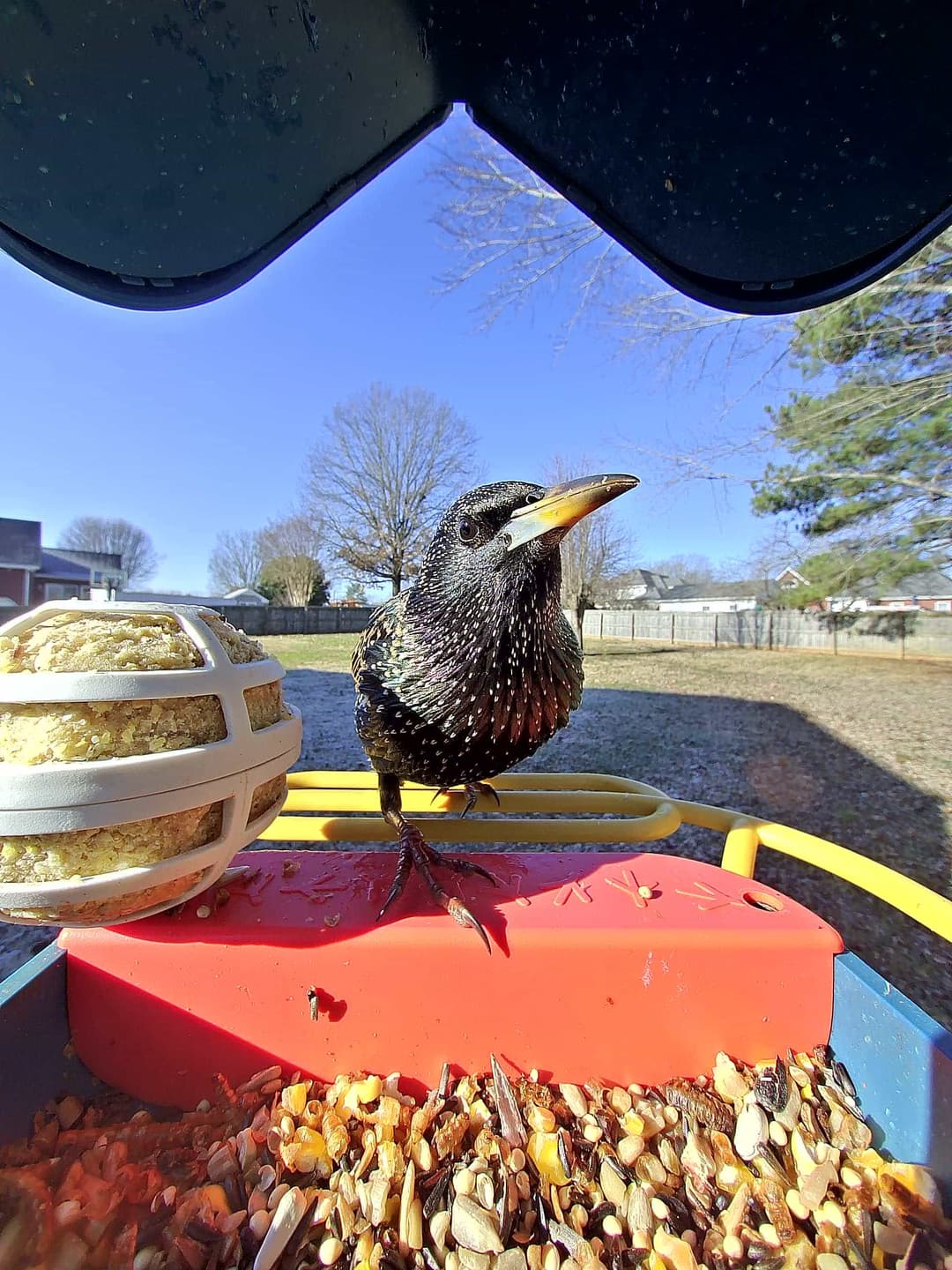
Red-Billed Starling vs Common Starling
Red-Billed Starling vs [Select a bird]

[Select a bird]
Pick a bird to compare
Tristram’s Starling vs [Select a bird]
[Select a bird]
Pick a bird to compare