Orange-fronted Yellow-Finch or Saffron Finch?
Here's how to tell the difference
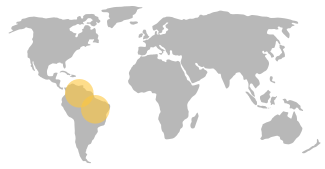

Orange-fronted Yellow-Finch


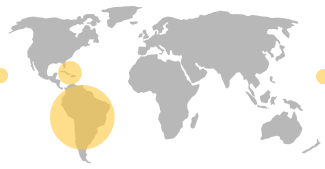
Saffron Finch
Orange-fronted Yellow-Finch
Sicalis columbiana
General Appearance
The Orange-fronted Yellow-Finch is a small passerine bird with a bright, striking appearance. Its plumage primarily showcases a vibrant yellow, with its most unique feature being a vivid orange patch located on the forehead. The beak is strong and conical, typically an orange-yellow shade, while its wings and tail feathers are slightly darker, providing a slight contrast against the bright yellow body.
Male vs Female
There is a subtle difference between the sexes. Males are often more brightly colored than females, with the orange patch on their foreheads being more pronounced and vivid. Females tend to have a more subdued color palette, with a slight greenish tint on their body, and the orange patch may be less noticeable in comparison to the males.
Juvenile
Juvenile Orange-fronted Yellow-Finches look different from their adult counterparts. They generally exhibit a more drab coloration with a light brown or olive tone and lack the distinctive orange forehead that adults possess. As they mature, juveniles gradually develop the signature yellow body and orange forehead patch, transitioning to adult plumage as they age.
Size
4.3 - 4.7 in/0.4 - 0.6 oz
There's more to learn about Orange-fronted Yellow-Finch
View full detailsSaffron Finch
Sicalis flaveola
General appearance
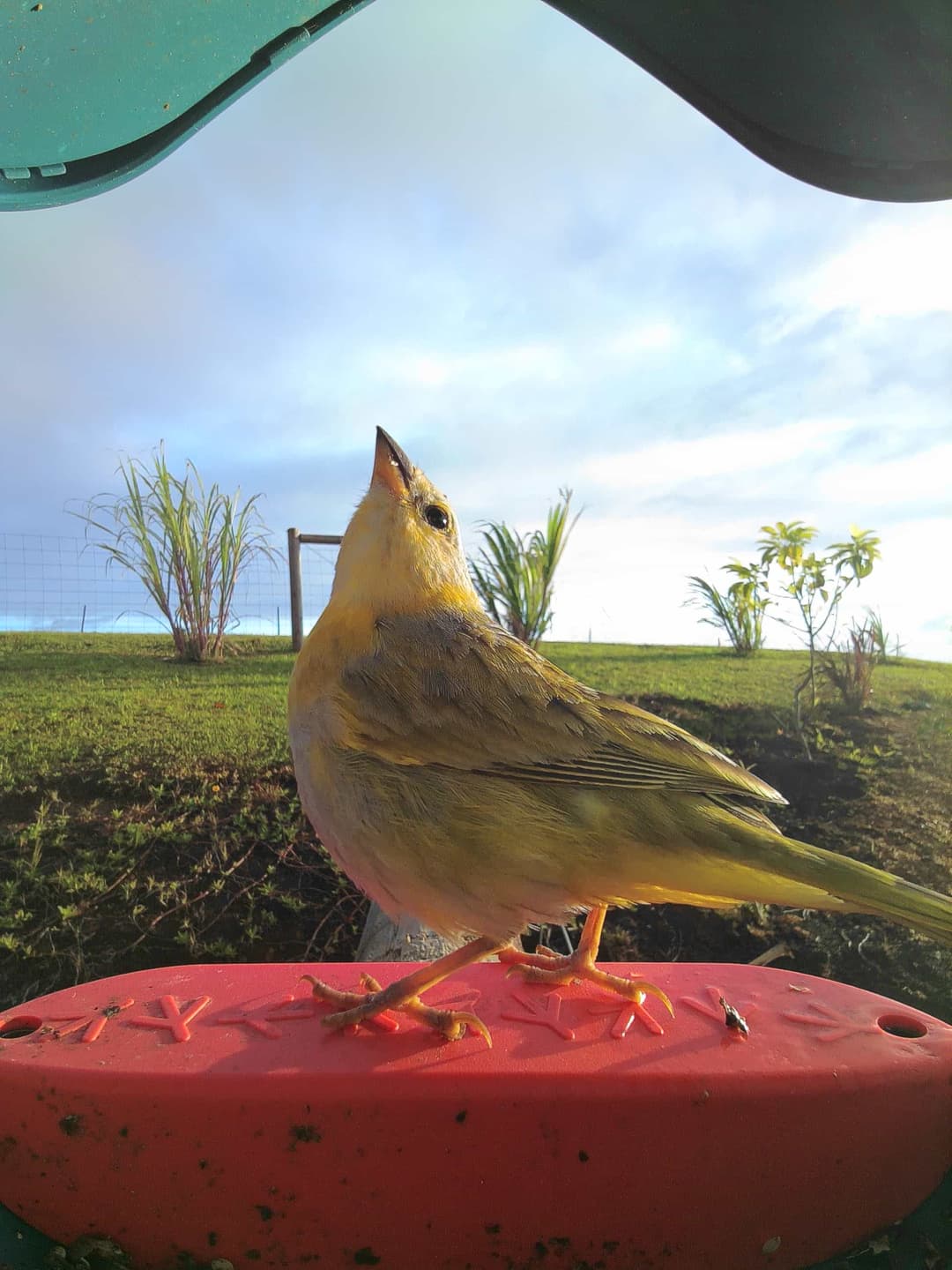
Saffron finches have a bright yellow coloring that distinguishes them from other birds. Notably, they possess a striking yellow-greenish hue on their wings and tail, and their beaks are coloured light orange. Their entire body is adorned with saffron hues, living up to their name. Size-wise, they are relatively small, typically ranging between 13 to 15 cm.
Male vs female
The males are more vibrant in color than the females, their yellow being strong and bright, often with vague streaks of black on the back. On the other hand, female saffron finches are typically paler, with an almost greenish-yellow upper part. Moreover, the females also have brown streaks on their belly.
Juvenile
Juvenile saffron finches have a dull yellow coloration and blend in more effectively with their surroundings than the adults. They are characterized by their faintly streaked underparts and lack the black markings on the upper parts, characteristic of adult males. Their appearance undergoes significant changes as they mature into adults and their colour brightens becoming more vibrant.
Size
5.3 - 5.9 in/0.4 - 0.8 oz
There's more to learn about Saffron Finch
View full detailsHow to tell the Orange-fronted Yellow-Finch from the Saffron Finch
Visual differences
The Saffron Finch is larger, measuring 5.3 to 5.9 inches, compared to the 4.3 to 4.7 inches of the Orange-fronted Yellow-Finch. Saffron Finches have vibrant yellow plumage with a yellow-greenish hue on wings and tail, and males have occasional black streaks. Their beaks are light orange. In contrast, the Orange-fronted Yellow-Finch features a more subdued yellow body with an orange forehead, especially in adults. Juveniles are drabber for both species. Saffron Finches tend to be more consistently bright yellow across their bodies.
Key differences and behavior
The Orange-fronted Yellow-Finch and Saffron Finch both inhabit open and semi-open areas of South America but can also adapt to urban environments. They have similar dietary habits, primarily consuming seeds, grains, and insects, especially during the breeding season for added protein. Behaviorally, both species are not shy of humans and may forage in gardens. Orange-fronted Yellow-Finches are found near water and exhibit ground-foraging behavior, often in flocks during non-breeding seasons. They show territorial aggression during breeding, with males performing melodious flight songs. They utilize low trees and shrubs for nesting. Saffron Finches, while engaging in vibrant courtship displays, are known for aerial acrobatics and can nest in man-made structures. They lay slightly more eggs (3-5) compared to the Orange-fronted Yellow-Finch (2-4), indicating potential variation in reproductive strategies. Both species display active parental care post-fledging.
Still not sure? Here are more lookalikes!
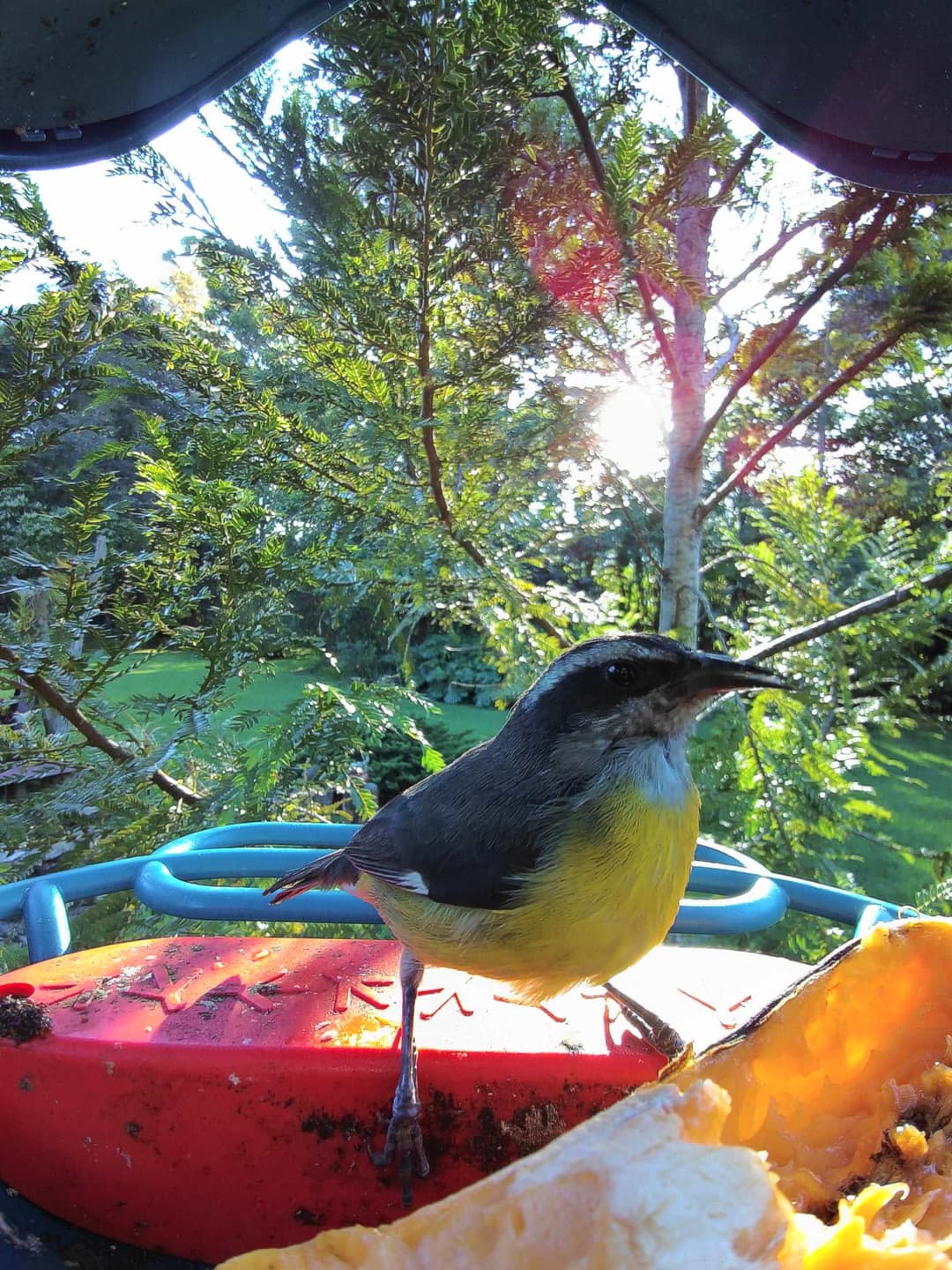
Saffron Finch vs Bananaquit
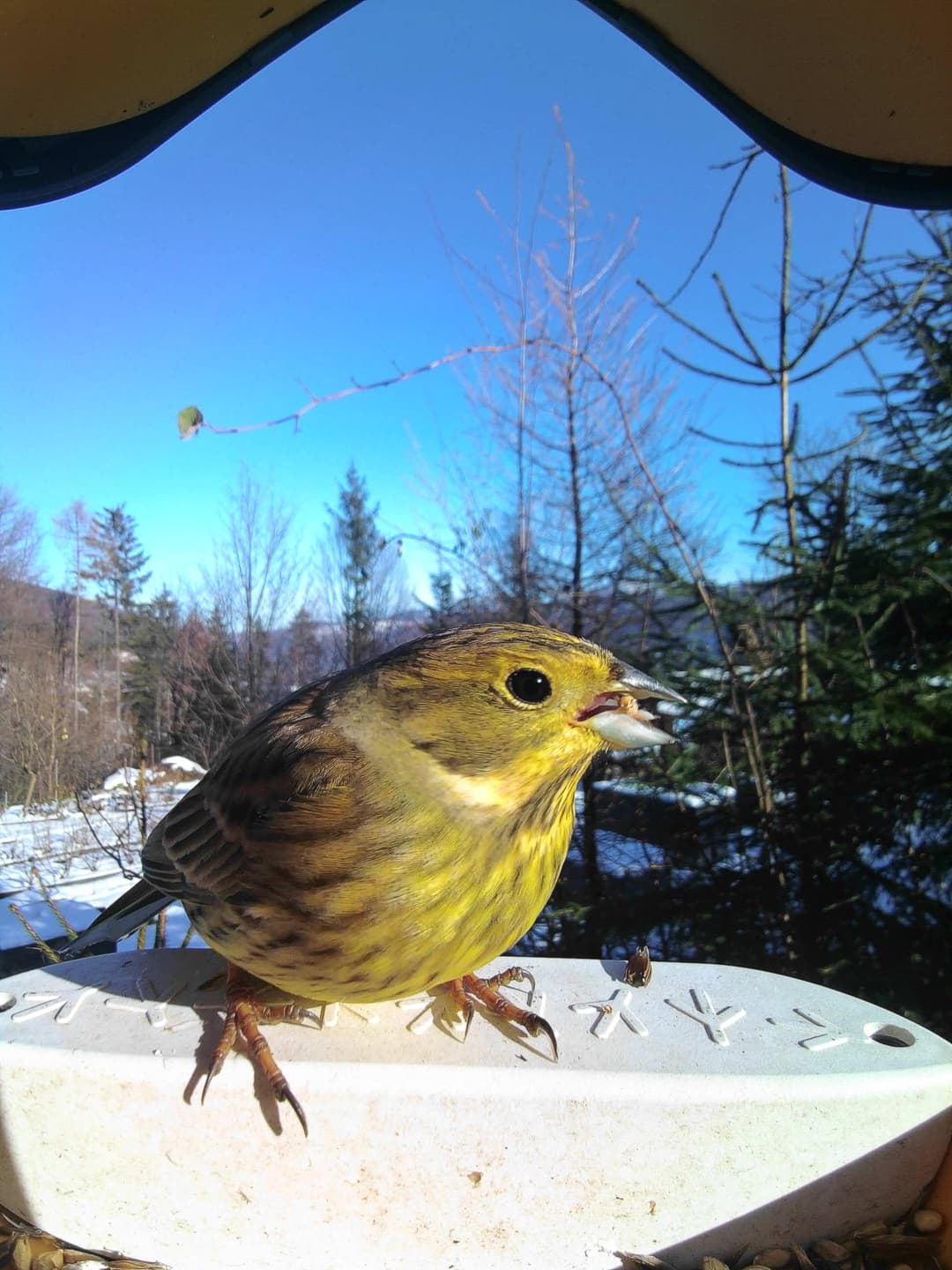
Saffron Finch vs Yellowhammer
Orange-fronted Yellow-Finch vs [Select a bird]


[Select a bird]
Pick a bird to compare
Saffron Finch vs [Select a bird]
[Select a bird]
Pick a bird to compare