Orange-Bellied Euphonia or Bananaquit?
Here's how to tell the difference
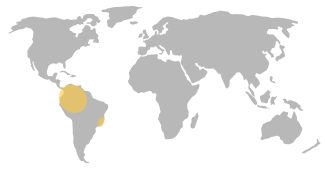

Orange-Bellied Euphonia


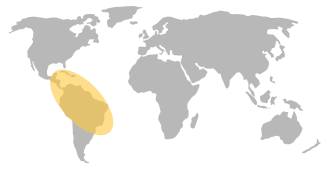
Bananaquit
Orange-Bellied Euphonia
Euphonia xanthogaster
Orange-Bellied Euphonia: A Detailed Study
General appearance - The Orange-Bellied Euphonia is a small songbird distinguished by its vibrant and contrasting plumage. Adults feature a striking deep blue head, back, and wings, which vividly contrasts with their bright orange belly. The throat and chest sport a vibrant yellow hue, smoothly transitioning into the orange belly. The legs are a subtle light gray, and their short tail also retains the deep blue coloration. Male vs female - Males are unmistakable with their bright and clear coloration. In comparison, female Orange-Bellied Euphonias exhibit more subdued shades of olive and dull yellow, with the orange belly being less prominent. Both sexes have a similar overall shape and size, but the coloration differences are crucial for identification in the wild. Juvenile - Juvenile Orange-Bellied Euphonias appear similar to females with less vibrant hues overall. Young birds have a predominantly olive coloration with pale underparts, and their orange bellies aren't as well-developed as in adults. Over time, as they mature, their plumage shifts to reflect the more defined coloration seen in adults. Observing juveniles often involve noting the less distinct demarcations between the color patches to differentiate them from their adult counterparts.
Size
3.5 - 4.3 in/0.3 - 0.6 oz
There's more to learn about Orange-Bellied Euphonia
View full detailsBananaquit
Coereba flaveola
General appearance
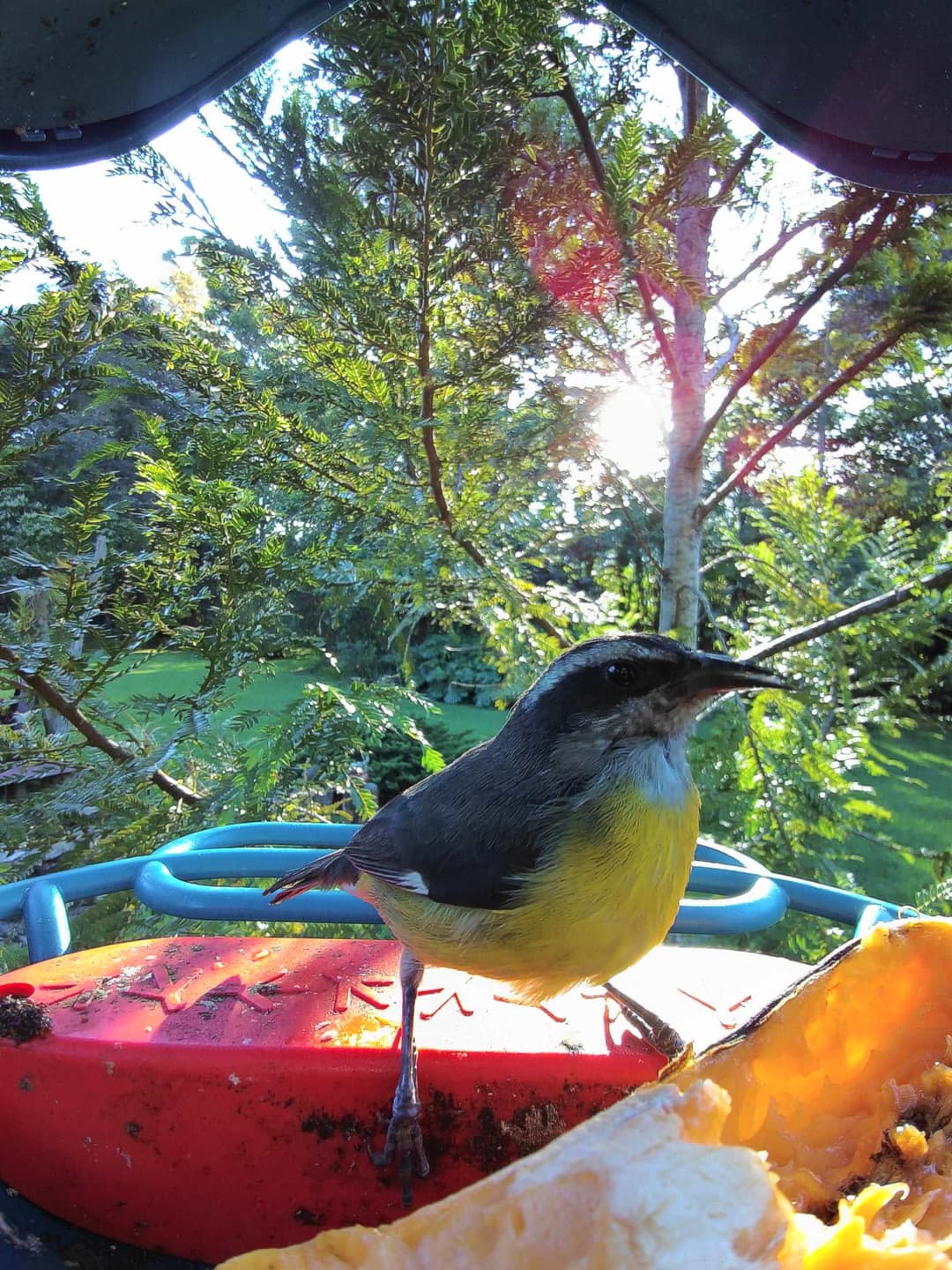
The bananaquit is small; about 4 1/2" (12 cm) in size, roughly the size of a sparrow. Its tail is short and squared at the tip. The bird has a white forehead extending to a white eyebrow and a yellow rump and chest. Its wings are broad and rounded. A distinctive feature is a spot of pink at the base of the thin, curved bill.
Male vs female
There are no significant differences visible between male and female bananaquits. Both genders share the same striking coloration: black, gray, red and white, with notable yellow parts. Hence, both males and females can be identified in the wild through these characteristics.
Juvenile
Young bananaquits, or juveniles, lack the vibrant coloration of the adults. They are generally duller in their coloration, which makes them less noticeable. As they mature, their vibrant adult colors start to show, making them easier to spot as they reach adulthood.
Size
3.9 - 4.3 in/0.2 - 0.5 oz
There's more to learn about Bananaquit
View full detailsHow to tell the Orange-Bellied Euphonia from the Bananaquit
Visual differences
The Orange-Bellied Euphonia (3.5-4.3 in) is slightly smaller than the Bananaquit (about 4.7 in), with the Euphonia often weighing more relative to its size. The Euphonia displays a vibrant orange belly with a deep blue upper body, while the Bananaquit features a distinctive yellow underpart and rump, black upperparts, and a white forehead stripe. The Euphonia has a straight, short beak, whereas the Bananaquit's beak is thin and curved, with a pink spot at the base, ideal for nectar feeding. These distinctive colors and beak shapes aid in visual differentiation.
Key differences and behavior
The Orange-Bellied Euphonia (3.5-4.3 inches, 0.32-0.56 ounces) and Bananaquit (4.5 inches, 0.23-0.5 ounces) both thrive in tropical regions but differ sharply in behavior and diet. Euphonias favor dense tropical forests and are often found in social groups, foraging on fruits and occasionally insects, while Bananaquits adapt well to urban settings and favor nectar, obtained either from flowers or sugar solutions. Breeding behaviors vary: Euphonias are monogamous, with males performing song displays and both parents nurturing the offspring, whereas Bananaquits court with vocal and flight displays and construct distinct dome-shaped nests. Euphonias prefer low foliage for nesting, while Bananaquits nest 5-13 feet high. These distinctions in social behavior, feeding preferences, and nesting habits provide key field identification cues.
Still not sure? Here are more lookalikes!
Orange-Bellied Euphonia vs Scrub Tanager

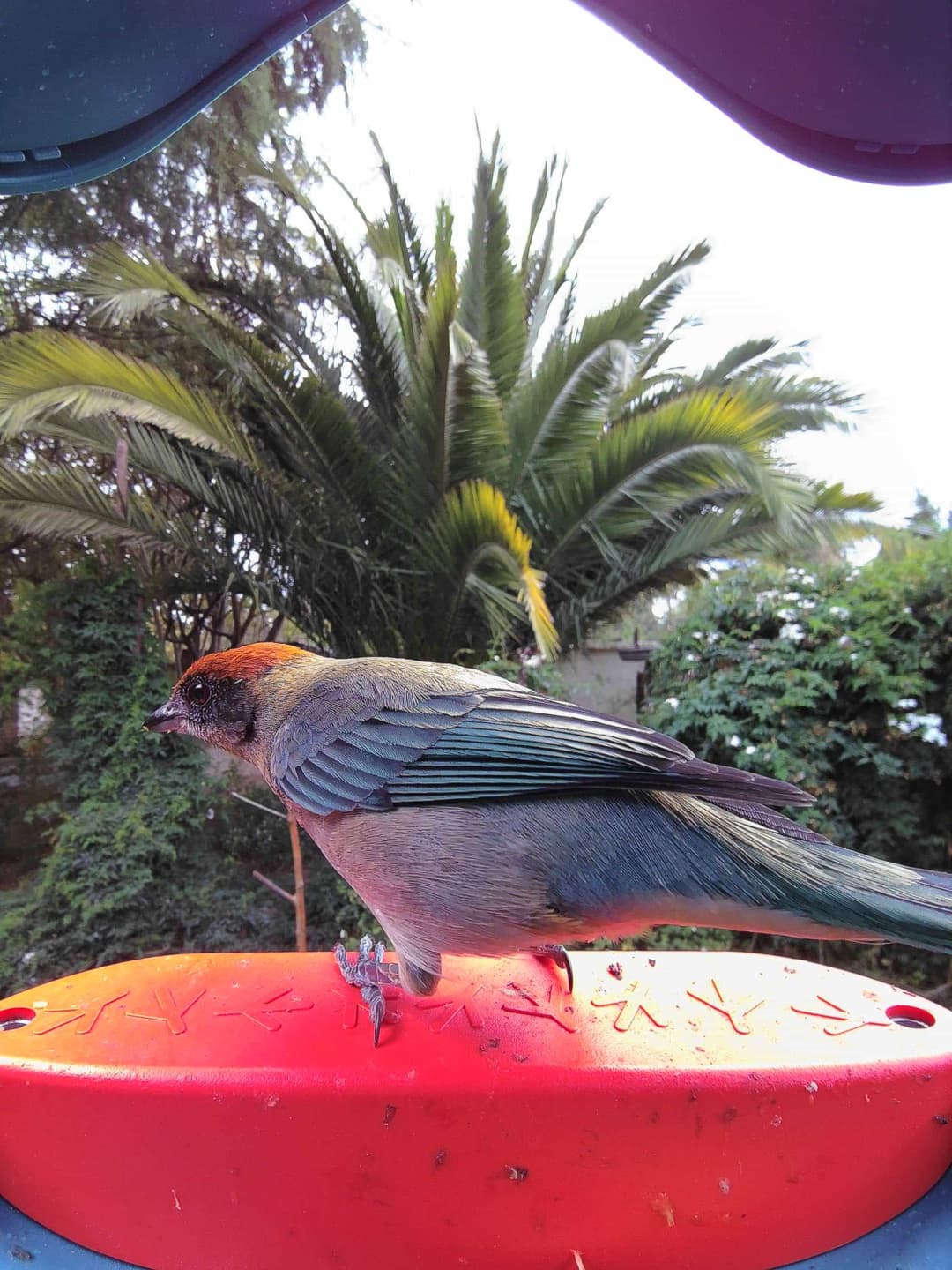
Orange-Bellied Euphonia vs [Select a bird]

[Select a bird]
Pick a bird to compare
Bananaquit vs [Select a bird]
[Select a bird]
Pick a bird to compare