
Prothonotary Warbler
Prothonotary Warbler
Protonotaria citrea


Quick Identification guide
Quick Identification guide
- •
The male Prothonotary Warbler features bright yellow underparts and a vivid blue-gray back that offer striking contrast
- •
Has a slim, pointed beak typical of warblers, adapted for insect foraging
- •
Displays a stocky and compact body with no wing bars, promoting ease of identification
What does a prothonotary warbler sound like?
The prothonotary warbler's song is a unique, melodious repetition of a "sweet-sweet-sweet-sweet-sweet-sweet-sweet" ring, which resembles a canary's flight song. Its call is a noisy, metallic chip that can have a falling, flat, or rising pattern. Related call types would include a chirp or chip, a friendly 'hi' and a whistle. These vocal manifestations aid in communication within its species.


Description
Now that's a tongue twister! But what is a prothonotary anyway, you ask? It's Latin for First Notary and designates a papal clerk in the Roman Catholic Church. Our friend the warbler happens to be dressed in the same bright shade of yellow, hence the name! They are conspicuous birds, and not just because of their vibrant plumage: they are not shy when it comes to singing, and you can often hear them before seeing them!
The prothonotary warbler can weigh between 14to18grams and be from13.5to14.5centimeters tall.
The prothonotary warbler typically lives around 11 years. This lifespan is noteworthy since smaller bird species often have shorter lifespans. However, compared to related species like the yellow warbler, which lives for around 10 years, the prothonotary warbler has a relatively longer lifespan.
Did you know?
Most popular questions about prothonotary warbler
How to recognise a prothonotary warbler?
General appearance
The prothonotary warbler is a striking songbird with brilliant golden-yellow underparts and an olive-green back. Its wings and tail are bluish-gray, and it has a distinctive black eye that stands out against the bright plumage. This small warbler averages about 5.5 inches in length with a beak designed for insect hunting in moist woodland habitats.
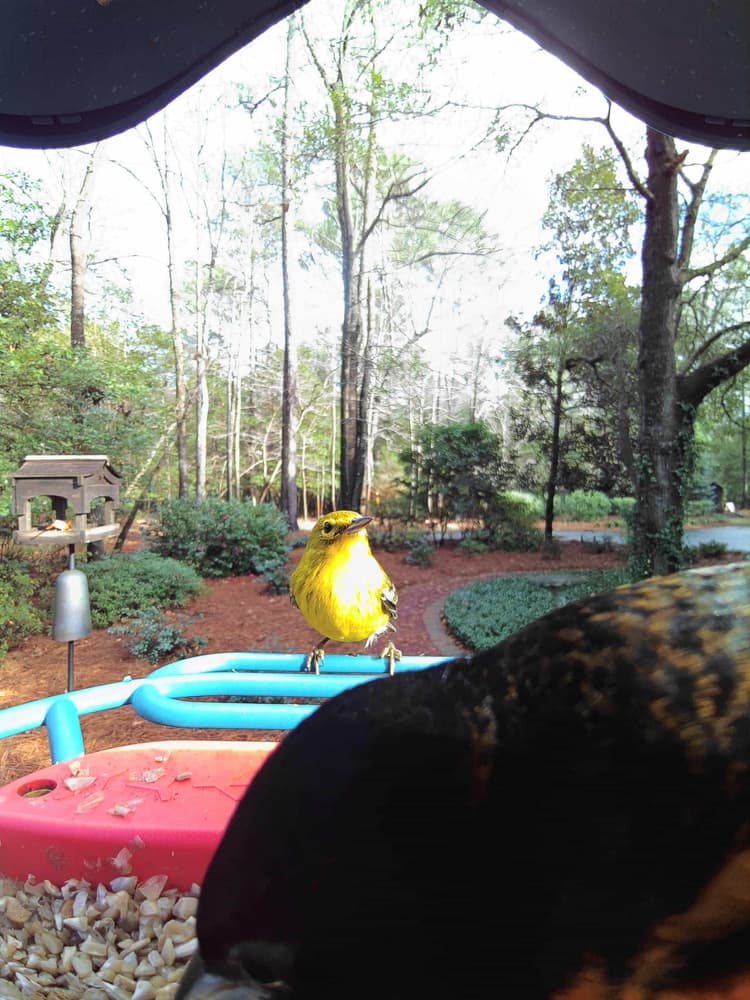
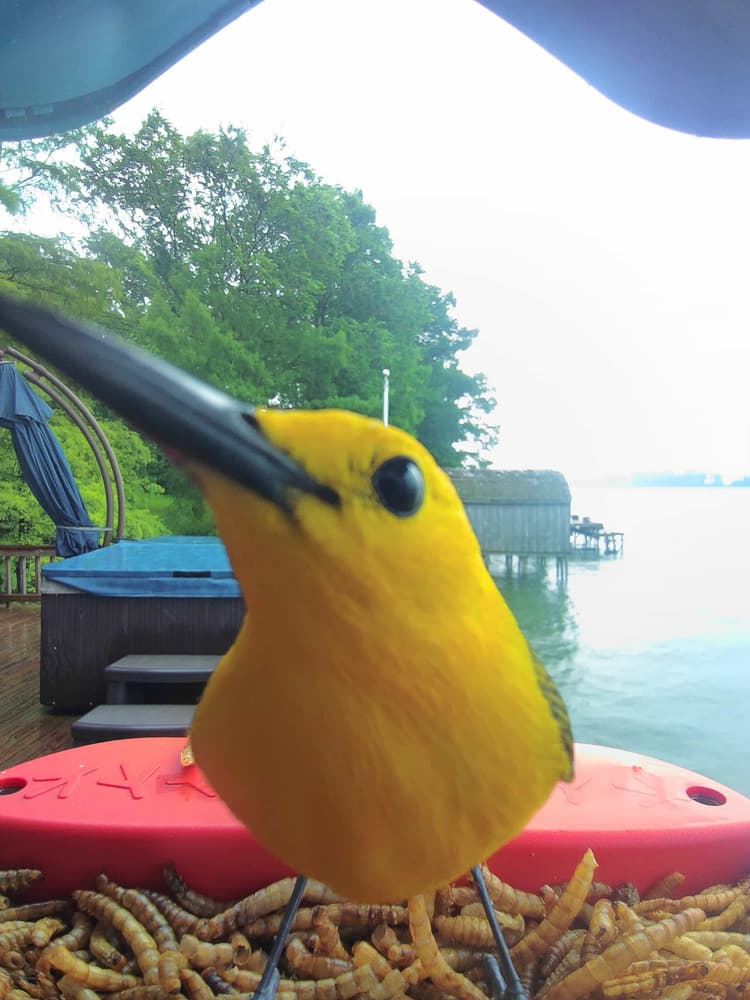
Male vs female
Males are more vibrant with a brighter orange-yellow breast and belly, and their overall plumage is more intense compared to females. Female prothonotary warblers are slightly duller, with a paler yellow underbody and duller olive-colored back, helping them camouflage when nesting.
Juvenile
Juvenile prothonotary warblers resemble females but are even duller. They have a washed-out appearance with more subdued yellows and grays, which assists in avoiding predation. As they mature, juveniles gradually acquire more vibrant coloring, similar to adults, particularly before their first migration.
Often mistaken for
Yellow-Rumped Warbler vs Prothonotary Warbler
The Yellow-Rumped Warbler has a similar yellow coloration, but it features distinctive yellow patches on its sides and a yellow rump. The Prothonotary Warbler has a more consistent golden-yellow body without these patches.

Breeding and nesting habits of the prothonotary warbler
Mating behaviors
Prothonotary warblers engage in elaborate courtship displays, which involve the male fluttering and singing to attract females. Males exhibit territorial behaviors, often showing off their bright plumage and using specific call notes to invite prospective mates to inspect potential nest sites.
Nesting details
These warblers prefer nesting in cavities found in trees, often near water bodies like swamps and streams. They utilize natural hollows or old woodpecker holes, lining them with moss, leaves, and grasses. While they rarely nest in gardens, providing nest boxes can attract them; ensure boxes have entry holes about 1.25 inches in diameter.
Eggs and chick-rearing
Females lay 4-6 eggs, which are incubated for around 12-14 days. Both parents partake in feeding and caring for the chicks post-hatching. The young fledge after approximately 10 days, during which they are closely guarded and fed by the parents to ensure their development and safety.
What does a prothonotary warbler like to eat?
Berries
Insects
Nectar
Seeds
Snails
Spiders
Natural diet
The prothonotary warbler primarily feeds on a variety of insects and other invertebrates. Its diet includes adult insects and larvae, with a particular preference for aquatic insects. Additionally, it consumes ants, caterpillars, mayflies, beetles, and other insect species. Apart from insects, it also eats snails and other small mollusks, as well as spiders. While its diet mainly consists of animal matter, the prothonotary warbler does consume some seeds.
Bird feeders
Prothonotary warblers are less commonly seen at bird feeders compared to some other bird species, as their diet consists mainly of live prey. However, they might occasionally visit feeders offering mealworms or suet, particularly during migration when they need to supplement their energy intake.
Setting up the perfect environment
To draw in the prothonotary warbler, arrange your yard to resemble its natural habitat. These birds love wooded swamps and river margins and are particularly drawn to water bodies. Incorporating a small pond or water feature into your yard may increase your chance of attracting these lovely birds.
Providing the right feed
Prothonotary warblers are primarily insectivores but are partial to small fruit and berries. For the best results, try using Bird Buddy seeds which are expertly chosen for the season and contain a nutritious, irresistible mix the warblers are sure to love.
Choosing the right feeder
When it comes to feeders, try a platform or tray feeder which allows for a variety of foods to be offered. Be sure to place the feeder near a water source, or incorporate a birdbath into your feeder setup to catch their eye.
Encouraging nesting
Provide nesting opportunities to encourage these warblers to stick around. They are cavity nesters and can't resist nesting boxes. Try hanging one up near your feeder to tempt them into making your yard their home.
Tricks to attract warblers
Playing the call or song of the prothonotary warbler can spark their interest and lure them to your yard. Just be sure not to overdo it, as you don't want to stress the bird or make it believe there's too much competition in your yard.
Where can you find prothonotary warblers?
Primary habitat
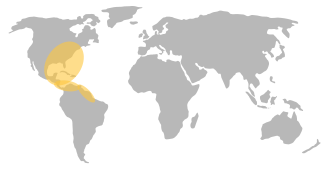
The prothonotary warbler primarily breeds in flooded river bottom hardwoods or wetlands with bay trees, often near bodies of slow moving or standing water.
Additional range
This bird also nests near lakes, rivers, and ponds. Unusually, it winters in tropical lowland woods and mangrove swamps.
Do they migrate?
The prothonotary warbler migrates rather than remaining in one place all year. It showcases a relatively early migration pattern, with notable movement peaks occurring in April and August. During its migration, this warbler primarily travels between its breeding and wintering grounds. In spring, this species moves from its wintering habitats, which are primarily located in the mangrove forests and coastal regions of Central America and northern South America, particularly in Panama and Colombia. It then migrates northward to reach its breeding habitats in the southeastern United States, often around wetland areas with abundant trees. By fall, the prothonotary warbler begins its journey back to the more tropical climates of Central and South America. This migration occurs through the eastern United States and primarily heads southward. It’s rarely seen straying into the western U.S., especially during the fall migration. Key locations for this warbler's migration include wetland areas and forests in the southern United States during breeding season, and the tropical forests in Central and South America during winter. With peaks noted in April and August, these months are critical for observing their movement.
What is the role of prothonotary warblers in nature and how to protect them?
Conservation status
The prothonotary warbler has undoubtedly declined in the past due to the clearing of southern swamp forests. However, it remains fairly common in its existing habitat. Conservation efforts, such as the installation of birdhouses by conservationists, have helped support its population in certain areas. Despite these efforts, habitat loss remains a significant threat to the species.
Ecological role of prothonotary warblers
Its role in the ecosystem
The Prothonotary Warbler plays a vital role in regulating the insect population, serving as a form of natural pest control. Its diet mainly consists of adult insects and their larvae, particularly aquatic ones. This warbler feeds on beetles, caterpillars, ants, mayflies, and other insects. Apart from insects, it also consumes snails and other small mollusks, contributing to the control of these species populations. In addition to pest control, this bird species could potentially contribute to seed dispersal. Although its primary diet is composed of invertebrates, it does consume some seeds, which can be spread through its droppings. Therefore, it contributes to the propagation of certain plant species. Furthermore, their nesting behavior wherein their nesting sites, often old Downy Woodpecker nests, are filled with moss, dry leaves, twigs, and bark, may contribute to the recycling of organic material in their habitat ecosystem.
How to help protect prothonotary warblers
Preservation tips
Habitat preservation strategies
To conserve the prothonotary warbler, protection and restoration of its habitat is crucial. This species primarily depends on forested wetlands. Support local and national conservation organizations that focus on protecting these areas. Participate in tree-planting activities to restore its habitat. Advocate for policies that protect wetlands from destructive practices like draining, logging, and pollution.
Community science initiatives
Community science plays a vital role in the conservation of the prothonotary warbler. Engage in birdwatching groups and record sightings on platforms like eBird. Participate in nest monitoring programs to gather data on the species' breeding success. Educate your community about the importance of this warbler and its role in the ecosystem. Fundraise or donate to research projects studying the prothonotary warbler.