
Tricolored Blackbird
Tricolored Blackbird
Agelaius tricolor


Quick Identification guide
Quick Identification guide
- •
Features a glossy black body with distinctive red and white shoulder patches visible in flight
- •
Displays a cone-shaped black beak that blends seamlessly with its plumage
- •
Males have a sleek and smooth appearance, with noticeably narrow shoulders compared to other blackbirds
What does a tricoloured blackbird sound like?
The tricolored blackbird's calls are somewhat akin to those of the Red-wing, featuring an array of buzzes, chatters, chirps or chips, and trills. However, the tricolored blackbird's song has a distinctive nasal quality, making it less melodic compared to the Red-wing. Its calls are typically delivered in a rising pattern, contributing a unique auditory profile to this species.


Description
When parenting, these birds adopt an interesting method: they will bring chicks food but immediately fly away with it, forcing them to get over their fear of leaving the nest! If you're ever in the vicinity of some, you will know, as they are not only outstandingly noisy but also incredibly sociable. In fact, they form the largest breeding colonies of all North American passerines.
The tricoloured blackbird can weigh between 38to77grams and be from18to24centimeters tall.
The tricolored blackbird typically lives for an average of 7 to 8 years. This is shorter than some related species such as the common grackle, but it's on par with others like the red-winged blackbird. However, high mortality rates of tricolored blackbird juveniles can lower the average lifespan.
Did you know?
Most popular questions about tricoloured blackbird
How to recognise a tricoloured blackbird?
General appearance
The tricolored blackbird is similar in appearance to the Red-winged Blackbird, but it differs in color and size. It measures 7 1/2-9 inches (19-23 cm) in length, about the size of a Robin. Its coloration includes hues of black, brown, red and white. Its wing shape is broad and pointed while its tail is rounded yet square-tipped.
Male vs female
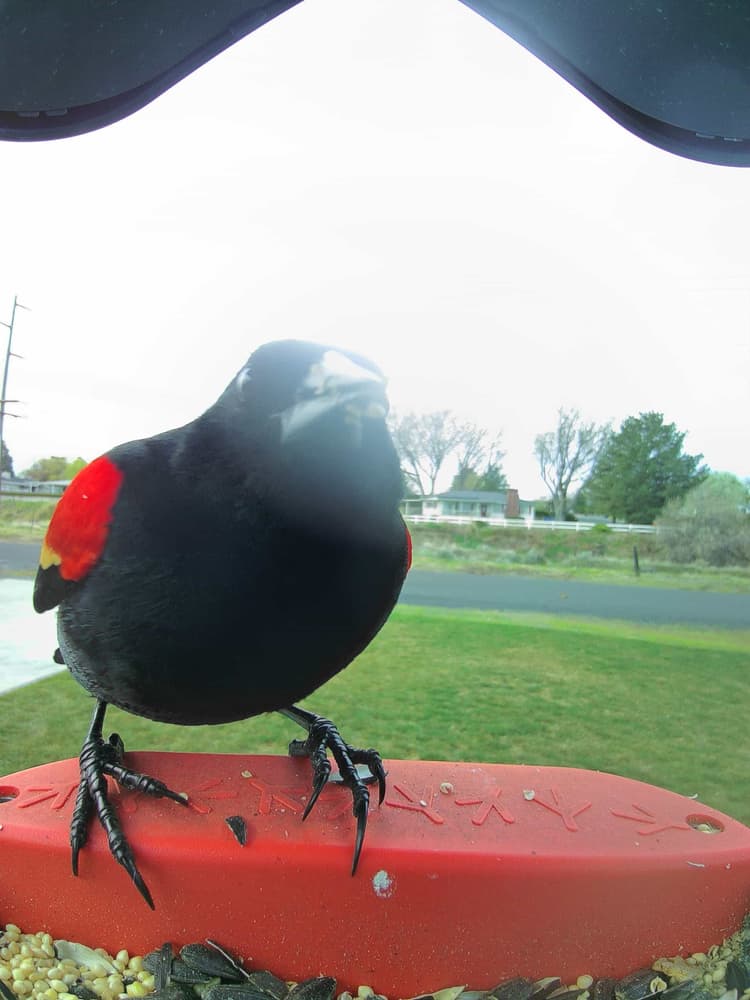
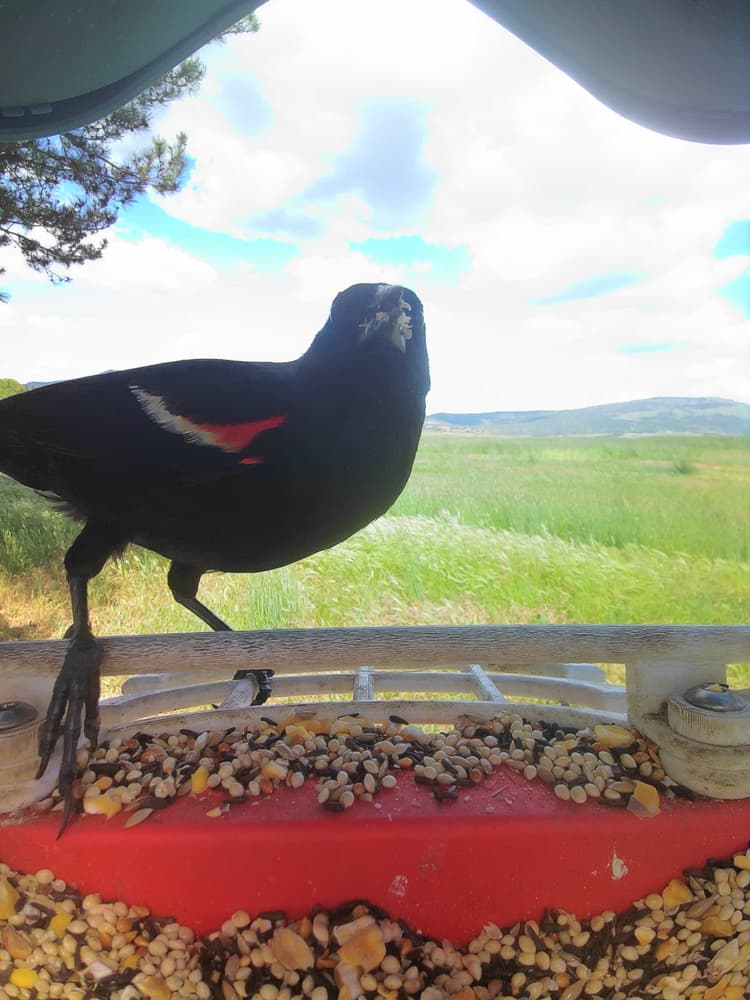
Males feature a deeper red shoulder patch, surrounded by a white border. This is a contrast to the yellow border found on male Red-wings, although fading in the late summer can cause it to appear white. Females and young tricolored blackbirds look very similar to some female Red-wings but are typically darker, and their streaking is mostly obscure. Unlike the Red-winged Blackbird, they never exhibit buff or rusty edgings on their back.
Juvenile
The juveniles are almost identical in appearance to the females, making them difficult to differentiate. They too have a dark coloration which is inconspicuous streaking in their feathers. However, they do not display the buff or rusty edges often seen on Red-winged Blackbird females or juveniles.
Often mistaken for
Red-Winged Blackbird vs Tricolored Blackbird
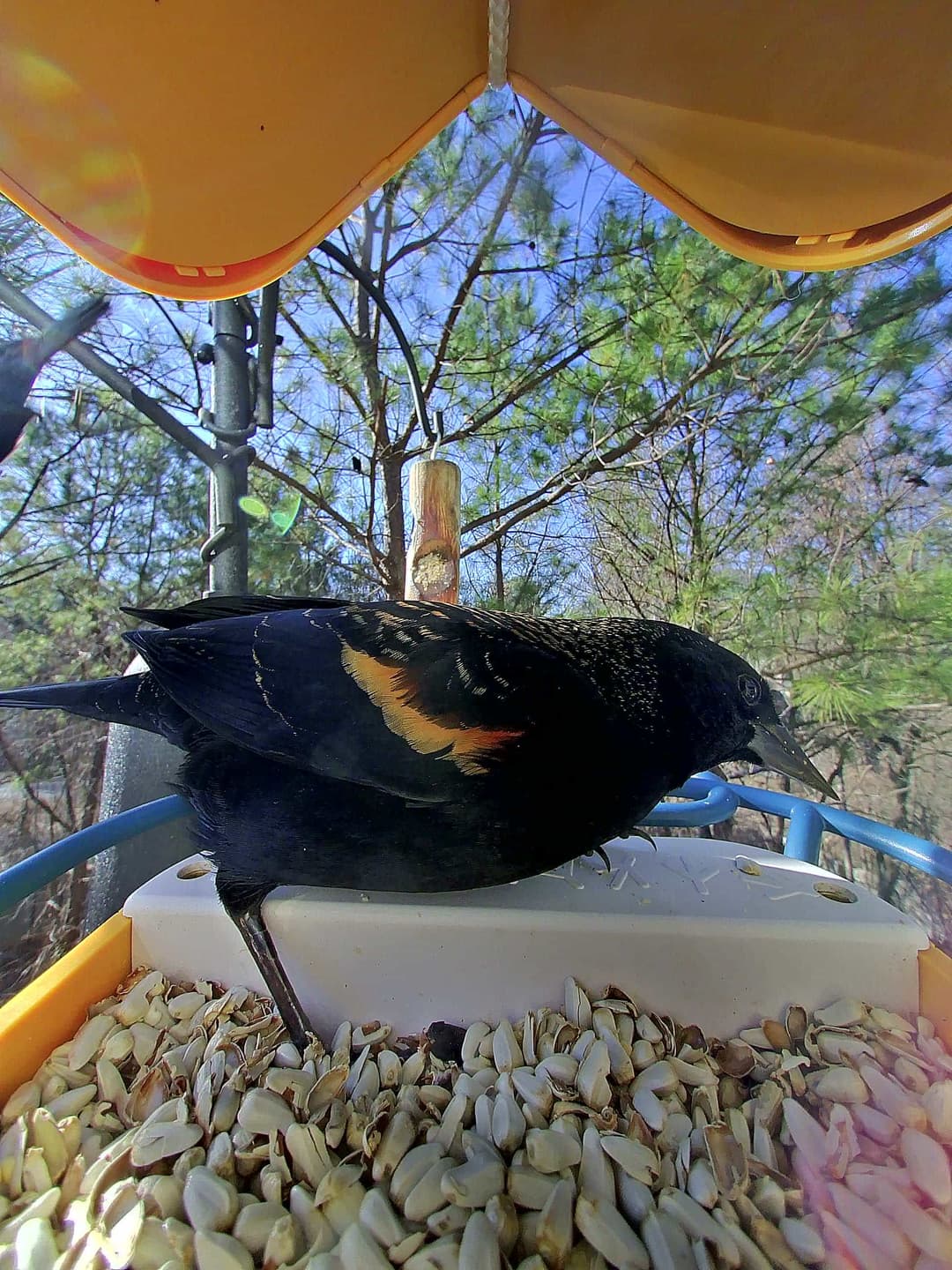
The Tricolored Blackbird and the Red-Winged Blackbird can appear very similar at first glance. Key differences include the Red-Winged Blackbird having a yellow border on its red shoulder patch, whereas the Tricolored Blackbird displays a white border. The Tricolored's red patch is generally more vibrant. Additionally, Tricolored Blackbirds are more social, often found in larger colonies compared to the more solitary Red-Winged. Their songs differ as well, with the Tricolored's song being more harsh and nasal. Habitat preference is also a clue: Tricolored Blackbirds are more common in California, often found in wetlands next to agricultural areas.
Breeding and nesting habits of the tricoloured blackbird
Mating behaviors
Tricolored blackbirds display elaborate courtship rituals. The male perches prominently, often on a high stalk, to attract a mate. With feathers fluffed and tail partly spread, he showcases his red shoulder patches by lifting the wing's leading edge, lowering his head, and singing to entice females.
Nesting details
Nesting in densely packed colonies, nests are placed just a couple of feet apart. Locations include marshes within cattails or bulrushes, and sometimes in willows at the water's edge. Nests are bulky open cups built by females, lashed to standing vegetation, constructed from grass, reeds, leaves, and rootlets, and lined with fine grass.
Eggs and chick-rearing
Tricolored blackbirds lay their eggs in these carefully constructed nests. The female incubates the eggs and, after hatching, both parents feed the chicks. The proximity of nests in colonies aids in communal protection against predators, ensuring higher survival rates for the young birds.
What does a tricoloured blackbird like to eat?
Aquatic animals
Insects
Seeds
Snails
Natural diet
The tricolored blackbird primarily feeds on insects and seeds. During the summer, it consumes a variety of insects such as caterpillars, beetles, grasshoppers, and spiders. In the fall and winter, the diet shifts more towards seeds, including those from grasses and weeds, as well as waste grain.
Bird feeders
Tricolored blackbirds are not common visitors to bird feeders. However, if they do visit, they may consume offerings like sunflower seeds, cracked corn, or suet, which mimic the seeds and grains found in their natural diet.
Set the stage with the right feeders
Tricolored blackbirds are most attracted to platform or tube feeders. These types of feeders allow birds to easily access their food, making your yard a tempting spot to visit. For even better results, add a birdbath or water feature to your yard. These birds love hanging out near water for bathing and drinking.
Give them their favorite snacks
One of the simplest ways to encourage tricolored blackbirds to visit your yard is by offering their favorite snacks. These birds love grains, seeds and insects. Purchasing bird seed mixtures such as Bird Buddy seeds can provide great results as they are chosen by experts for the season, making it a favorite for this species.
Create a safe haven
Tricolored blackbirds will be more likely to visit (and perhaps even take up permanent residence) in your yard if they deem it safe. This means providing lots of thick, thorny shrubs and small trees for them to hide from predators and find nest-building material.
Sing along fun
Tricolored blackbirds have a beautiful song, which they really get into in the early morning and late evening. To encourage a tricolored blackbird sing-along in your yard, try playing soft bird songs during these times. It may just convince these beautiful birds that your yard is the perfect spot for a sing-along!
Where can you find tricolored blackbirds?

Primary habitat
The Tricolored Blackbird breeds mainly in large, freshwater marshes with dense stands of cattails or bulrushes.
Additional range
In all seasons, it forages in open space habitats such as farm fields, pastures, cattle pens, and large lawns.
Do they migrate?
The tricolored blackbird (Agelaius tricolor) is not highly migratory. It typically remains within a limited geographical range throughout the year, primarily found in California and parts of Oregon, with some populations extending into Nevada and Baja California. During winter, these birds withdraw from the northernmost parts of their nesting areas, especially those regions subject to harsher climates, but they do not engage in long-distance migration like some other bird species. Instead, they move locally, adjusting their location based on seasonal resources such as food and breeding conditions. Throughout the year, tricolored blackbirds exhibit significant movement within their range. They may shift colony sites annually, which can occur due to changes in habitat conditions like water availability or food supply. Key areas for their populations include the Central Valley of California, where they are known to form large breeding colonies. During the non-breeding season, they often congregate in large flocks, moving to locales with ample resources. These movements underscore their adaptability to localized environmental changes rather than a predictable migration pattern.
What is the role of tricolored blackbirds in nature and how to protect them?
Conservation status
The tricolored blackbird is likely endangered, having experienced a serious decline in numbers in recent decades, primarily due to habitat loss. Its practice of nesting in dense colonies increases its vulnerability. Conservation efforts are crucial to prevent further decline, focusing on habitat preservation and restoration. Significant threats include agricultural development and urban expansion, which reduce available nesting and foraging grounds. Protecting existing habitats and creating new ones are essential strategies to aid its recovery and ensure the survival of the species.
Ecological role of tricolored blackbirds
Its role in the ecosystem
The tricolored blackbird plays a crucial role in maintaining ecological balance. In terms of pest control, these birds feed on a variety of insects such as caterpillars, beetles, and grasshoppers, particularly during summer. By doing so, they help limit the populations of these insect species, some of which can be harmful or destructive to crops and other vegetation. The tricolored blackbird also contributes to seed dispersal. Particularly in fall and winter, they consume many seeds of grasses, weeds, and waste grain. As these birds move and forage across different habitats, they aid in the distribution and germination of these plant species. This is an essential process for plant reproduction and biodiversity. Furthermore, their communal nesting behaviour in marshes and cattails provides a unique ecological significance as their nests, densely packed, assist in fostering a thriving and diverse marsh environment.
How to help protect tricolored blackbirds
Preservation tips
Habitat preservation strategies for tricolored blackbird
Support the preservation of native grasslands and wetlands, the primary habitats of the Tricolored Blackbird. Encourage responsible agricultural practices, limiting the use of pesticides that can harm these birds. If possible, establish protected areas and engage in active habitat management to prevent degradation by invasive species. Preserve breeding sites during the nesting season to ensure successful reproduction.
Community science initiatives for tricolored blackbird conservation
Encourage community science initiatives by reporting sightings to local wildlife authorities or using citizen science platforms. This data helps monitor population numbers and track changes over time. Educate communities on the importance of these birds to local ecosystems and involve them in habitat restoration projects. Advocate for policies that protect the Tricolored Blackbird and its habitat. Support research that improves our understanding of the species’ conservation needs.