
Red-Browed Finch
Red-Browed Finch
Also known as: Red-browed Firetail
Neochmia temporalis


Quick Identification guide
Quick Identification guide
- •
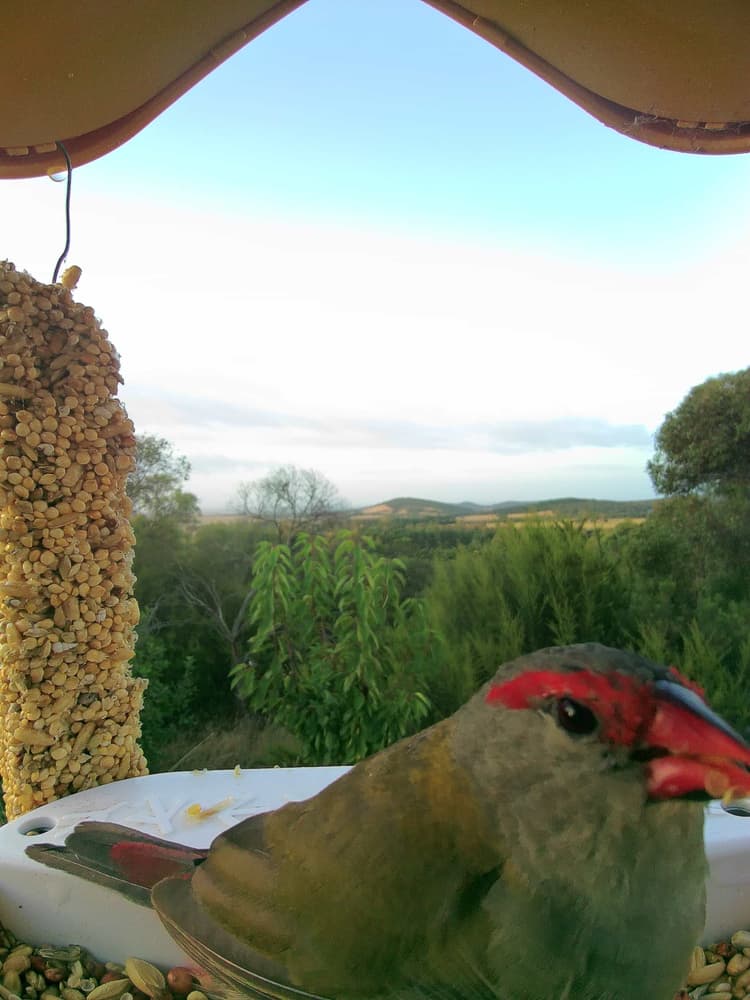
The distinctive red brow above the eye contrasts with its mostly olive-green body
- •
Features a bright red rump visible during flight and a soft grey face
- •
Displays a short, conical beak and fine streaks of yellow on the belly
What does a red-browed finch sound like?
The red-browed finch's vocalizations consist of soft, chattering calls and a more distinctive "peet-peet-slur" song. These finches are particularly noisy in flight, with fast, trilling communication calls. Males use a gentle, twittering song to court females, which becomes louder and more frequent during breeding season. The finch's call is noted for its melodious, pleasant nature.


Description
These finches are sociable as can be! They can usually be seen travelling in flocks of 10 to 20 birds and will only disperse if there's danger. But just for a moment. They'll fly away to a safe location, regroup and most likely laugh about what just happened!
The red-browed finch can weigh between 8to15grams and be from10to12centimeters tall.
Red-browed finches typically live up to 5-7 years in the wild. This is relatively standard for finch species, with the zebra finch also having an average 5 year lifespan. The Gouldian finch has a slightly shorter lifespan, typically living only 3-4 years in the wild. These species may live longer in captivity, given optimal conditions.
Did you know?
Most popular questions about red-browed finch
How to recognise a red-browed finch?
General appearance
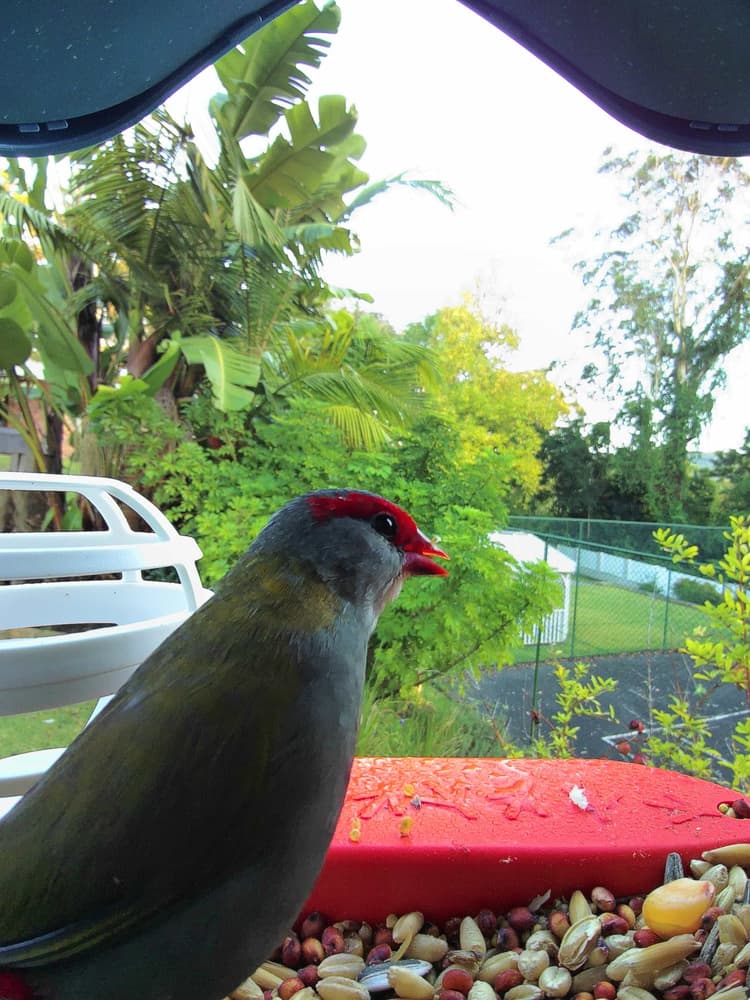
The Red-browed Finch is a small bird, approximately 12 cm in length. It has distinctive bright green upperparts, crimson brow, and flank: thus the name. The bird’s tail and bill are black, and it has pale grey underparts. These birds usually move around in flocks and can be seen in grasslands and bushy areas.
Male vs female
Both males and females are similar in appearance, making it challenging to differentiate between the two based on physical traits. The main difference lies in their call, the male usually has a more prolific and louder song compared to the female.
Juvenile
Juvenile Red-browed Finches are not as brightly coloured as the adults. The juveniles have a greyish-green tinge instead of the bright green on their upperparts and lack the red marking on the brow, which develops as they mature. They also have a lighter coloured bill compared to the adults.
Often mistaken for
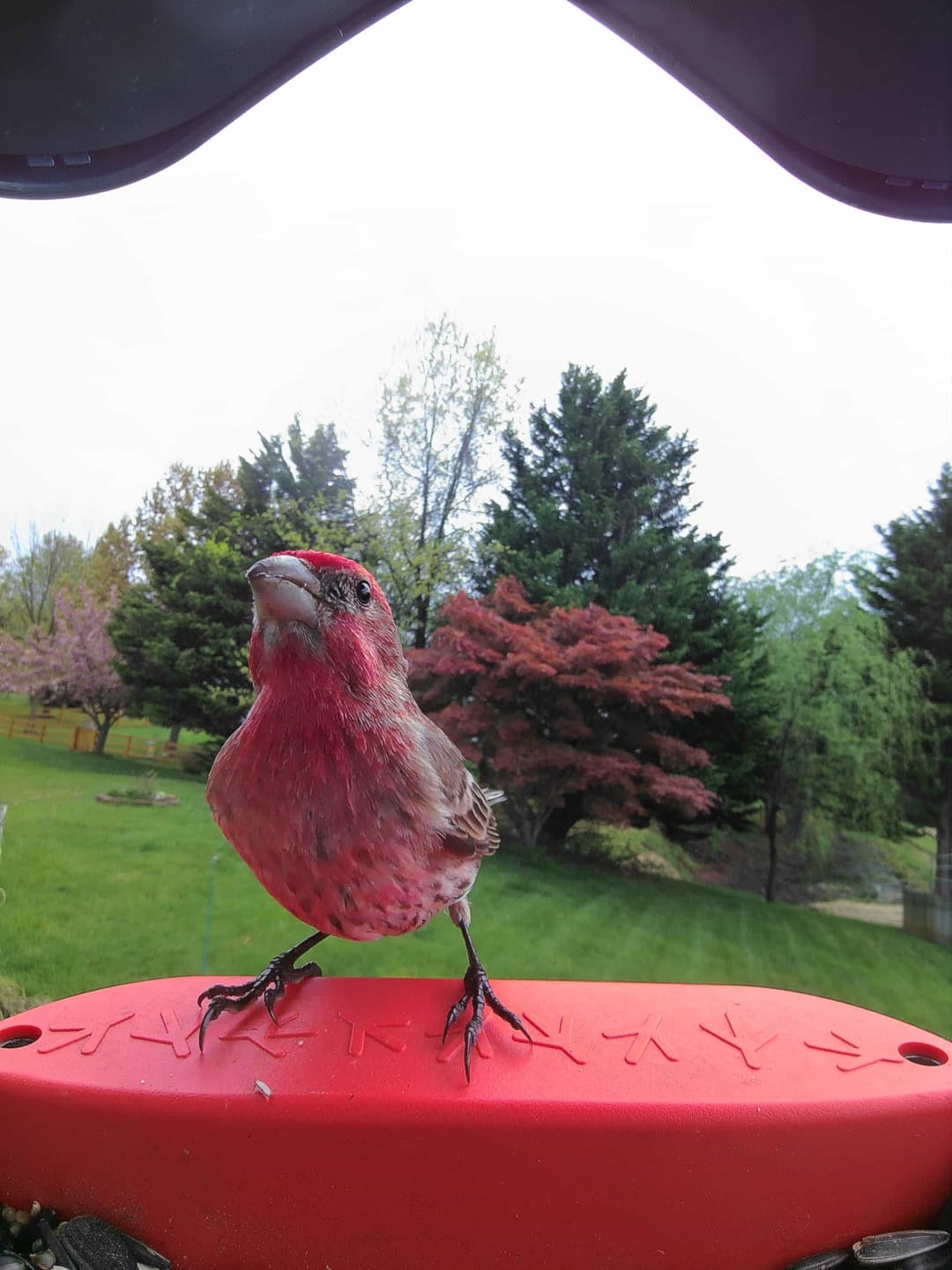
House Finch vs Red-Browed Finch
The House Finch is often mistaken for the Red-Browed Finch due to its similar body shape and size. However, it lacks the distinctive red brow and has more streaked plumage.
Zebra Finch vs Red-Browed Finch
Zebra Finches can resemble the Red-Browed Finch given their small size and some similar coloration, but Zebra Finches have a brown back and barred tail, while the Red-Browed Finch has a more uniform gray body and distinct red brow.

Breeding and nesting habits of the red-browed finch
Mating behaviors
Red-browed finches engage in intricate courtship displays that include singing, hopping, and wing fluttering. Mating usually occurs in the spring after successful courtship.
Nesting details
The nesting sites are often low shrubs or trees, sometimes in urban gardens. Nests are round structures made of grass, twigs, and feathers. Gardens can attract finches by providing dense shrubbery and natural materials for nesting.
Eggs and chick-rearing
Typically, the female lays 4 to 6 white eggs that hatch after about two weeks. Both parents share feeding duties. Chicks fledge after approximately 21 days but continue to receive parental care for several weeks thereafter.
What does a red-browed finch like to eat?
Berries
Insects
Seeds
Natural diet
The red-browed finch primarily feeds on seeds from grasses and herbs, including various native species. They also occasionally consume small insects, such as ants and beetles, especially during the breeding season to provide additional protein for their young. The birds typically forage on or near the ground in flocks.
Bird feeders
At bird feeders, the red-browed finch is often attracted to a variety of small seeds, such as millet and canary seed. They may also consume finely chopped fruits and vegetables provided in backyard feeders. While not as attracted to them, they may sometimes sample suet mixtures and other seed blends if readily available.
Setting up the perfect feeder
For red-browed finches, opt for a tube feeder. These types of feeders cater to small-billed birds like finches and keep larger beaked birds from stealing their food. Keep the feeder in a quite place but within view from your windows so you can enjoy their visits.
Choosing the right food
Red-browed finches love seeds! We recommend using Bird Buddy seeds. They are specially selected by experts for the season, ensuring that your feathered visitors get the best.
Creating a finch-friendly environment
Adding a few dense shrubs or small trees to your yard will provide the finches with a place to perch and feel safe. Including a birdbath will also attract the finches to your yard.
Encouraging the songbirds
Lastly, play some soft bird songs or chimes in your yard. The sound will lure curious finches. Once they see your appealing set up, they're likely to visit often and may even bless you with their own delightful melodies.
Where can you find red-browed finches?
Primary habitat
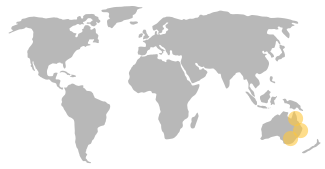
The red-browed finch primarily inhabits the East Coast of Australia. They prefer dense bushes and rainforests.
Additional range
Sometimes, they unexpectedly occupy urban parks and gardens, adapting to non-native vegetation.
Do they migrate?
The red-browed finch, also known as the red-browed firetail, is primarily a sedentary bird, meaning it does not engage in long-distance migration. It is native to eastern Australia and tends to stay within its habitat throughout the year, which includes coastal and sub-coastal regions from southern Queensland through New South Wales and into Victoria, as well as parts of southeastern South Australia. Instead of migrating, the red-browed finch may exhibit some local movement or dispersal in response to changes in food availability or habitat conditions, particularly outside the breeding season. These movements are generally limited in scope, as the finch prefers to remain near reliable sources of food and water. Red-browed finches inhabit grasslands, open forests, and urban gardens, where they are often seen in flocks foraging for seeds and small insects. Their adaptability to various environments, including suburban and rural areas, facilitates their sedentary lifestyle. Overall, the red-browed finch's year-round presence in its range is a reflection of its ability to find the resources it needs without the necessity of seasonal migration.
What is the role of red-browed finches in nature and how to protect them?
Conservation status
The red-browed finch is currently listed as a species of least concern, indicating it is relatively common and not considered vulnerable or endangered. Key conservation efforts focus on habitat protection, as they thrive in grasslands, forests, and urban gardens. Major threats include habitat loss due to urban development and predation by introduced species like cats. Conservationists emphasize maintaining natural vegetation and creating bird-friendly urban spaces to support their populations.
Ecological role of red-browed finches
Its role in the ecosystem
The Red-browed Finch, also known as the 'Neochmia temporalis', plays a vital role in the ecological balance of the Australian environments in which it inhabits. One of the key roles it performs is pest control. By feeding on small invertebrates, Red-browed finches help to control the populations of insects that might otherwise become problematic if left unchecked. Furthermore, the birds are also efficient seed dispersers due to their predominantly granivorous diet. They eat a variety of seeds from grasses, herbs and shrubs, and as they travel, they excrete the undigested parts of these seeds, facilitating the propagation and dispersal of various plant species in the ecosystem. In this way, the Red-browed Finch supports biodiversity and aids in preventing the overgrowth of certain plant species. In addition, the Finch's building and maintenance of visible nests contribute to the regulation of certain predator-prey dynamics in the ecosystems. They often become target prey for larger animals, and their nests can divert attention from other vulnerable species. Overall, the Red-browed Finch contributes significantly to ecosystem balance and diversity.
How to help protect red-browed finches
Preservation tips
Habitat preservation strategies
Protect and conserve the natural habitats of the red-browed finch. This includes webs of grassy undergrowth and shrubs present usually in native woodlands and forests. It's crucial to conserve these environments from logging, deforestation and urban developments. Implementation of sustainable land use plans and legislations can promote habitat preservation. Encourage reforestation of native plants and trees.
Community science initiatives
Involve local communities in conservation efforts. Organize birdwatching expeditions and educational workshops to raise awareness about the importance of this species and their habitat. Encourage citizen scientists to monitor red-browed finch populations and report sightings. This data can help in tracking population trends, distribution and can aid research efforts. Use platforms like iNaturalist to share data.