
Gambel’s Quail
Gambel’s Quail
Callipepla gambelii


Quick Identification guide
Quick Identification guide
- •
Displays a striking black top-knot crest on the head, easily distinguishing it from other quails
- •
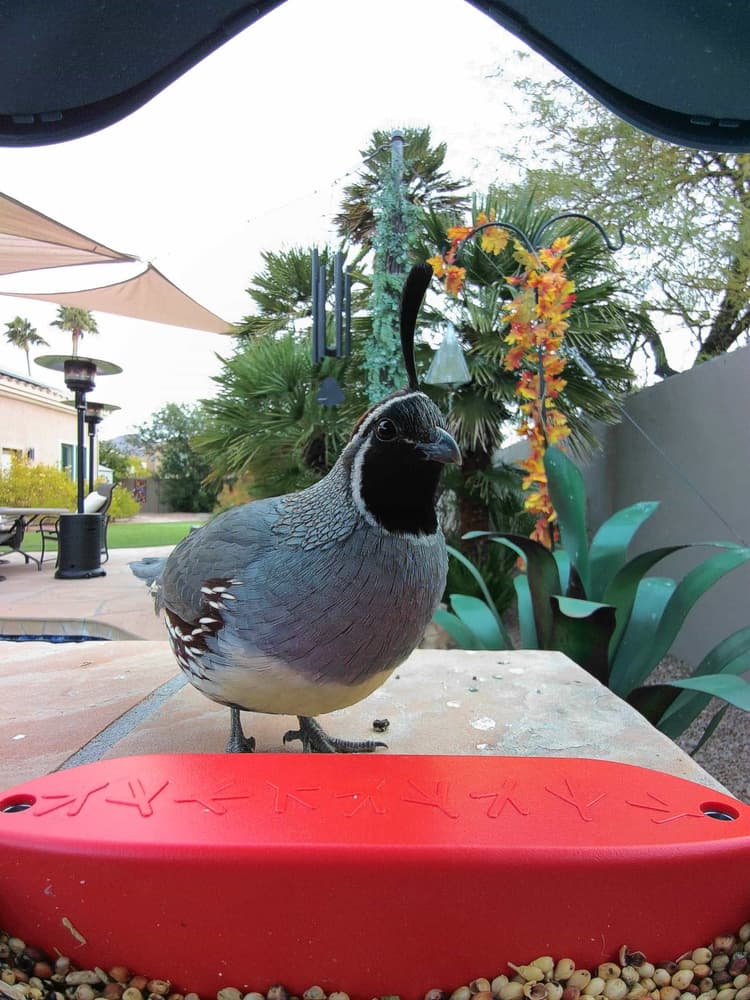
Features bluish-gray upperparts with a rusty-brown crown and white face bordered by black
- •
Compact, round body with scaly-patterned underparts and a short, square tail
What does a Gambel's quail sound like?
The Gambel's quail vocalizes a distinctive call pattern that is both flat and undulating. Its call resembles a ringing "puk-kwaw-cah," with the second syllable reaching the highest pitch. This bird's utterance can be described as raucous and may even sound like a scream, demonstrating its unique audible characteristics. The call thus both blends with and stands out in its natural environment, marking the unique vocalization style of the Gambel's quail.


Description
Hello? What's that? It's a baby Gambel's quail calling from inside its egg! Females call to their chicks before they hatch and these respond from inside the egg. Handy, right? When they're ready to greet the world, they make a hole in the largest part of the egg and leave a piece intact, making a sort of door. Isn't that adoorable!
The Gambel's quail can weigh between 157to208grams and be from24to28centimeters tall.
The Gambel’s quail typically has a lifespan of 1.5-2 years in the wild. This lifespan is slightly shorter when compared to related quail species, such as the California quail which can live up to 4-5 years in the wild, and the Bobwhite quail, which can live approximately 6 years.
Did you know?
Most popular questions about Gambel's quail
How to recognise a Gambel's quail?
General appearance
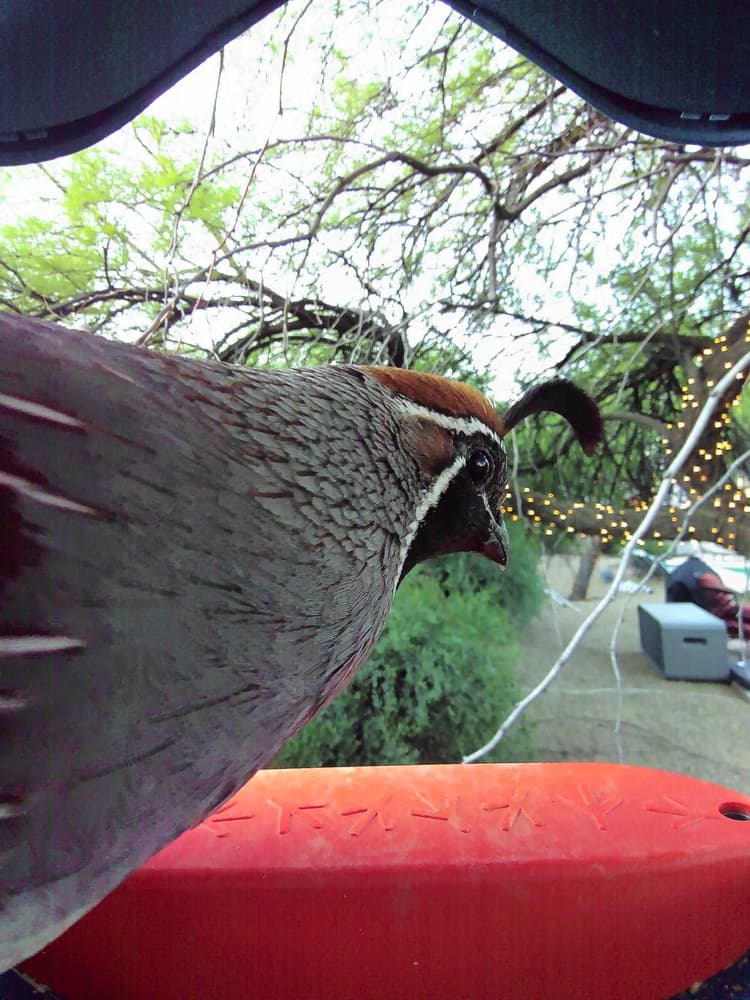
The Gambel’s quail is between 10-11 1/2" (25-29 cm) in size, about the size of a crow. It exhibits a curving topknot with white stripes set against chestnut-red sides. The colors associated with this bird include black, brown, gray, red, tan, and white. Its wings have a fingered, rounded, and short shape, while the tail takes a rounded, short, square-tipped shape.
Male vs female
There are noticeable differences between the male and female Gambel’s quail. The male sports a reddish cap, complete with a black patch at the center of its yellow belly. The female, on the other hand, is redder on the sides than the female California Quail, and displays less scaly pattern on the belly.
Juvenile
The description does not supply the differences between juveniles and adults or provide any seasonal variations in the Gambel’s quail appearance. Addtitional information may be required to adequately describe these features.
Often mistaken for
California Quail vs Gambel’s Quail
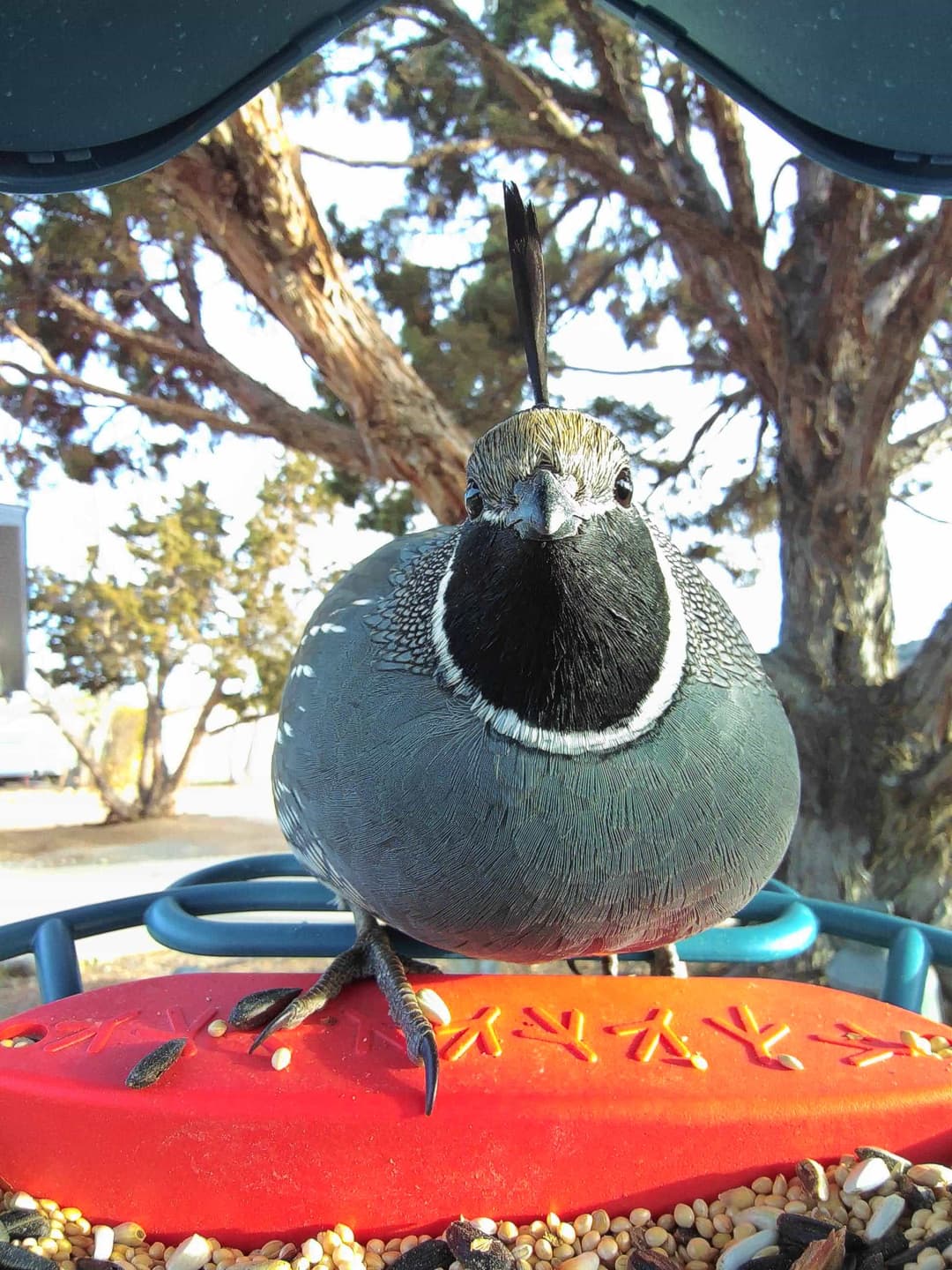
Gambel’s Quail has a distinct black face and neck, with a cream belly marked with a black teardrop pattern, while California Quail show a scaly-patterned belly. The topknot on Gambel's Quail is larger and stands upright; California Quail's topknot often bends forward. Listen for the calls too: Gambel’s Quail emits a more singular, sharp 'ka-KAA-ka,' whereas California Quail sounds more rhythmic.
Scaled Quail vs Gambel’s Quail
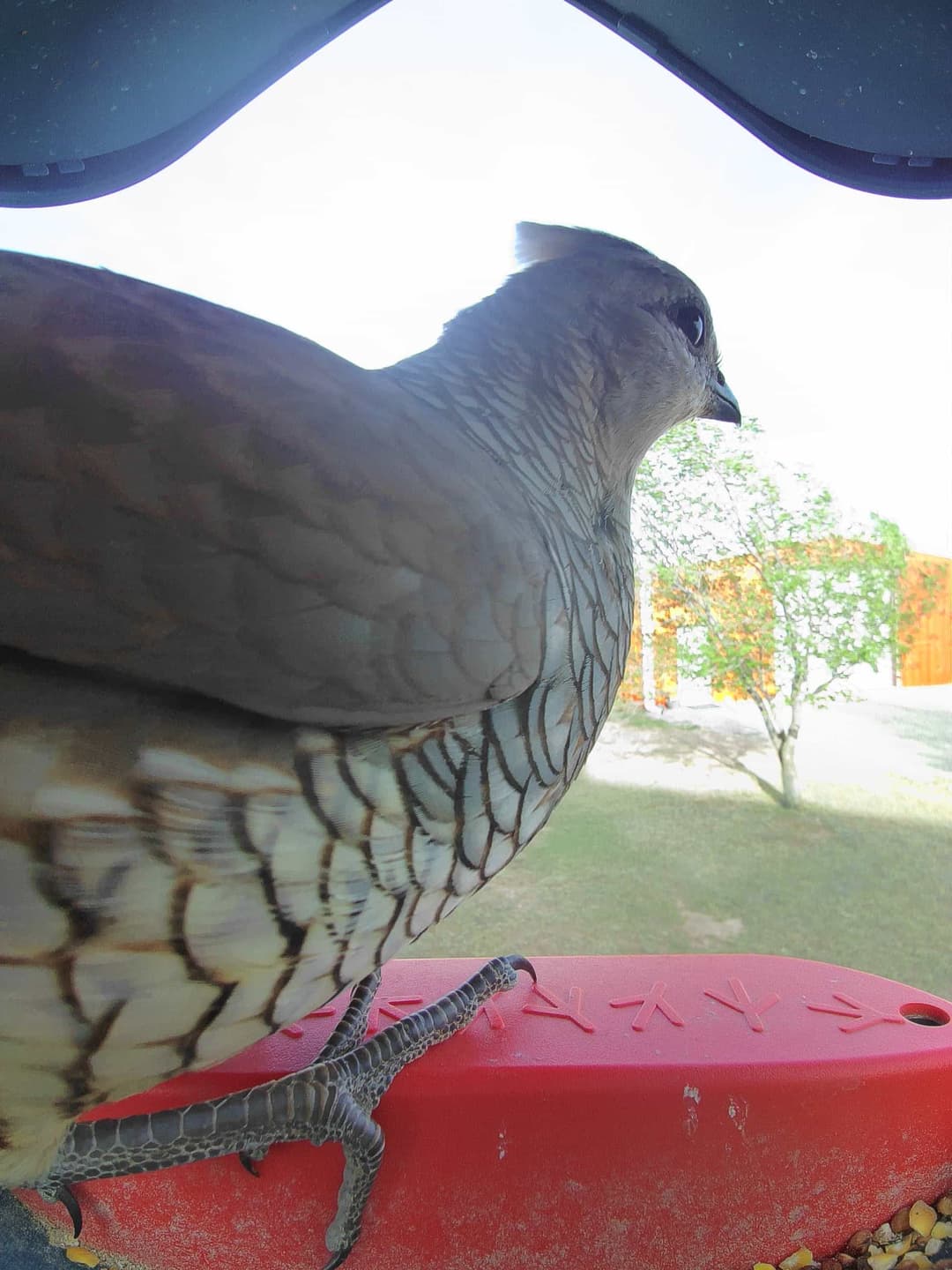
Gambel’s Quail can be distinguished by its black patch below the beak and its vivid color contrast, unlike the Scaled Quail which features a blue-gray color and a scalloped pattern across the back and breast. Additionally, Gambel’s Quail often has a prominent topknot, while Scaled Quail have a crestless, more uniform appearance. Their habitat preferences differ too, with Gambel’s favoring desert scrub.
Breeding and nesting habits of the Gambel's quail
Mating behaviors
During breeding season, male Gambel’s quails perform by giving a clear descending note from high perches. Mated pairs actively explore their territory, likely searching for optimal nesting sites.
Nesting details
Nests are typically located on the ground, often in the shade of a shrub or grass clump, and may sometimes be placed above ground on stumps or old nests of other birds. The female likely builds the nest, creating a shallow depression lined with grass, leaves, and twigs, offering concealment and protection.
Eggs and chick-rearing
Following nest building, the female lays eggs which she incubates. Both parents may play a role in rearing chicks. To attract Gambel’s quails to gardens, create a safe environment with low shrubs and grass clumps, minimizing human and pet disturbances.
What does a Gambel's quail like to eat?
Berries
Flowers
Fruits
Insects
Plants
Seeds
Natural diet
Gambel’s quail have a diet primarily consisting of plant-based foods. They frequently consume seeds, leaves, and berries. In spring, they focus on fresh plant shoots, leaves, and buds. They eat cactus fruits and the berries of mistletoe, hackberry, and other plants when available. Seeds are crucial throughout the year. Adults maintain a mostly vegetarian diet while young birds may consume more insects.
Bird feeders
At bird feeders, Gambel's quail typically consume seeds similar to their natural diet. They are likely attracted to feeders offering a variety of seeds, reflecting their preference for these in their natural habitat.
Attracting gambel’s quail: seeds and feeder types
The Gambel’s quail have a preference for seeds and grains, making the Bird Buddy seeds your best choice. These seeds are carefully selected by birding experts to match the season's requirements. In terms of feeders, ground feeders will work best as Gambel’s quails are ground-dwelling birds. A shallow platform feeder at ground level can be used too. Remember to place feeders near cover to allow birds to feel safe while they eat.
Fun tricks to encourage gambel’s quail visits
If you provide a small water source, like a shallow bird bath or a pet water bowl, you can attract these desert-dwelling birds who appreciate a reliable water source. Quails love taking dust baths, so another fun trick to lure them into your yard is to set up a small sandy or dusty area. They might just end up staying for a 'sing-along', as their calls can make entertaining chorus sounds. Keep your yard quiet and safe, free of predators, to make it a hospitable haven for the quails.
Where can you find Gambel’s quails?

Primary habitat
Gambel’s quail favors Sonoran desert with shrubs, low trees, and cactus, frequently around mesquite thickets. It prefers open ground near water sources and avoids grassland with no shrubs.
Additional range
While mainly found in very dry desert and canyon regions, Gambel’s quail can be common in open suburban areas with undeveloped land.
Do they migrate?
The Gambel’s quail is a permanent resident throughout its range, meaning it does not migrate and stays in the same general area all year round. This bird species is commonly found in the arid regions of the southwestern United States and parts of Mexico. It typically inhabits areas with desert scrub, mesquite, and thorny bushes, relying on these environments for food, cover, and nesting sites. As a non-migratory bird, the Gambel’s quail remains within its established territory across seasons, adapting to local conditions rather than embarking on seasonal migrations. It remains active throughout the year, foraging for seeds, leaves, and insects. Since it does not migrate, there are no distinct routes, timing, or key locations akin to migratory birds. The Gambel’s quail’s ability to thrive within limited geographic areas is supported by its social structure and behavior, including living in coveys, which enhances survival in stable habitats. Thus, understanding the Gambel’s quail involves studying its territoriality and adaptation strategies rather than migratory patterns.
What is the role of Gambel’s quails in nature and how to protect them?
Conservation status
The Gambel’s quail is considered common, with a stable overall population despite local fluctuations linked to dry years that impact reproduction. Key conservation efforts focus on habitat preservation, particularly in arid regions where water scarcity poses a significant threat. Conservationists aim to maintain stable populations by addressing these environmental challenges and ensuring sustainable habitats. While not currently endangered, ongoing monitoring and habitat management are essential to mitigate the effects of drought and support population stability.
Ecological role of Gambel’s quails
Its role in the ecosystem
The Gambel’s quail, a vegetarian creature, contributes significantly to the ecosystem. Mainly, its diet includes fresh plant shoots, leaves, buds, and seeds, helping to control the growth of certain plants. In the abundance of food supply, they can breed twice a year, creating more diversity in the bird population. Additionally, the consumption of berries, such as that of mistletoe and hackberry, leads to seed dispersal. After digestion, their droppings contain undigested seeds, which, when excreted, helps in the propagation of these plants. While they dismiss many insects, young birds may consume more, thus contributing to pest control. Lastly, their nesting behavior can help with soil aeration. Nests created on grounds involve the digging of shallow depressions, which can lead to increased soil permeability and enhanced water infiltration.
How to help protect Gambel’s quails
Preservation tips
Habitat preservation strategies
Support Gambel’s quail conservation through protection of their natural habitats. These include dry, arid lands often with cacti, especially in southwestern parts of the United States. Prevent habitat destruction by discouraging urban development and farming expansion in these areas. Actively promote the replanting of native vegetation to restore habitats that have been altered.
Community science initiatives
Involve local communities in science-based initiatives to conserve the Gambel’s quail. Set up community-led bird watching groups to monitor populations and report any significant changes. Citizens can also participate in data collection, providing crucial information to conservation scientists. Advocate for educational programs in schools and community centres to promote understanding and appreciation for the Gambel’s quail and its place in the ecosystem.