
Dark-Eyed Junco
Dark-Eyed Junco
Also known as: Snowbird
Junco hyemalis


Quick Identification guide
Quick Identification guide
- •
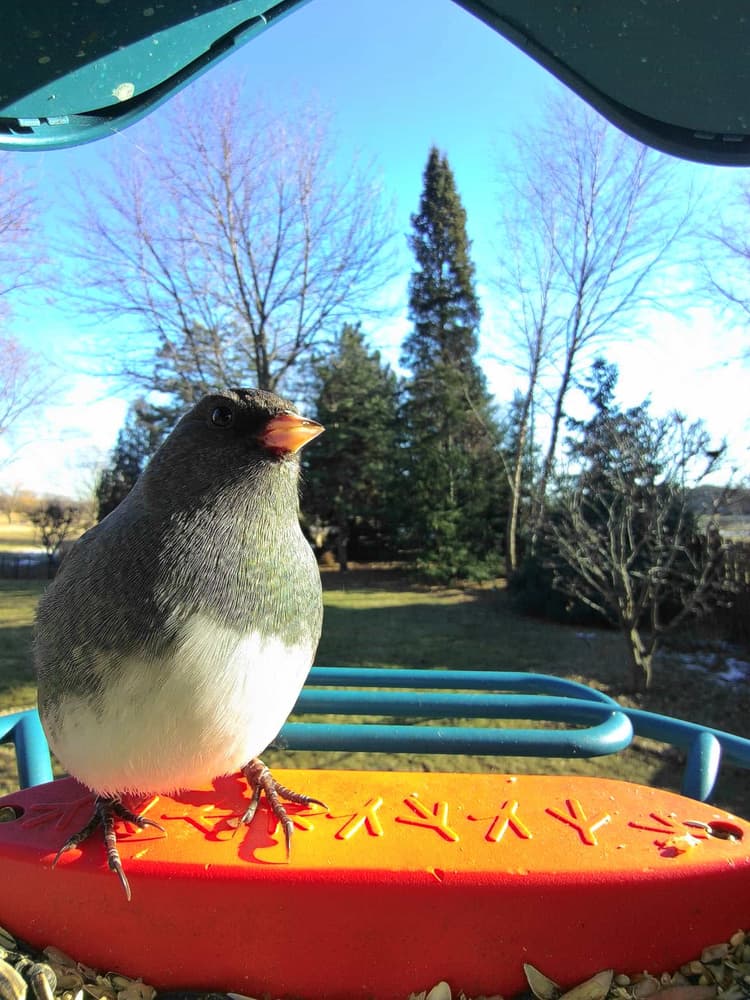
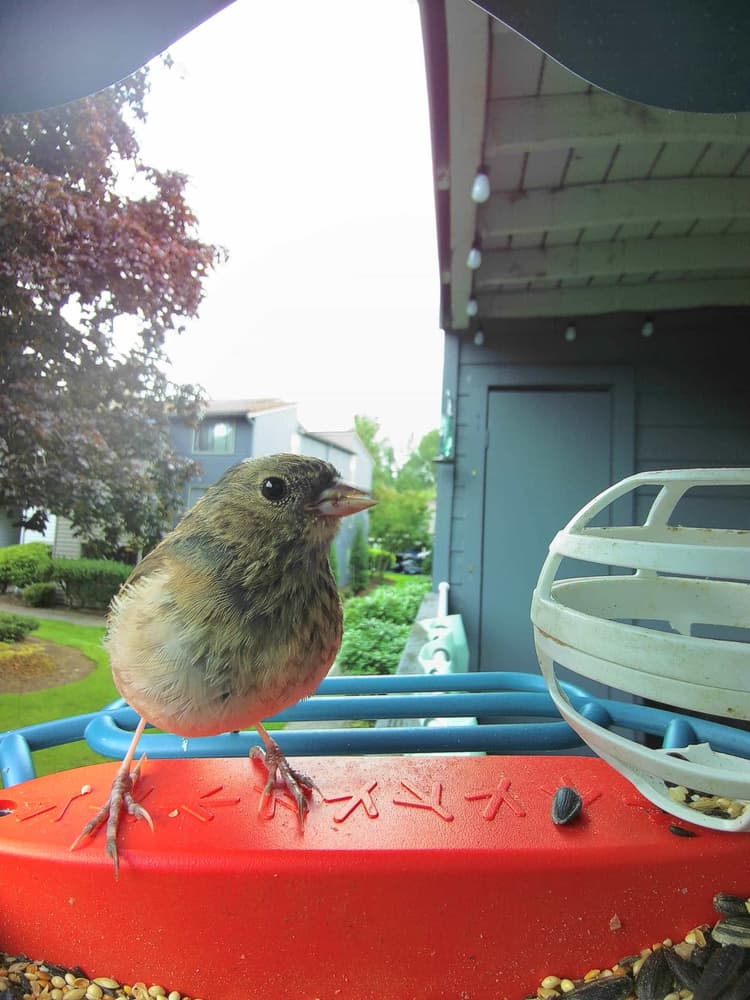
Features a round head and plump body with a distinct, uniform shape
- •
Boasts dark eyes and a short, stout, pinkish beak that stands out
- •
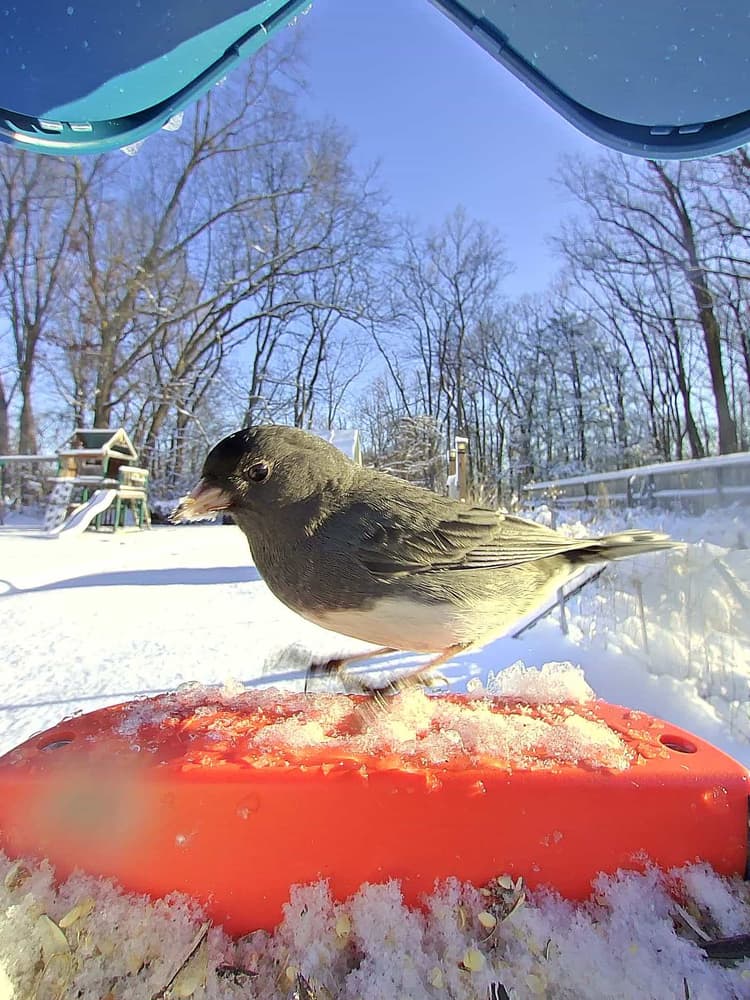
Exhibits slate-gray plumage on the body with a contrasting white belly and undertail
What does a dark-eyed junco sound like?
The dark-eyed junco vocalizes with a ringing metallic trill on a consistent pitch, typically utilizing a call pattern that is both falling and flat. It often emits a 'tsick' or 'tchet' sound to maintain contact with its flock, even when members are spread out. A soft buzzy trill is also common during flight. The junco’s calls can be categorized as both chirps or chips and trills.


Description
Did you know that dark-eyed juncos grow their own jackets to protect them from the snow? In winter, their coat can be up to 30% heavier! Sounds like an awesome superpower to have in winter, right? They are here for a good time and a long time and can live to be 11 years old. For reference, the average lifespan of a bird that survives being a fledging is about three years.
The dark-eyed junco can weigh between 18to22grams and be from14.5to16.5centimeters tall.
The dark-eyed junco typically lives around 11 years but can reach up to 13 years in the wild - longer than many small bird species. This lifespan is comparable to the related white-throated sparrow, which lives up to 14 years. However, it's longer than the average lifespan of other relatives such as the song sparrow, which typically lives 3-7 years.
Did you know?
Most popular questions about dark-eyed junco
How to recognise a dark-eyed junco?
General appearance
Dark-eyed Juncos are variable in size, ranging from 5-6 1/4 inches (13-16 centimeters). They have white outer tail feathers. They typically have a solid gray hood, sides, and back. Some subspecies like 'Pink-sided Junco' and 'White-winged Junco' also display additional color variations like blue, pink, and brown. Certain variations like 'Red-backed' and 'Gray-headed' have a distinctive reddish patch on the back.
Male vs female
Males and females differ mostly in color and slightly in size. Generally, females and first-year birds are slightly browner than adult males. A male 'Oregon Junco' sports a solid black or slate hood with a chestnut back and rusty sides, while females are paler with a gray hood. 'Pink-sided' males are a bit larger than most juncos with blue-gray hood, pink sides, and brown back.
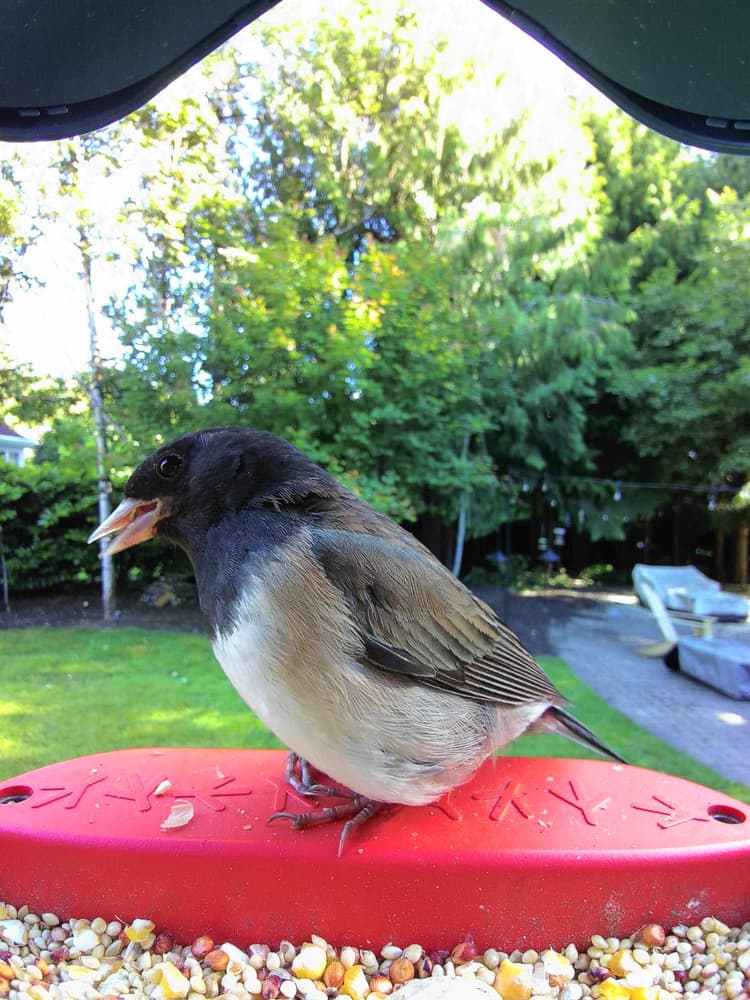
Male Dark-Eyed Junco
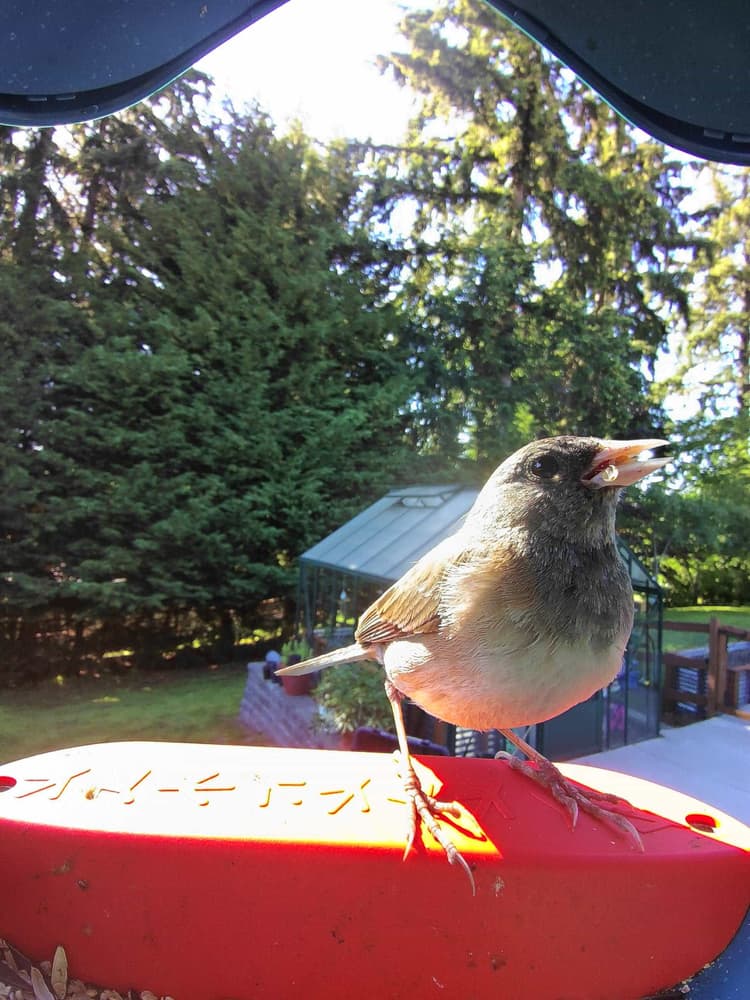
Female Dark-Eyed Junco
Juvenile
Juveniles, irrespective of their type, are streaky brown initially. With each molting period, they slowly attain the coloration of the adults of their specific type.
Often mistaken for
Spotted Towhee vs Dark-Eyed Junco
Dark-Eyed Junco and Spotted Towhee can be confused due to similar sizes and coloration. However, Juncos are generally smaller, with a more delicate structure. They have a slate gray body and a distinct white belly, while Spotted Towhees have a black upper body with white spots and a reddish-orange side. Juncos have a rounded head and shorter tail compared to the longer, fan-shaped tail of the Towhee. Listen for their distinctive calls: Juncos have a soft, musical trill, while Towhees have a more raspy 'chewink'.

Black Phoebe vs Dark-Eyed Junco
Dark-Eyed Junco and Black Phoebe can look similar at a distance due to their dark upper bodies, but Juncos have a more uniform slate gray color, while Black Phoebes have a distinct black color with white underparts. Phoebes have a slightly upright posture and are more commonly seen near water. Juncos often have a hopping ground-feeding behavior, while Phoebes are known for their flycatcher-like behavior, darting out from perches to catch insects. Listen for the Phoebe's clear, sharp 'tsee' call, which contrasts with the Junco's melodic trill.

Breeding and nesting habits of the dark-eyed junco
Mating behaviors
Male dark-eyed juncos sing from high perches to establish and defend their nesting territory. During courtship, both the male and female may perform a hopping display on the ground, drooping their wings and spreading their tails to reveal white outer feathers. The male often accompanies this display with a soft song.
Nesting details
Nests are usually located on the ground, concealed under grass, logs, rocks, exposed roots, or in shallow dirt bank holes. Occasionally, they may be found in shrubs, trees, or building ledges, usually not more than 10 feet above ground. The nest, mostly constructed by the female, is an open cup made of grass, weeds, and leaves, lined with fine grass and sometimes hair or feathers.
Eggs and chick-rearing
The female lays eggs in the well-hidden nest and primarily takes care of incubation. Once hatched, both parents share duties in feeding and caring for the chicks. To attract juncos for nesting in gardens, provide dense vegetation like shrubs and tall grass, ensuring spots are sheltered and hidden.
What does a dark-eyed junco like to eat?
Fruits
Insects
Seeds
Natural diet
The dark-eyed junco mainly consumes seeds and insects. In the summer, nearly half of its diet consists of insects, such as caterpillars, beetles, grasshoppers, true bugs, and spiders. During the winter, the bird feeds heavily on seeds from various weeds and grasses and also includes some berries in its diet. The young are fed primarily on insects, indicating a high protein requirement for growth.
Bird feeders
At bird feeders, dark-eyed juncos are commonly attracted to seeds. They often eat millet, cracked corn, and sunflower seeds. Their adaptability to various seed types makes them frequent visitors to feeders especially designed for ground-feeding birds.
The perfect feed for dark-eyed juncos
Providing the right type of feed is an excellent way to attract Dark-eyed Juncos to your yard. These little birds are predominantly ground feeders, they especially enjoy Bird Buddy seeds as they are expertly selected for the season. A variety of seeds including millet, sunflower seeds and cracked corn are likely to bring these lovely birds to your feeder.
Feeder types for dark-eyed juncos
Dark-eyed Juncos prefer to feed on the ground or low lying feeders. Place a tray or platform feeder closer to the ground. They also prefer a somewhat open space, so avoid positioning your feeder inside dense foliage or shrubbery. Broken or spilled seeds underneath the feeder are definitely a bonus point.
Creating a junco-friendly environment
Apart from feeders, creating a 'bird-friendly' environment could also help attract more of these dark-eyed feathered friends. Providing a clean source of water for drinking and bathing, planting native plants, and minimizing the use of chemicals can help create a healthy environment for the birds.
Fun tricks to keep them around
One of the fun ways to keep Dark-eyed Juncos coming back is to create a 'birdscape' with dust bathing areas and suitable nesting sites. Gentle sounds, like wind-chimes, can also attract these birds. Besides, maintaining a consistent feeding schedule and ensuring feeders are always filled will definitely encourage them to stay.
Where can you find dark-eyed juncos?
Based on Birdbuddy sighting data. The heatmap shows where Birdbuddy users have spotted this species.
Embed this map
This map shows the full native range based on scientific range data.
Primary habitat
The dark-eyed junco breeds in coniferous or mixed woodlands, especially in open areas like edges or clearings.
Additional range
In winter, it occupies semi-open habitats including woodland edges, thickets, brushy places, and even suburban areas.
Do they migrate?
The dark-eyed junco is primarily a migratory bird, though its migratory patterns can vary based on geographical location. Most populations undertake seasonal migrations, but there are exceptions. Juncos residing in the southwestern mountains and along the southern Pacific Coast may remain in these areas year-round as permanent residents. During migration, dark-eyed juncos typically move south for the winter and north to breed in the summer. Their breeding range stretches across Canada and into parts of Alaska and the northeastern United States. As winter approaches, they migrate to the southern United States, reaching as far south as northern Mexico. Interestingly, there is a slight gender difference in the migration pattern: males tend to winter slightly farther north than females. This may be due to males' need to return earlier to breeding grounds in the spring to establish territories. Key locations during migration include the central and eastern United States, where large flocks can be seen stopping over in forests, fields, and gardens. Overall, the dark-eyed junco's flexible migratory behavior allows it to adapt to various environmental conditions, ensuring survival across its extensive range.
What is the role of dark-eyed juncos in nature and how to protect them?
Conservation status
The dark-eyed junco is considered "abundant and widespread," indicating it is common and not currently at risk of becoming vulnerable or endangered. This songbird thrives across various North American habitats, benefiting from its adaptability. While generally not facing severe threats, habitat destruction and climate change could impact some populations. Key conservation efforts focus on habitat preservation and monitoring populations to ensure early detection of potential declines. Overall, the species remains stable, but ongoing efforts are essential to maintain its robust status.
Ecological role of dark-eyed juncos
Its role in the ecosystem
The Dark-eyed Junco plays a significant role in the ecosystem. As it feeds on various insects including caterpillars, beetles, grasshoppers, true bugs, and spiders, it acts as an effective natural pest control, reducing the number of these insects and maintaining a balanced ecosystem. Furthermore, the junco's diet also comprises seeds of weeds and grasses, playing a crucial role in seed dispersion. This contributes to the propagation of these plant species, particularly in the winter when the junco feeds heavily on them. Its habitation habits, such as nesting on the ground under overhanging grass or in a shallow hole in a dirt bank, also contribute to soil aeration which is beneficial for the overall health of the soil ecosystem. As both parents feed the nestlings, they also act as a food distributor within their habitat. Thus, it can be inferred that the Dark-eyed Junco helps in maintaining ecological balance through pest control, seed dispersal, soil aeration and food distribution.
How to help protect dark-eyed juncos
Preservation tips
Habitat preservation strategies
Support the conservation of the dark-eyed junco through adopting habitat preservation strategies. Mainly, protect their natural habitats such as coniferous and mixed forests, especially during the breeding season. Limit deforestation and promote reforestation in previously deforested areas. Advocate for policies that restrict harmful agricultural practices affecting these bird habitats.
Community science initiatives
Engage the local community in science initiatives aimed at preserving the dark-eyed junco. Encourage citizen participation in bird watching activities to monitor the junco population and report sightings to relevant wildlife authorities. Initiate educational programs to create awareness about the importance of the junco and how to protect it. Back projects researching on the dark-eyed junco’s habits, population trends, and threats to provide data for making effective conservation decisions.