
Chestnut Munia
Chestnut Munia
Also known as: Black-Headed Munia
Lonchura atricapilla
Quick Identification guide
Quick Identification guide
- •
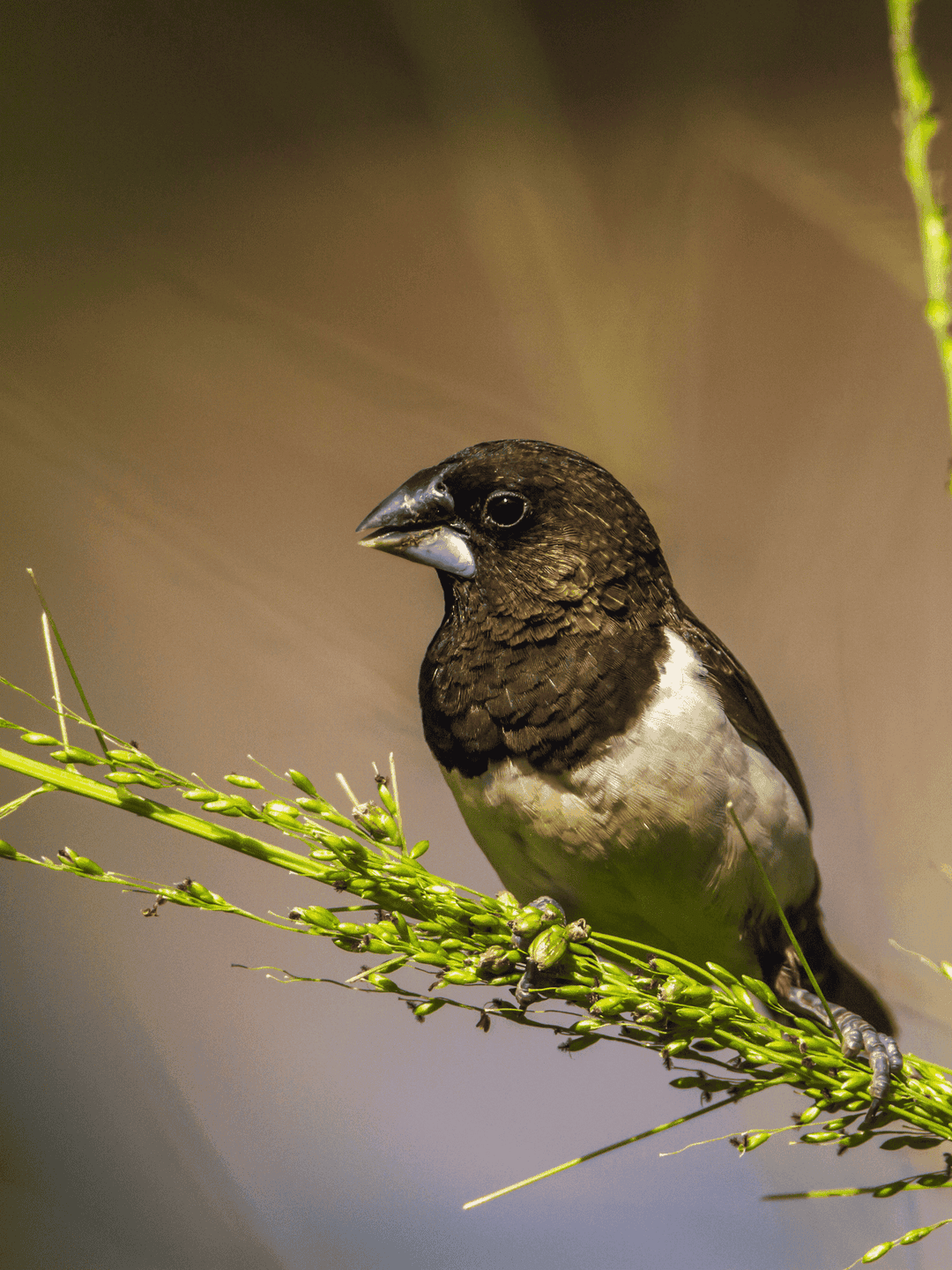
Features a distinct black head and upper breast contrasting sharply with its body colors
- •
Boasts rich chestnut brown plumage covering the majority of the body, creating a warm appearance
- •
Possesses a short, thick conical beak ideal for seed eating, along with a stout body structure
What does a chestnut munia sound like?
The Chestnut Munia, a small passerine bird, is known for its soft and subtle vocalizations. It typically produces a series of light, metallic "tik-tik" or "chip-chip" calls, which serve as contact or alarm alerts among flocks. Its song is generally a gentle, melodic series of short notes delivered in a rhythmic sequence. These vocal patterns help maintain social cohesion and coordination within groups. The Chestnut Munia's calls are not as elaborate as some other finch species but serve essential communication functions in their natural habitats.
Description
Did you know these soft-spoken birds were the national bird of the Philippines until 1995, when they ceded the spot to the Philippine eagle? These little guys are quite sociable! Alone time? Overrated. At least that's what they’d probably say, since they spend most of their time in flocks.
The chestnut munia can weigh between 10to16grams and be from11to12centimeters tall.
The Chestnut Munia typically has a lifespan of 6-8 years in the wild. This is similar to the closely related Scaly-breasted Munia, which also lives around 6-8 years. In captivity, both species may live slightly longer due to controlled conditions and absence of predators. Compared to the Zebra Finch, another small passerine, which lives 5-9 years, the Chestnut Munia's lifespan is comparable. Factors such as diet, environment, and health management significantly influence lifespan in both wild and captive settings.
Did you know?
Most popular questions about chestnut munia
How to recognise a chestnut munia?
General appearance
The Chestnut Munia, known scientifically as Lonchura atricapilla, is a small passerine bird characterized by its striking coloration. It has a rich chestnut brown body that extends from the back to the tail, with a contrasting deep black head and throat framing its face. This uniform and bold coloration makes it easier to spot in open fields or grassy marshlands where it commonly lives. Its beak is thick, short, and conical, typically of a light blue-gray hue, ideal for seed consumption.
Male vs female
In the Chestnut Munia, both males and females have similar plumage, making them difficult to differentiate based solely on appearance. Both genders share the same chestnut body and black head and throat. However, subtle differences can sometimes be observed, such as a slightly more robust build in males compared to females. These differences are not always pronounced, and often, behavior during breeding seasons helps in identifying the sexes.
Juvenile
Juvenile Chestnut Munias are quite different from adults in appearance. Young birds are predominantly a plain, dull brown with paler undersides, lacking the distinctive black head and chestnut body seen in adults. These muted colors offer juveniles better camouflage from predators. As they mature, their plumage transitions into the recognizable adult coloration over several months.
Often mistaken for
White-rumped Munia vs Chestnut Munia
The White-rumped Munia is similar in size to the Chestnut Munia but has a lighter overall coloration with a distinctive white rump patch, absent in the Chestnut Munia. Additionally, the Chestnut Munia features a darker head and richer chestnut body compared to the White-rumped Munia's more uniformly brown tones.
Scaly-breasted Munia vs Chestnut Munia
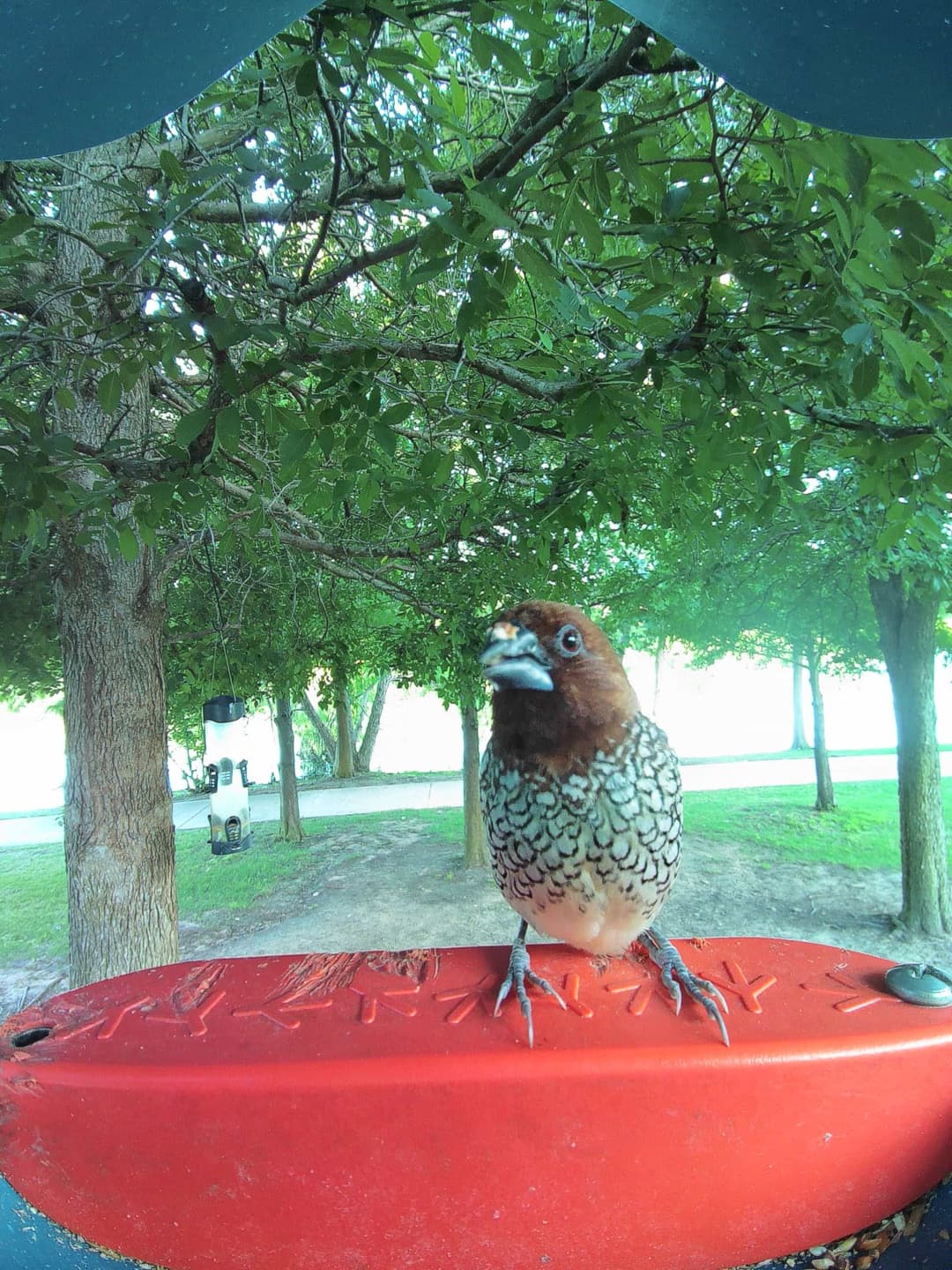
While the Scaly-breasted Munia shares a similar shape and size, it can be identified by its distinctive scaly pattern on the breast, unlike the solid chestnut of the Chestnut Munia. This munia also lacks the dark head coloration characteristic of the Chestnut Munia.
Breeding and nesting habits of the chestnut munia
Mating behaviors
The Chestnut Munia exhibits a lively courtship display. Males showcase their vibrant plumage and perform hopping dances while singing melodic tunes to attract females. These birds often engage in synchronized behaviors, reinforcing pair bonds within flocks. Breeding patterns are influenced by seasonal changes, with most activity occurring during wetter months as resources are abundant.
Nesting details
Chestnut Munias prefer to build nests in dense vegetation in gardens, marshes, or fields. They utilize a variety of materials, such as grass, leaves, and twigs, to craft a globe-shaped structure often concealed within thick foliage. Creating a suitable habitat involves cultivating native plants that provide cover and ensuring a supply of nesting materials.
Eggs and chick-rearing
Typically, a female Chestnut Munia lays three to six eggs per clutch. The incubation period ranges from 11 to 14 days, with both parents sharing duties. Once hatched, the chicks are altricial, requiring considerable care, including regular feeding and warmth. Within 21 to 25 days, the young become fledglings, honing their flying skills under the watchful eyes of their parents.
What does a chestnut munia like to eat?
Seeds
Natural Diet
In the wild, the Chestnut Munia primarily feeds on a variety of seeds, especially those from grasses. This hearty diet helps sustain them throughout the year. During the breeding season, which coincides with periods of rainfall, their diet may expand to include small insects and other invertebrates, providing the additional protein required for raising young. The Chestnut Munia also consumes grains and occasionally indulges in rice paddies, foraging in both cultivated and natural settings where seeds and grains are plentiful. While fruits and nectar are not typical components of their diet, these birds remain opportunistic feeders, adapting their food intake based on availability.
Bird Feeders
At bird feeders, the Chestnut Munia is likely to be attracted to seed mixes that prominently feature smaller grains and seeds. Millet and canary seeds are particular favorites, replicating the texture and size of their natural diet. Sunflower hearts and other oil seeds might also be accepted, though preferences can vary geographically and individually. Providing a shallow tray, preferably protected from larger birds, ensures these petite seed-eaters can comfortably access food. Given their dietary habits in the wild, these Munias are less likely to be interested in suet, fruits, or nectar offerings, so focusing on high-quality seed mixes will yield the most success in attracting them to feeders.
Welcome chestnut munias with the perfect feeder
To attract Chestnut Munias to your backyard, consider using tube feeders or tray feeders with small perches. These feeders allow the birds easy access to food while keeping larger birds at bay. The compact size of these feeders makes them ideal for accommodating multiple small birds, providing a safe dining space for your avian visitors.
Delight chestnut munias with their favorite fare
Chestnut Munias have a penchant for seeds and grains. Offer them Bird Buddy seeds, which are specially formulated to attract small seed-eating birds. High-quality millet, canary, and grass seeds will be particularly enticing. By providing a consistent supply of these nutritious snacks, you'll transform your yard into a sought-after spot for Chestnut Munias.
Position feeders at prime heights for munia marvels
Feeder placement significantly impacts bird attraction. Set feeders at 5-7 feet above the ground. This height keeps them safe from ground predators like cats, while still being within easy reach for the Munias. Ensure they are near shrubs or small trees, offering birds a quick escape and allowing them to survey their surroundings.
Embrace the seasons for munia mania
Chestnut Munias are adaptable to various climates. However, they are more active during the warmer months when food is plentiful. Adjust feeding frequency based on seasonal availability of natural food sources. Regularly clean feeders and replace old seeds to maintain a healthy feeding environment as seasons change.
Enhance your habitat and capture munia hearts
Enhance your garden by incorporating water sources such as bird baths, which are essential for helping these birds stay hydrated. Consider creating natural habitats with similar elements to their native environments, such as tall grasses and dense vegetation. This invites them to nest nearby and ensures they'll return to your backyard consistently.
Where can you find chestnut munias?

Chestnut munia habitat
Primary habitat. The Chestnut Munia, also known as Lonchura atricapilla, predominantly inhabits grasslands, agricultural fields, and wetlands within its typical range extending across South and Southeast Asia, including India, Sri Lanka, and the Malay Archipelago. This bird species thrives in regions characterized by warm tropical climates, abundant in grasses and reeds that facilitate their nesting and feeding habits. Additional range. Beyond their primary habitats, the Chestnut Munia demonstrates adaptability by occupying unexpected environments such as suburban gardens and coastal mangroves. Their ability to thrive in urban and semi-urban settings highlights their ecological versatility in varying environmental conditions.
Do they migrate?
The Chestnut Munia (Lonchura atricapilla), also known as the Black-headed Munia, is primarily a resident bird, meaning it does not typically engage in long-distance migrations. Native to South and Southeast Asia, including countries like India, Bangladesh, the Philippines, Indonesia, and Malaysia, the species generally remains in its local habitats year-round. Chestnut Munias are known for their adaptability to various environments, such as grasslands, wetlands, and agricultural fields, which provide a constant food supply throughout the year. They primarily feed on seeds, especially of grasses, aligning their movement patterns more with food availability and local environmental conditions than with seasonal migration. While they do not migrate, Chestnut Munias may engage in minor local movements or dispersal, especially after the breeding season, which allows them to exploit different areas within their range. These movements are less predictable and not on the scale of true migratory species. Therefore, while the Chestnut Munia is largely sedentary, it may exhibit some flexibility in its range depending on local conditions.
What is the role of chestnut munias in nature and how to protect them?
Conservation status
The Chestnut Munia is classified as a species of "Least Concern" by the IUCN, indicating it is relatively common and not currently endangered. This bird thrives in a variety of habitats including grasslands and agricultural areas across South and Southeast Asia. Key conservation concerns involve habitat loss due to agricultural expansion and potential trapping for the pet trade. Despite these threats, the species' wide distribution and large population help mitigate immediate risks. Ongoing habitat preservation and monitoring of trade practices are crucial to maintaining stable populations.
Ecological role of chestnut munias
Its role in the ecosystem
The Chestnut Munia (Lonchura atricapilla) plays a significant ecological role in maintaining the balance of its natural habitats. As a granivorous bird, it primarily feeds on seeds, playing a crucial role in seed dispersal. By consuming seeds and excreting them across different areas, the Chestnut Munia aids in plant propagation, promoting plant diversity and supporting the health of plant ecosystems. This seed distribution also encourages the growth of various plant species, contributing to habitat heterogeneity. Though predominantly a seed-eater, the Chestnut Munia occasionally consumes small insects, providing a degree of pest control. This can help regulate insect populations, reducing the risk of overpopulation and potential damage to crops and vegetation. Additionally, this bird contributes to nutrient cycling through its excretion, which enriches the soil with organic matter, promoting further plant growth and habitat fertility. Furthermore, the Chestnut Munia's interactions with other species, such as its role as a prey species for predators, help maintain ecological equilibrium within its habitat. Though not directly involved in pollination, the species contributes indirectly by supporting the growth of plant populations that may, in turn, provide resources for pollinators like bees and butterflies.
How to help protect chestnut munias
Preservation tips
Habitat preservation strategies
To support the conservation of the Chestnut Munia, it is crucial to focus on safeguarding their natural habitats. Efforts should be made to protect wetlands and grasslands, which are vital for their survival. Supporting organizations that focus on ecosystem restoration and species conservation is an effective approach. These organizations often work on projects that rehabilitate degraded habitats, ensuring food availability and nesting sites for the Munia. Participating in local conservation lobbying groups can further help raise awareness about the importance of land protection. Governments and NGOs can collaborate on creating protected areas, particularly within the Munia's natural range, to mitigate habitat loss due to urbanization and agriculture. Encouraging sustainable farming practices can also play a significant role in habitat preservation, ensuring that their ecosystems are not disrupted by agricultural expansion.
Community science initiatives
Individuals and communities can contribute to Chestnut Munia conservation through community science initiatives. Participating in bird monitoring programs and surveys helps gather essential data on population trends and distribution, providing valuable insights for conservation efforts. Joining or forming local birdwatching groups can increase awareness and appreciation of the species, promoting its conservation. Using online platforms to report Munia sightings contributes to citizen science databases that researchers utilize in conservation planning. Educational outreach programs in schools and communities can foster local engagement, encouraging people to participate in habitat restoration activities and species conservation campaigns. By integrating these strategies, individuals can play an active role in supporting the conservation of the Chestnut Munia, ensuring its survival for future generations.