
Cactus Wren
Cactus Wren
Campylorhynchus brunneicapillus


Quick Identification guide
Quick Identification guide
- •
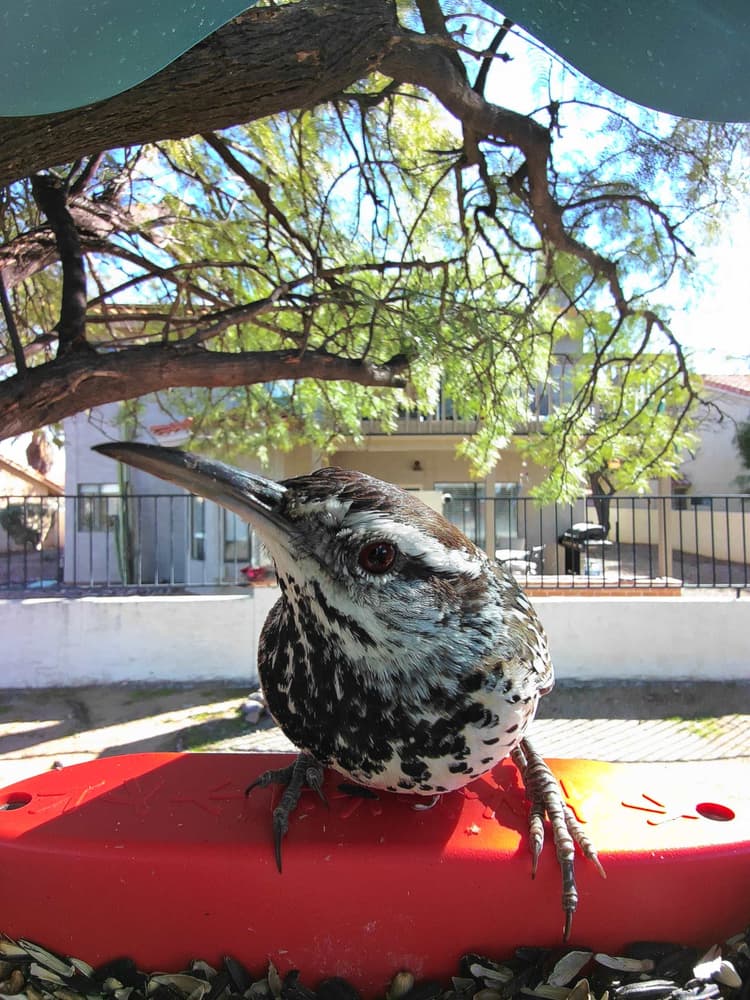
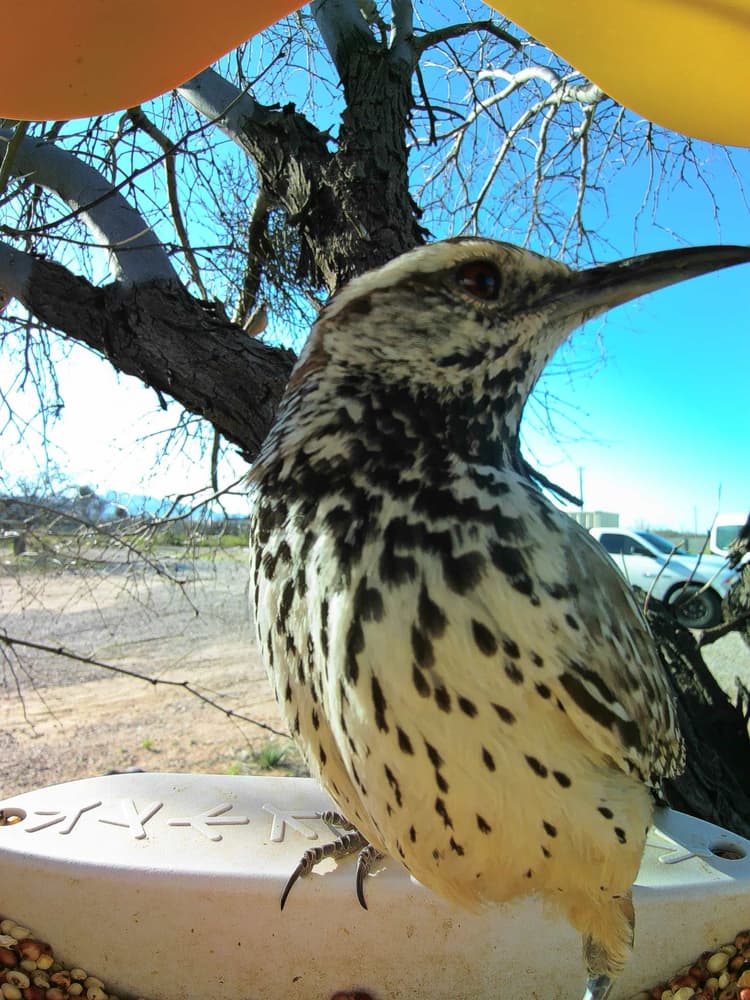
Features a boldly patterned head with a white stripe over the eye, contrasting against a brown cap
- •
Displays a heavy, speckled chest with white underparts finely streaked with dark lines
- •
Its stout, slightly curved beak and long, rounded tail aid in identification, along with barred wings and tail
What does a cactus wren sound like?
The cactus wren produces rhythmic, mechanical vocalizations, often represented as repeated "chug-chug-chug" sounds. The bird exhibits various call types such as buzz-like, chirps or chips, and raucous calls. Its vocal pattern typically remains flat throughout these calls and songs.


Description
Did you know cactus wrens don't drink? They don't need to; they get all the liquids they need from fruit and juicy insects. They are the real-estate moguls of bird world, building multiple nests and using them to roost even in non-breeding season. You could say nest-building is in this bird's blood, as chicks imitate their parents and begin picking up nest-building materials at just 12 days old!
The cactus wren can weigh between 32to47grams and be from18to22centimeters tall.
The cactus wren typically lives up to 10 years. When compared to related species, it has a relatively long lifespan; for instance, the house wren usually lives up to 7 years, while the marsh wren lives for up to 6 years. Therefore, the cactus wren outlives many of its relatives.
Did you know?
Most popular questions about cactus wren
How to recognise a cactus wren?
General appearance
The cactus wren is a desert bird with a distinctive appearance. It is more boldly barred, striped, and spotted than other desert birds, with a sharp white eyebrow for contrast. The bird is predominantly black, brown, tan, and white. It measures roughly 8 1/4 inches (21 cm), making it about the size of a sparrow or a robin. It has rounded wings and a long tail that could be either rounded or wedge-shaped.
Male vs female
There isn't any specific information provided about Male and Female differentiation or defining characteristics in terms of appearance. Any difference in size, color, or markings isn't specified.
Juvenile
Juvenile cactus wrens have less spotting on their chests compared to adults. While it isn't specified, they might also be smaller in size than adults. More specific attributes or variations in coloration and markings from adult birds are not provided.
Often mistaken for
Rock Wren vs Cactus Wren
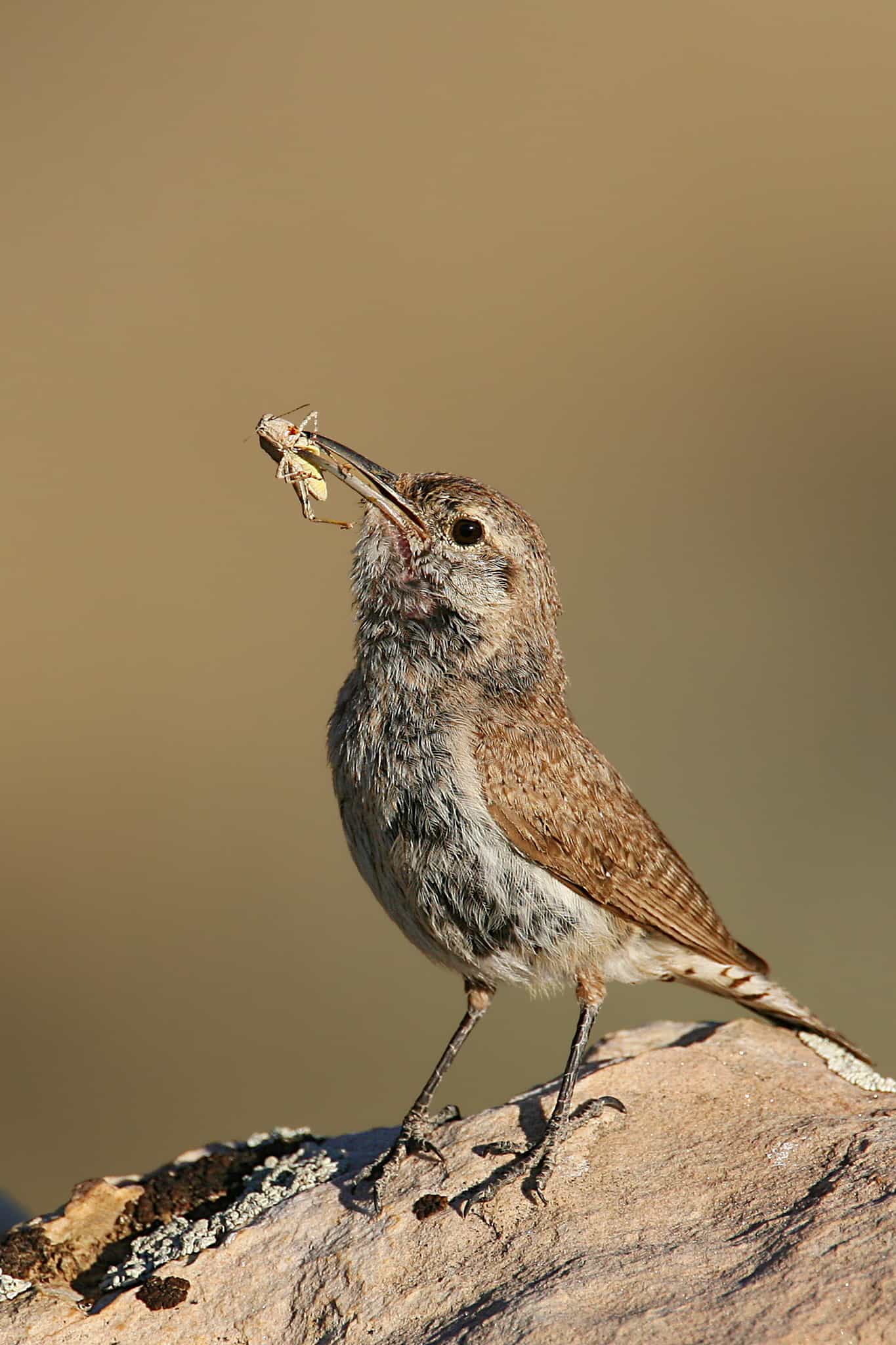
Cactus Wren is larger than Rock Wren and has a distinctive white stripe over the eye. Rock Wren has a more muted brown coloration with a less bold pattern. Cactus Wrens are often seen in arid, open areas around cacti, while Rock Wrens prefer rocky terrains.
Bewick’s Wren vs Cactus Wren
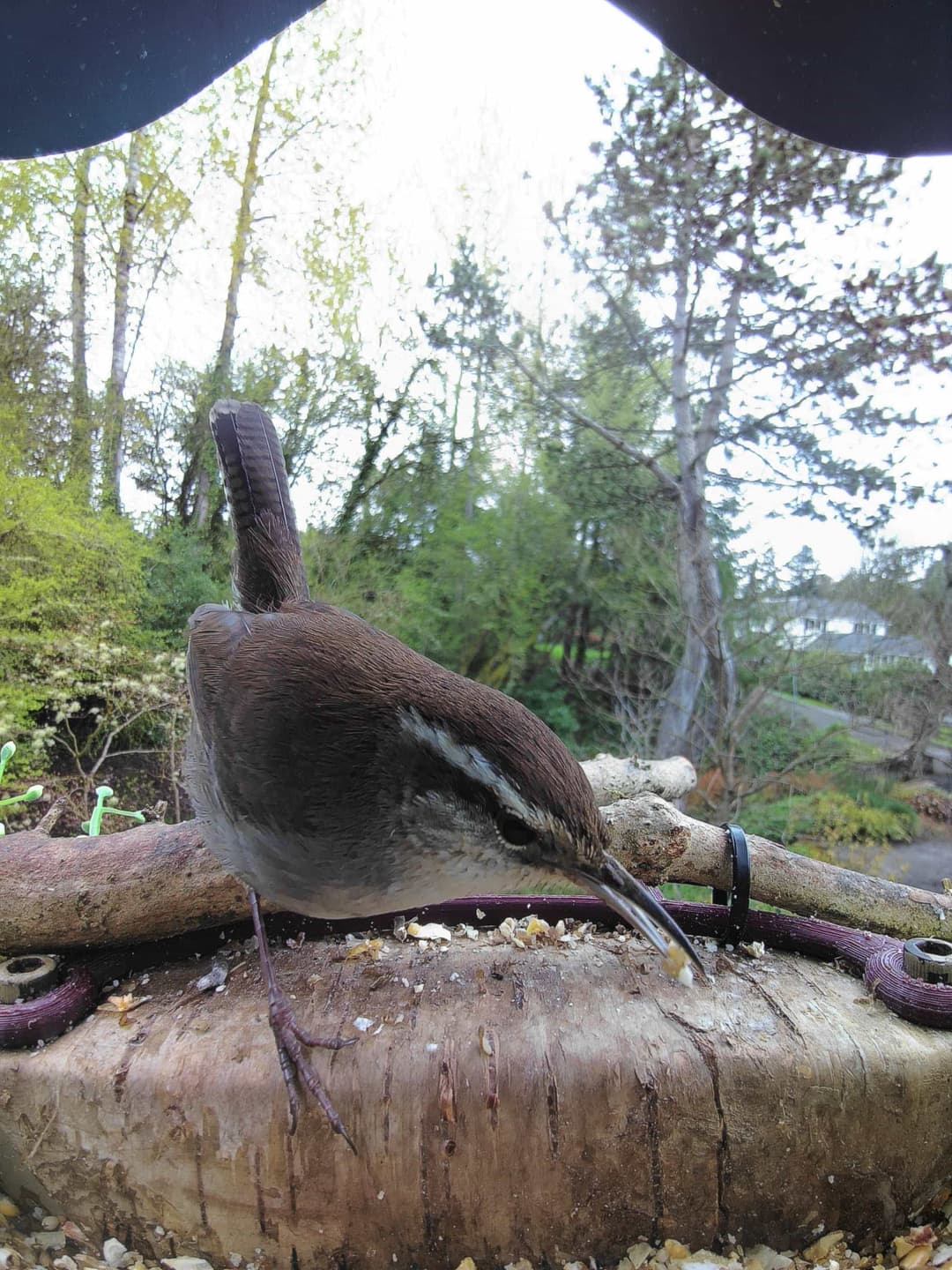
Cactus Wren is larger with a heavier build compared to Bewick’s Wren. It has a spotted chest and a more pronounced white eye stripe. Bewick’s Wren is more slender with a longer tail, typically seen in scrubby environments, whereas Cactus Wren favors desert habitats.
Breeding and nesting habits of the cactus wren
Mating behaviors
Cactus wrens engage in elaborate courtship displays which include males singing and performing acrobatic flights to attract females. These behaviors often occur during the breeding season in spring.
Nesting details
Cactus wrens build large, dome-shaped nests often located in cacti like cholla or saguaro, but also in thorny shrubs. They use grass, twigs, and plant fibers to construct their nests. These locations provide protection against predators.
Eggs and chick-rearing
Females lay 2 to 4 eggs, which are incubated for about 16 days. Both parents participate in feeding the chicks. They feed the nestlings a diet rich in insects, ensuring rapid growth. Chicks fledge around 19 to 23 days after hatching.
What does a cactus wren like to eat?
Berries
Fruits
Insects
Seeds
Spiders
Natural diet
The cactus wren primarily feeds on insects, including beetles, ants, wasps, true bugs, grasshoppers, and others. It also consumes spiders occasionally and small lizards. Plant material constitutes up to 20% of its diet, which is higher than other wrens. This includes berries, cactus fruits, seeds, and some nectar.
Bird feeders
At bird feeders, the cactus wren may consume seeds and fruits that are typical offerings. It may be attracted to feeders providing berries, seeds, and nectar alternatives.
Provide a suitable feeding station
To attract Cactus Wren to your yard, install a platform feeder or a bird house. These birds prefer low or medium height feeders with lots of space for them to move around. You can also place these feeders near a brushy or prickly shrub, as Cactus Wrens prefer such environments.
Offer their favorite snacks
Cactus Wrens are omnivorous and love a variety of snacks. You can tempt them with mealworms, small fruits and Bird Buddy seeds. These seeds are expert-selected for the season ensuring you have the best chances of attracting Cactus Wrens.
Provide fresh water
Like all birds, Cactus Wrens need fresh water for drinking and bathing. Provide a shallow bird bath or even a simple dish with fresh water in your yard.
Maintain a cactus-friendly landscape
Creating a desert-like environment preferably with cactus plants can certainly attract Cactus Wrens. They love using cactus plants for nesting.
Play cactus wren songs
Playing Cactus Wren songs in your yard can encourage these birds to drop by and maybe stay for a sing-along. It makes them feel that the environment is safe and friendly.
Where can you find cactus wrens?

Primary habitat
The cactus wren mainly inhabits desert regions abundant with thorny shrubs, cacti, and particularly cholla cactus. It prefers arid, low dry habitats.
Additional range
In addition to deserts, the cactus wren can be found in mesquite brush, towns, and coastal chaparral environments where cactus grows.
Do they migrate?
The cactus wren is a permanent resident, meaning it does not migrate and tends to stay in one place throughout the year. This bird is native to the deserts of the southwestern United States and northern Mexico, specifically inhabiting regions such as the Sonoran and Chihuahuan Deserts. The cactus wren's range includes areas in Arizona, California, Nevada, Utah, New Mexico, Texas, and across the border into Mexico. As a non-migratory species, the cactus wren has adapted to the harsh desert environment. It nests in spiny cacti like cholla or prickly pear, as well as in thorny shrubs and trees, which provide protection from predators. Its ability to thrive in arid conditions is supported by a diet that includes insects, fruits, seeds, and occasionally small reptiles. The cactus wren is well-equipped to conserve water and can obtain much of its moisture from its food. Since the cactus wren does not migrate, it does not have specified routes, timing, or key locations related to migration. It spends its entire life cycle within its established range, breeding and foraging in the same territories year-round.
What is the role of cactus wrens in nature and how to protect them?
Conservation status
The cactus wren's conservation status varies regionally. In its main southwestern range, it remains widespread and abundant, indicating it is common there. However, the population is declining in parts of Texas and is scarce on the coastal slope of southern California, where it may be threatened. Key threats include habitat loss and fragmentation due to urban development and environmental changes. Conservation efforts focus on habitat preservation and restoration to support its populations, particularly in areas where numbers are decreasing. Overall, the cactus wren is not endangered, but it faces localized vulnerabilities.
Ecological role of cactus wrens
Its role in the ecosystem
The ecological significance of the cactus wren is multifaceted. With a diet largely consisting of insects such as beetles, ants, wasps, and grasshoppers, it plays a crucial role in pest control, helping to maintain a balance in the local insect populations, and indirectly contributing to the health of plant species in its ecosystem. The cactus wren also consumes a considerable amount of plant material - including berries, cactus fruits, seeds, and even nectar - which contributes to seed dispersal, another vital ecological function. In consuming and subsequently excreting seeds, this bird helps in the distribution and propagation of certain plant species. Moreover, its nesting habits within cacti or thorny low trees such as mesquite, acacia, or paloverde can help facilitate plant pollination, another key contribution to the ecological health of its natural environment. Lastly, by probing into bark crevices and among leaf litter on the ground for food, the cactus wren aids in nutrient cycling, an integral component of any ecosystem's functionality.
How to help protect cactus wrens
Preservation tips
Habitat preservation strategies
Support cactus wren conservation by avoiding any alteration, degradation or removal of their natural habitat, which predominantly includes cacti and shrub-lands. Foster programs that aim at replanting native species to restore their habitat. Advocate for land use policies that limit human activities threatening the wren's habitat, and support wren-friendly farming practices.
Community science initiatives
Engage in community science initiatives that monitor cactus wren populations, their behaviors and threats. This can involve citizen science projects where individuals report sightings or data to a central database. Encourage local schools, community groups, and individuals to participate in such projects. Also, host or participate in educational events that raise awareness about the importance of cactus wren conservation and how to help.