
Ruby-Crowned Kinglet
Ruby-Crowned Kinglet
Corthylio calendula


Quick Identification guide
Quick Identification guide
Male
- •
Small olive-green body with a subtle gray tint
- •
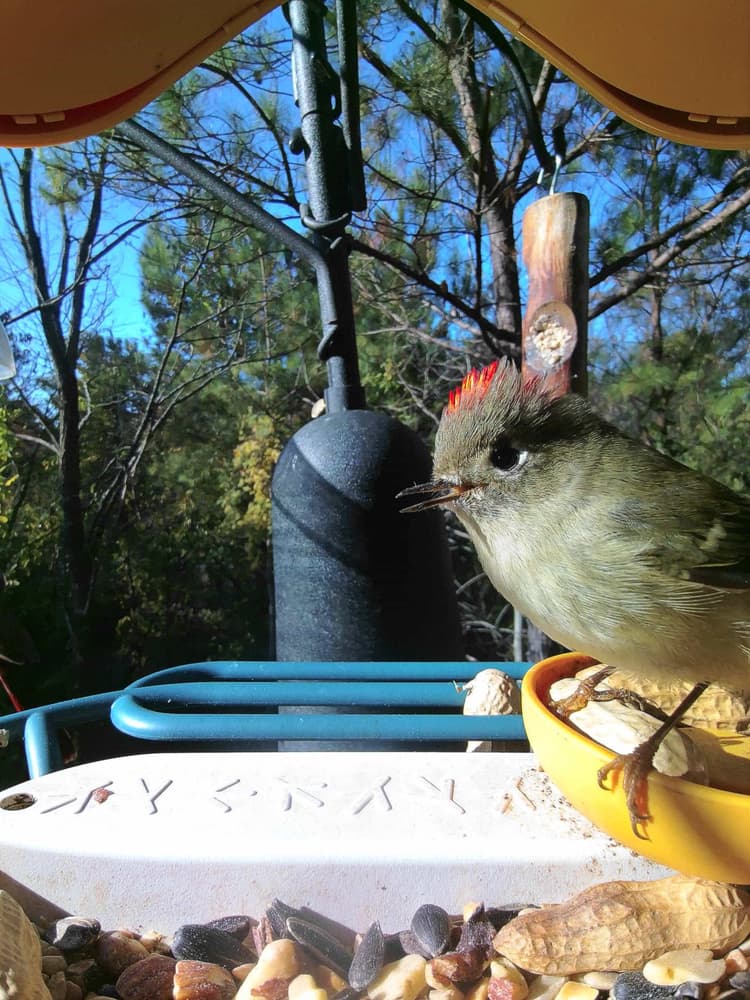
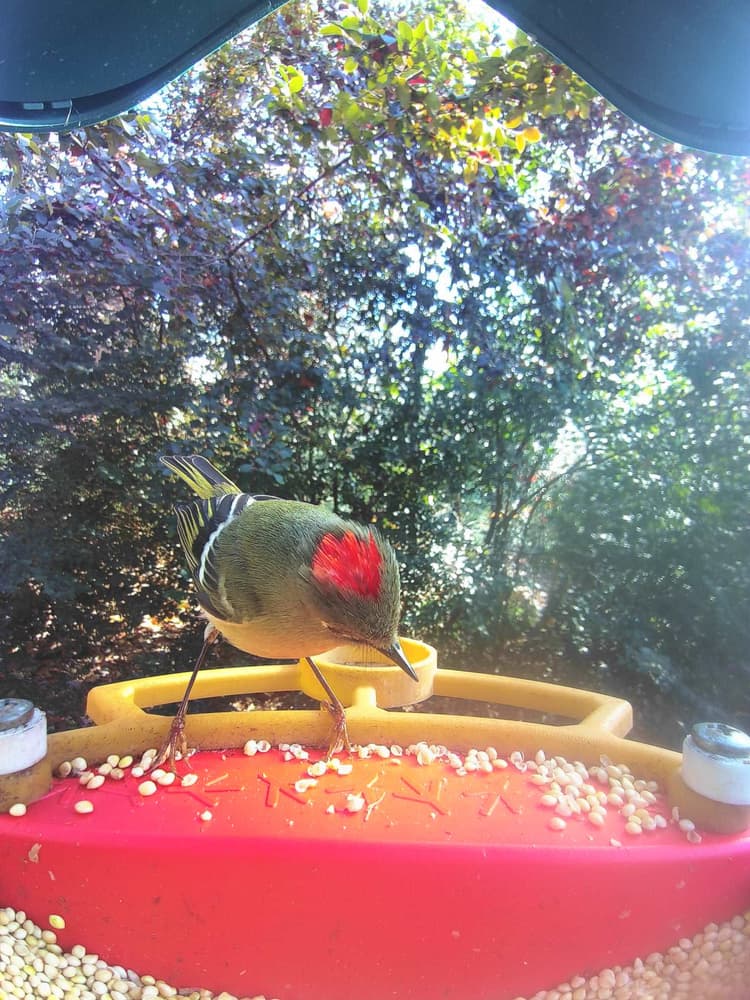
Distinctive ruby crown patch often concealed, only visible when raised
- •
Thin black beak and bold white eye ring creating a distinct face pattern
Female
- •
Similar olive-green body with a grayish hue, slightly less vivid
- •
Lacks the male's ruby crown patch
- •
Features a delicate white eye ring and slender black beak
What does a ruby-crowned kinglet sound like?
The ruby-crowned kinglet displays a host of dynamic vocalizations. Its song symbolizes an enthusiastic musical chattering, presenting an energetic performance. The call pattern of this bird is intricate, undulating, and flat, creating a rich listening experience. The call types further diversify the vocal profile with a variety of buzzes, chirps or chips, simple "hi" sounds, and whistles, making the kinglet's call distinctive and easily identifiable.


Description
These little kings – that's what regulus means in Latin! – are known for their loud, complex songs. One of their calls sounds like liberty-liberty-liberty! In keeping with their royal status, a group of kinglets is known as a castle, a court, a princedom or a dynasty!
The ruby-crowned kinglet can weigh between 5to10grams and be from9to11centimeters tall.
The ruby-crowned kinglet typically lives up to 5-6 years. This is medium-length for small songbirds, and similar to lifespan of related species like the golden-crowned kinglet. However, the maximum recorded age for a ruby-crowned kinglet is 13 years and 2 months. It is not clear that related species have such potential for surprisingly extended lifetimes.
Did you know?
Most popular questions about ruby-crowned kinglet
How to recognise a ruby-crowned kinglet?
General appearance
The Ruby-crowned Kinglet measures about 4 or 10 cm — approximately the size of a Sparrow. With a short tail and rounded wings, it has a distinctive wing-flicking action and a bold white eye-ring. Its coloration includes shades of black, gray, green, red, and white. It often exhibits a single white wing-bar, backed by a black bar.
Male vs female
The male Ruby-crowned Kinglet stands out due to its ruby crown patch. This patch is typically raised only in excitement. Female Ruby-crowned Kinglets are similar in appearance, but lack the distinctive ruby crown patch seen in males.
Juvenile
Juvenile Ruby-crowned Kinglets are alike to adults in terms of size and overall coloration. However, the younger birds may not not have the distinctive ruby crown patch seen in adult males. Further studies are needed to affirm this.
Breeding and nesting habits of the ruby-crowned kinglet
Mating behaviors
During courtship, the male crouches horizontally, fluttering its wings and raising its red crown feathers while singing to attract a mate.
Nesting details
Nests are primarily built in spruce trees, but can also be found in other conifers. The average nest height is 40 feet, but it can range from very low in the northern forests to as high as 90 feet. The nest is a deep hanging cup, attached to twigs below a horizontal branch, and is hidden by overhead foliage. It is constructed by the female using moss, lichens, bark strips, spiderwebs, twigs, rootlets, and conifer needles, and is lined with feathers, plant down, and animal hair.
Eggs and chick-rearing
The female lays a clutch of eggs in the well-protected nest. The details of chick-rearing include the incubation period and feeding, although specifics on this are not provided here.
What does a ruby-crowned kinglet like to eat?
Berries
Insects
Nectar
Sap
Seeds
Spiders
Natural diet
The ruby-crowned kinglet primarily feeds on small invertebrates, including insects and their larvae, which it gleans from foliage. Major components of its diet are aphids, beetles, caterpillars, ants, wasps, and spiders. In addition to insects, it consumes a small amount of plant matter, such as seeds and berries, especially during winter when insects are scarce.
Bird feeders
The ruby-crowned kinglet is not a common visitor to bird feeders, as it primarily forages for insects. However, it may occasionally be attracted to feeders offering suet, especially during colder months when fat is a vital energy source. Some kinglets might also consume peanut butter or pieces of chopped nuts if available.
Attracting the ruby-crowned kinglet
The first step in attracting the Ruby-Crowned Kinglet to your yard is to fill your bird feeders with their favorite snacks. These energetic birds are particularly fond of small insects, but they also enjoy eating suet, seeds, and berries. The Bird Buddy seeds are highly recommended because they are expertly chosen to attract a variety of birds each season.
Optimal feeder types
To make your yard a top destination for the Ruby-Crowned Kinglet, consider the type of feeders you put out. A platform feeder or a suet feeder hung high in a tree can be effective. Adding a bird bath or other water source will also make your yard more inviting. Keep in mind that these birds prefer quiet and less trafficked areas.
Fun tricks for more visits
Creating a habitat that mirrors the Ruby-Crowned Kinglet's natural environment is a fun trick to encourage these birds to visit your yard frequently. Plant native shrubs and trees, particularly conifers like spruces and pines. These provide shelter and a comfortable nesting environment. Don't forget to play soft bird songs, you might just have luck with a sing-along. Remember, patience is key when attracting birds to a new feeder. With time, you might just be rewarded with a lively Ruby-Crowned Kinglet visit.
Where can you find ruby-crowned kinglets?

Primary habitat
Ruby-crowned kinglets breed primarily in coniferous forests including spruce, fir, Douglas-fir, and pine woods.
Additional range
In winter, they inhabit open deciduous woods, coniferous and mixed woods, as well as unexpected environments like mesquite brush and streamside thickets.
Do they migrate?
The Ruby-crowned Kinglet is a migratory bird that travels significant distances between its breeding and wintering grounds. During the fall, this species begins its migration a bit earlier than the similar Golden-crowned Kinglet, with peak movements generally observed in October. In contrast, its spring migration occurs slightly later, with significant movement noted in April. Ruby-crowned Kinglets breed across boreal and montane forests in Alaska, Canada, and the northern contiguous United States. As winter approaches, they migrate southward to milder climates, spending the colder months across the southern United States, Mexico, and occasionally even into Central America. Their migration route includes a path through the central and eastern parts of North America. In some regions, such as the eastern United States, large numbers can be spotted during migration, often in mixed-species flocks in wooded and shrubby areas. Key stopover and feeding locations include deciduous and coniferous forests, where they can find insects and other small invertebrates. Overall, the Ruby-crowned Kinglet's migration is a well-timed and vital journey that reflects its adaptability and the seasonal availability of resources.
What is the role of ruby-crowned kinglets in nature and how to protect them?
Conservation status
The conservation status of the ruby-crowned kinglet is common. Although populations can fluctuate due to harsh winters causing increased mortality, the species remains widespread and stable overall. There are no immediate indications of vulnerability or endangerment. Key conservation efforts are minimal given their stable status, but maintaining healthy forest habitats is beneficial. The main threat is severe weather conditions that can impact their survival during winter months. Overall, the species does not currently face significant conservation concerns.
Ecological role of ruby-crowned kinglets
Its role in the ecosystem
The Ruby-crowned Kinglet plays a significant ecological role in its habitat. As an insectivore, it helps in pest control by feeding on small insects including beetles, flies, leafhoppers, true bugs, and caterpillars, many of which are considered as pests in gardens and farmland. This helps maintain a balance in the insect population. Moreover, the Ruby-crowned Kinglet’s diet also includes spiders and pseudoscorpions which again adds to its role in pest control. During winter, the bird also consumes berries and seeds, acting as an important agent of seed dispersal in its ecosystem. Like many bird species, its nest-building habits probably also benefit its surrounding ecosystem. The bird uses a variety of materials for its nest, including moss, lichens, bark strips, spiderwebs, twigs, rootlets, and conifer needles which likely help in the decomposition of these materials and the cycling of nutrients within its habitat. Thus, this bird species exhibits multiple interactions with its environment contributing to both its pest control function and nutrient cycling.
How to help protect ruby-crowned kinglets
Preservation tips
Habitat preservation strategies
Maintain and restore natural habitats of the ruby-crowned kinglet like coniferous forests, deciduous woods, and scrubby areas. Limit logging and deforestation within these areas. Incorporate bird-friendly design in urban areas and promote the use of native plants which provide natural food sources and nesting sites for the kinglet.
Community science initiatives
Encourage participation in bird monitoring programs such as the Audubon Society’s Christmas Bird Count and BirdTrack. These programs gather data on bird populations, benefiting conservation efforts. Educate the public on the importance of bird conservation. Foster community involvement in conservation activities such as tree-planting, nature clean-ups, and habitat restoration projects.