
Alpine Chough
Alpine Chough
Also known as: Yellow-Billed Chough
Pyrrhocorax graculus


Quick Identification guide
Quick Identification guide
Male
- •
glossy black plumage with a greenish sheen
- •
A yellow, slender, and slightly curved beak
- •
red legs that contrast with the dark feathers
Female
- •
glossy black plumage similar to the male
- •
Likewise features a yellow, slender, slightly curved beak
- •
red legs as seen in the male for easy identification


Description
It is said that the Alpine chough is the highest-nesting bird in the world! In fact, the atmosphere where it nests is so thin that its eggs adapted to withstand the harsh conditions. If there is one thing these members of the crow family are, it is loyal. Both to their partner, with whom they mate for life, and to their nesting spot, which is typically a nook in a steep cliff or cave.
The Alpine chough can weigh between 160to277grams and be from34to38centimeters tall.
The Alpine chough typically lives for up to 20 years. This lifespan is relatively long compared to other species in the Corvidae family. For example, the common raven, another Corvidae species, usually lives for 10-15 years. Despite extreme living conditions, the Alpine chough's lifespan is extended due to their survival strategies and strong adaptability.
Did you know?
Most popular questions about Alpine chough
How to recognise a Alpine chough?
General appearance
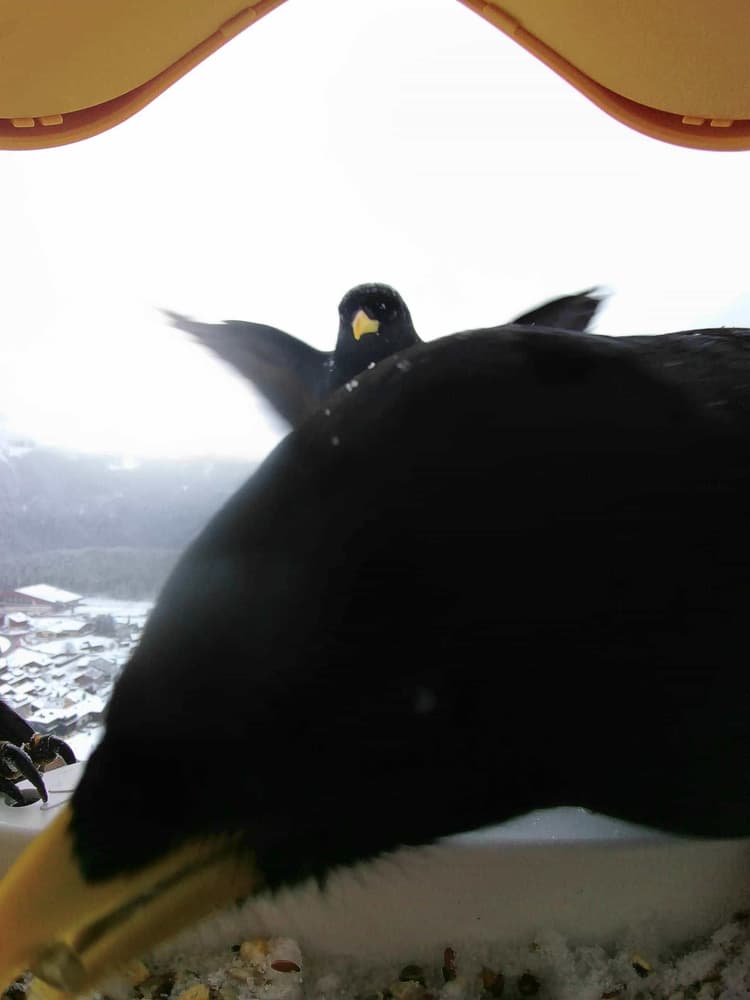
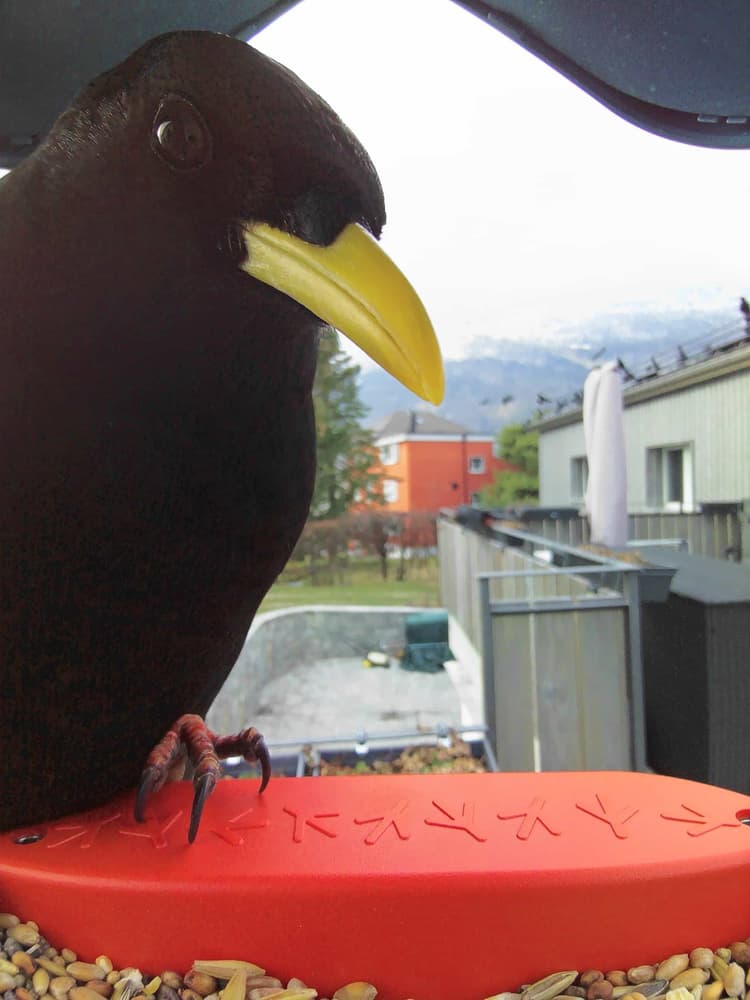
The Alpine chough, a species of bird from the crow family, is characterized by its vivid black coloration. It has a strong, yellow bill and red legs. The species displays a sleek profile, with a short neck and round head, a height of about 39-40 centimetres and a wingspan of approximately 75-85 centimetres.
Male vs female
Male and female Alpine choughs have similar appearances, making it challenging to distinguish between the sexes. Both possess the same striking contrast of black body, yellow beak, and red legs. There are slight differences in size, with males typically being larger, but this isn’t a consistent identifier.
Juvenile
Juvenile Alpine choughs greatly resemble adults. However, they can be identified by their softer plumage, duller legs and beak. Their beaks are also shorter and rounder than those of adults. As they mature, their features develop the sharper, more vibrant characteristics of adult choughs.
Often mistaken for
Western Jackdaw vs Alpine Chough
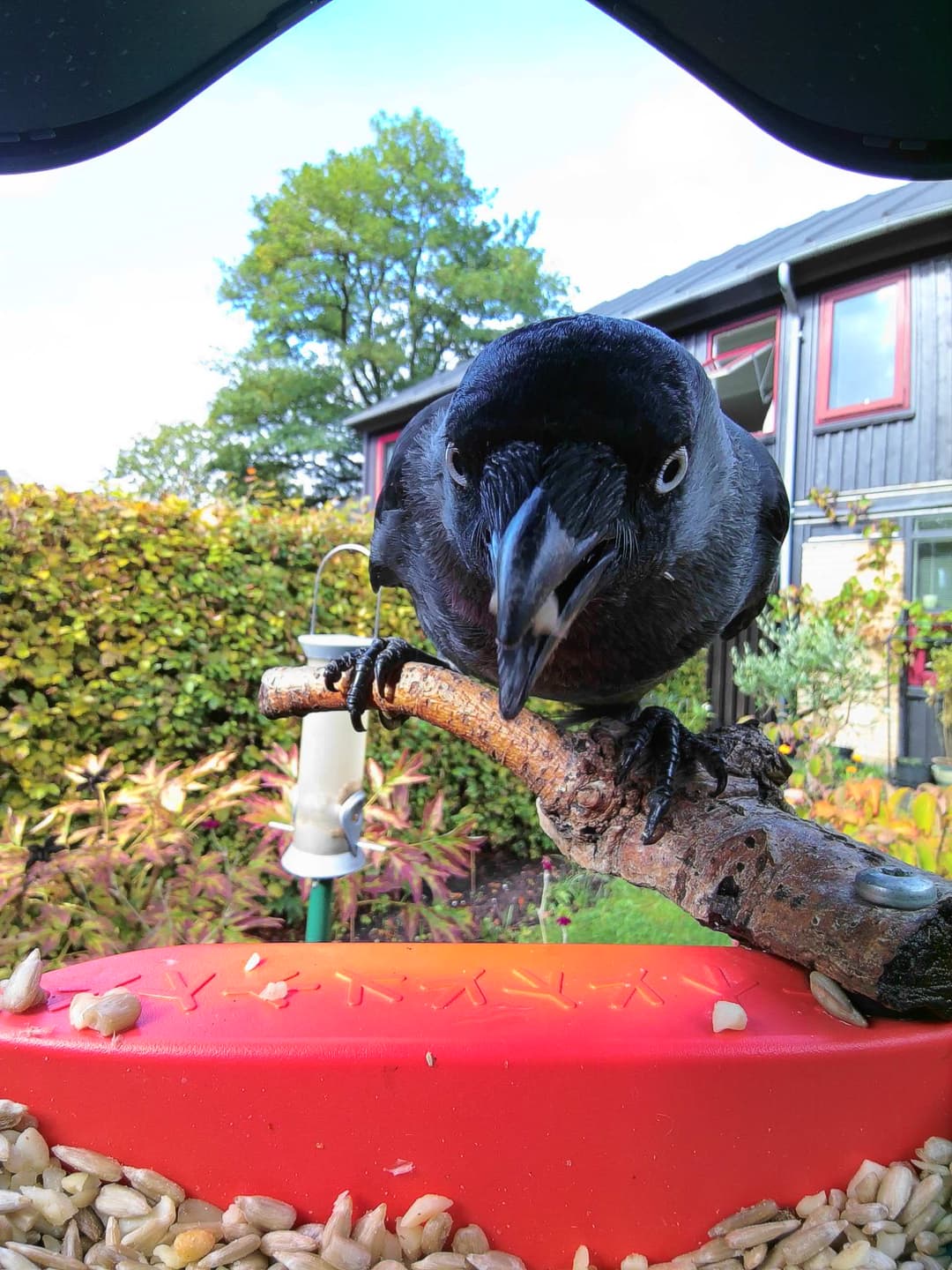
The Western Jackdaw is similar in size to the Alpine Chough but can be distinguished by its grey nape and cheeks, whereas the Alpine Chough is completely black.
Breeding and nesting habits of the Alpine chough
Mating behaviors
Alpine choughs exhibit complex courtship displays involving aerial acrobatics and synchronized pair flights. Males also perform visual and vocal displays to attract females.
Nesting details
Alpine choughs typically nest on rocky cliffs or crevices in mountain regions. They construct their nests using twigs, moss, and lichens. If nesting in gardens, providing rocky ledges and secluded corners can encourage nesting.
Eggs and chick-rearing
The female Alpine chough lays 3-5 eggs, which are incubated for about 14-21 days. Both parents participate in feeding and caring for the chicks until they fledge, which takes around 31-41 days.
What does a Alpine chough like to eat?
Berries
Bird eggs
Birds
Insects
Scraps
Seeds
Small animals
Snails
Natural diet
The Alpine chough primarily feeds on a variety of food sources available in its mountainous habitat. Its natural diet includes insects, such as beetles, grasshoppers, and caterpillars, which it actively searches for in the ground or vegetation. In addition to insects, it also consumes small mammals and bird eggs when available. During the winter or in higher altitudes, the Alpine chough relies more on plant material, including seeds and berries, such as those from junipers and rowans.
Bird feeders
Although the Alpine chough is less commonly seen at bird feeders compared to other bird species, it may visit them in search of supplemental food when natural sources are scarce. At feeders, it can consume bread crumbs, suet, and a variety of seeds, especially sunflower seeds, which provide the necessary fat and energy during colder months or when food is less accessible. Its adaptability allows it to take advantage of these food offerings when they are available.
Create a desirable environment
Firstly, Alpine Choughs love a peaceful environment, so try to keep your yard calm and quiet. Remove distractions or potential threats such as pets. These birds prefer high altitudes, so if possible, place your feeder at a high point in your yard.
Offer their favourite snacks
Alpine Choughs are omnivores, but they have a soft corner for insects and fruits. Try to offer them a mix of these as well as grains. Bird Buddy seeds are highly recommended as these are seasonally chosen by experts, providing just the right nutrition that the birds need.
Provide suitable feeder types
When it comes to feeder types, Alpine Choughs prefer platform feeders to tube feeders. The open space allows them to move around freely while feeding. It is also preferable if the feeder has perches as these birds enjoy standing while they feed.
Encouraging tricks and tips
Alpine Choughs are extremely social birds, so attract them with bird calls or songs. You might even get lucky with a glorious sing-along. Also, try moving your feeder to different locations in your yard as this species are explorative and would love the change.
Where can you find Alpine choughs?
Primary habitat
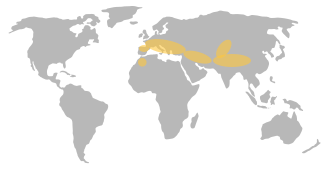
The Alpine chough predominantly inhabits high-altitude regions, typically between 1,200 and 4,000 meters. It thrives in mountainous areas with rocky terrain and sparse vegetation.
Additional range
Beyond its primary habitat, the Alpine chough occasionally occupies lower altitudes in winter or during harsh weather, including human settlements and agricultural lands at moderated elevations.
Do they migrate?
The Alpine chough is primarily a resident bird, and it does not undertake long-distance migrations like some other avian species. Instead, it exhibits altitudinal movement, which means it shifts between different elevations depending on the season. During the breeding season, typically from May to July, Alpine choughs inhabit high-altitude mountainous regions across southern Europe, North Africa, and East Asia, including the Alps, Pyrenees, Carpathians, and the Himalayas. They prefer open, rocky areas near cliffs and alpine meadows where they nest in crevices. As winter approaches and harsh conditions prevail in these high-altitude habitats, they move to lower elevations. These movements are influenced by snow coverage and food availability rather than long distance. In winter, they are often found in valleys and lower mountain regions, where they can forage more easily. Their altitudinal migration usually involves short, local flights rather than extensive journeys. Key wintering locations may include foothills or temperate basins adjacent to their breeding sites. These shifts help them avoid extreme cold and scarcity of food, allowing them to exploit different ecological niches throughout the year without engaging in prolonged migrations.
What is the role of Alpine choughs in nature and how to protect them?
Conservation status
The Alpine chough is classified as "Least Concern" on the IUCN Red List, indicating it is common and not currently vulnerable or endangered. This bird thrives in mountainous regions across Europe and Asia. Key conservation efforts focus on habitat protection, as its well-being is closely linked to alpine ecosystems. Significant threats include habitat degradation due to skiing infrastructure, climate change altering its alpine environment, and human disturbance. Conservation initiatives aim to manage these impacts and preserve the natural habitat to ensure the species' continued stability.
Ecological role of Alpine choughs
Its role in the ecosystem
The Alpine chough is ecologically significant due to its beneficial interaction with its alpine environment. Commonly known for its role in pest control, the species feeds on grubs, caterpillars, beetles, spiders, and other small insects, reducing pest populations, and contributing to the balance of the ecosystem. Moreover, the Alpine chough is also a notable seed disperser; the birds consume a variety of fruits and deposit seeds into new locations through their droppings, aiding in the spread and growth of different plant species in the alpine region. This is particularly important in high-altitude environments, where plant growth is generally limited. Additionally, dead Alpine choughs contribute to the nutrient cycle, providing a food source for decomposers. Thus, the Alpine chough is integral to ecosystem dynamics, supporting biodiversity, and ecosystem stability in the harsh alpine regions where they live.
How to help protect Alpine choughs
Preservation tips
Habitat preservation strategies
To support the conservation of the Alpine Chough, it is vital to implement habitat preservation strategies. Firstly, identify key habitats of the Alpine chough and lobby for legal protection of these areas. Secondly, mitigate human disturbance in their habitats, particularly during breeding seasons. Lastly, promote sustainable tourism in Alpine areas. Environmental education can also be part of the strategy to raise public awareness about the importance of conserving the Alpine chough's habitat.
Community science initiatives
Community science initiatives can play a significant role in Alpine chough conservation. Encourage community members and tourists to participate in programs such as monitoring and reporting Alpine chough sightings. These citizen science projects provide invaluable data about Alpine chough behaviors, movement patterns, and population trends. Collaborate with local schools and institutions to conduct research on Alpine chough and their habitats, fostering an understanding and appreciation of the bird among the younger generation, further supporting its conservation.