Red-Collared Lorikeet or Rainbow Lorikeet?
Here's how to tell the difference
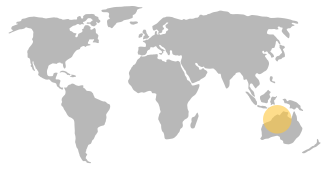

Red-Collared Lorikeet


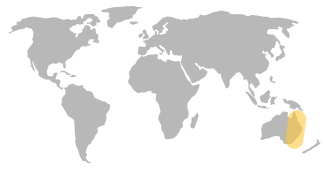
Rainbow Lorikeet
Red-Collared Lorikeet
Trichoglossus rubritorquis
General appearance
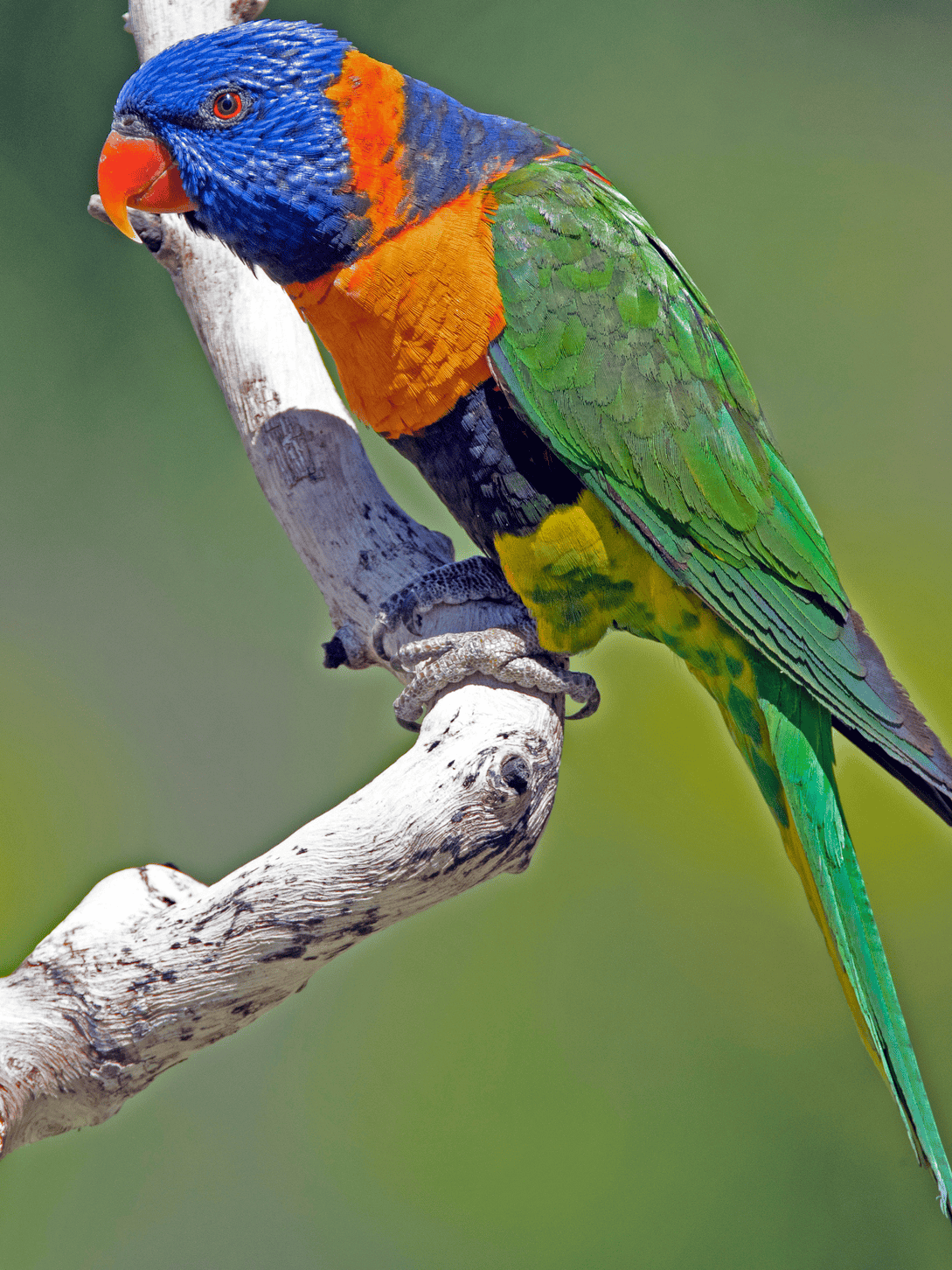
The Red-collared Lorikeet is a medium-sized, brightly coloured parrot with a distinctive red collar, orange beak, and blue head. It boasts beautifully contrasting green wings, tail, and chest, and a vivid, yellow-green underbelly. Adult Lorikeets are roughly 26 cm long with a wingspan of 17 cm.
Male vs female
Males and females are similar in appearance, making them difficult to distinguish by coloration. However, males tend to be slightly larger and heavier than females. The most reliable way to identify gender is by examining the size and shape of the beak: males have a larger, more curved upper beak.
Juvenile
Juvenile Red-collared Lorikeets are predominantly green, with an incomplete or absent red collar, less blue on their head, a yellow-orange beak, and duller overall plumage. As they mature, their colors become more vibrant and their features more defined. The transition from juvenile to adult plumage usually happens within the first year.
Size
9.8 - 10.2 in/4.4 - 4.6 oz
There's more to learn about Red-Collared Lorikeet
View full detailsRainbow Lorikeet
Trichoglossus moluccanus
General appearance
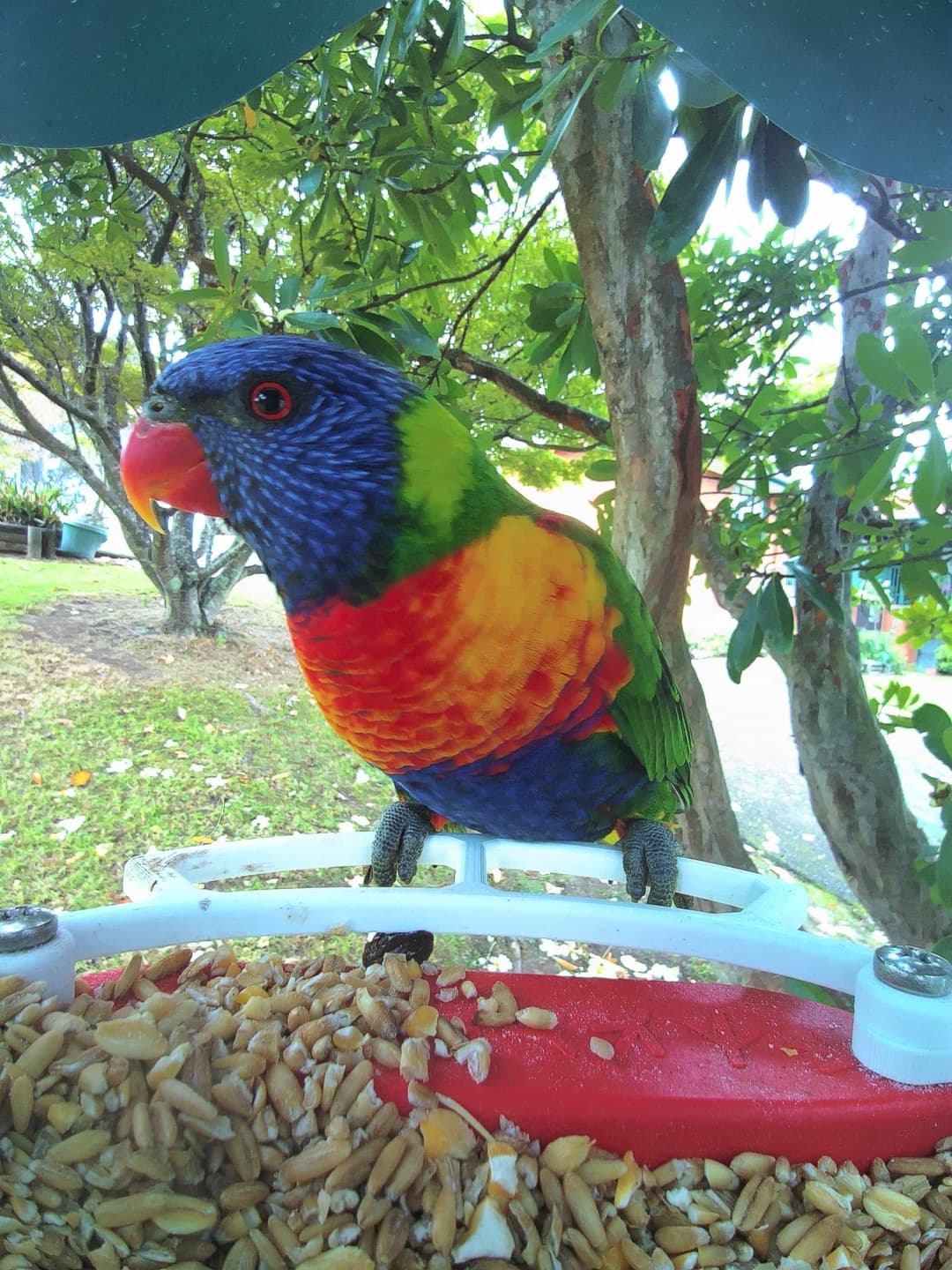
The rainbow lorikeet is a medium-sized parrot characterized by its vibrant multicolored plumage. They have striking blue faces, red-orange beaks, green wings, tail and back, with yellow-orange chest patterns. The bird’s belly is deep blue, and the thighs and rump are colored in tones of red. Male and female birds are similar in size, averaging a length of 15 inches from beak to tail-tip.
Male vs female
Visually, male and female rainbow lorikeets are indistinguishable as both sexes exhibit the same brilliant coloration. However, with a careful inspection, slight differences can be noticed. Males usually have a thicker and broader beak while females have a more slender beak. Telling them apart reliably requires DNA or surgical sexing.
Juvenile
Juvenile rainbow lorikeets have a similar color palette to adults but in a less vibrant tone. Their beaks are darker, often black or dark grey before turning into vibrant red-orange as they mature. The eye color also evolves from a dark brown in juveniles to a striking red-orange in adults.
Size
9.8 - 11.8 in/2.5 - 6.0 oz
There's more to learn about Rainbow Lorikeet
View full detailsHow to tell the Red-Collared Lorikeet from the Rainbow Lorikeet
Visual differences
The Red-Collared Lorikeet and Rainbow Lorikeet can be distinguished visually by their plumage and size. Red-Collared Lorikeets (approx. 10-10.2 inches) have a distinctive red collar, blue head, and vivid yellow-green underbelly, while Rainbow Lorikeets (approx. 10-12 inches) display a multicolored plumage with deep blue bellies and red thighs. Both have orange beaks but Rainbow Lorikeets’ chest is yellow-orange. Subtle differences exist in beak shape—males of both species often have a broader beak than females. Juveniles of both species have less vibrant plumage compared to adults.
Key differences and behavior
The Red-Collared and Rainbow Lorikeets both exhibit social behaviors, but they distinguish themselves through unique interactions. Red-Collared Lorikeets in Darwin, Australia, display a peculiar "drunk" behavior during the dry season, likely due to fermented fruit consumption. Rainbow Lorikeets, known for their territorial tendencies, aggressively chase both small and large birds. Both species inhabit coastal regions and adapt well to urban environments, favoring eucalyptus trees for nesting. They perform elaborate courtship displays involving vocalizations and mutual preening. Their diets are similar, primarily consisting of nectar and pollen, but vary slightly with Rainbow Lorikeets occasionally consuming seeds and small insects. Red-Collared Lorikeets in North Australia are known for foraging on specific native plants like melaleuca. Both species engage in shared parenting, but Rainbow Lorikeets may exhibit more territorial aggression, making them distinctive when observed in the field.
Red-Collared Lorikeet vs [Select a bird]

[Select a bird]
Pick a bird to compare
Rainbow Lorikeet vs [Select a bird]
[Select a bird]
Pick a bird to compare