Northern Rosella or Western Rosella?
Here's how to tell the difference
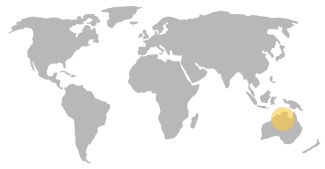

Northern Rosella

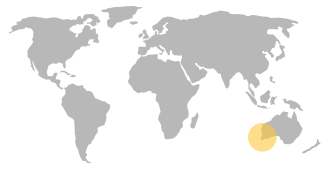
Western Rosella
Northern Rosella
Platycercus venustus
Also known as: Brown's Rosella, Smutty Rosella
General appearance
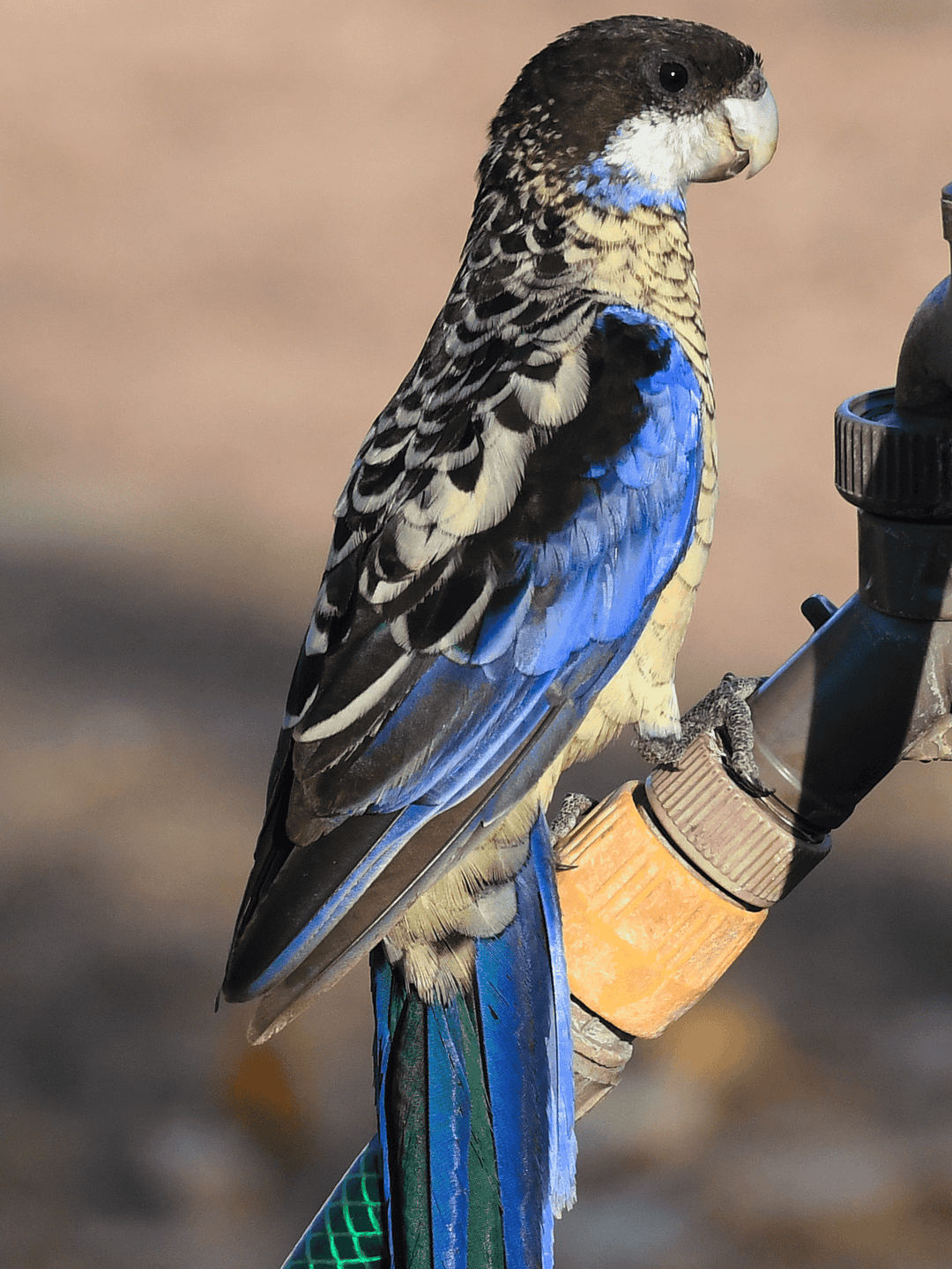
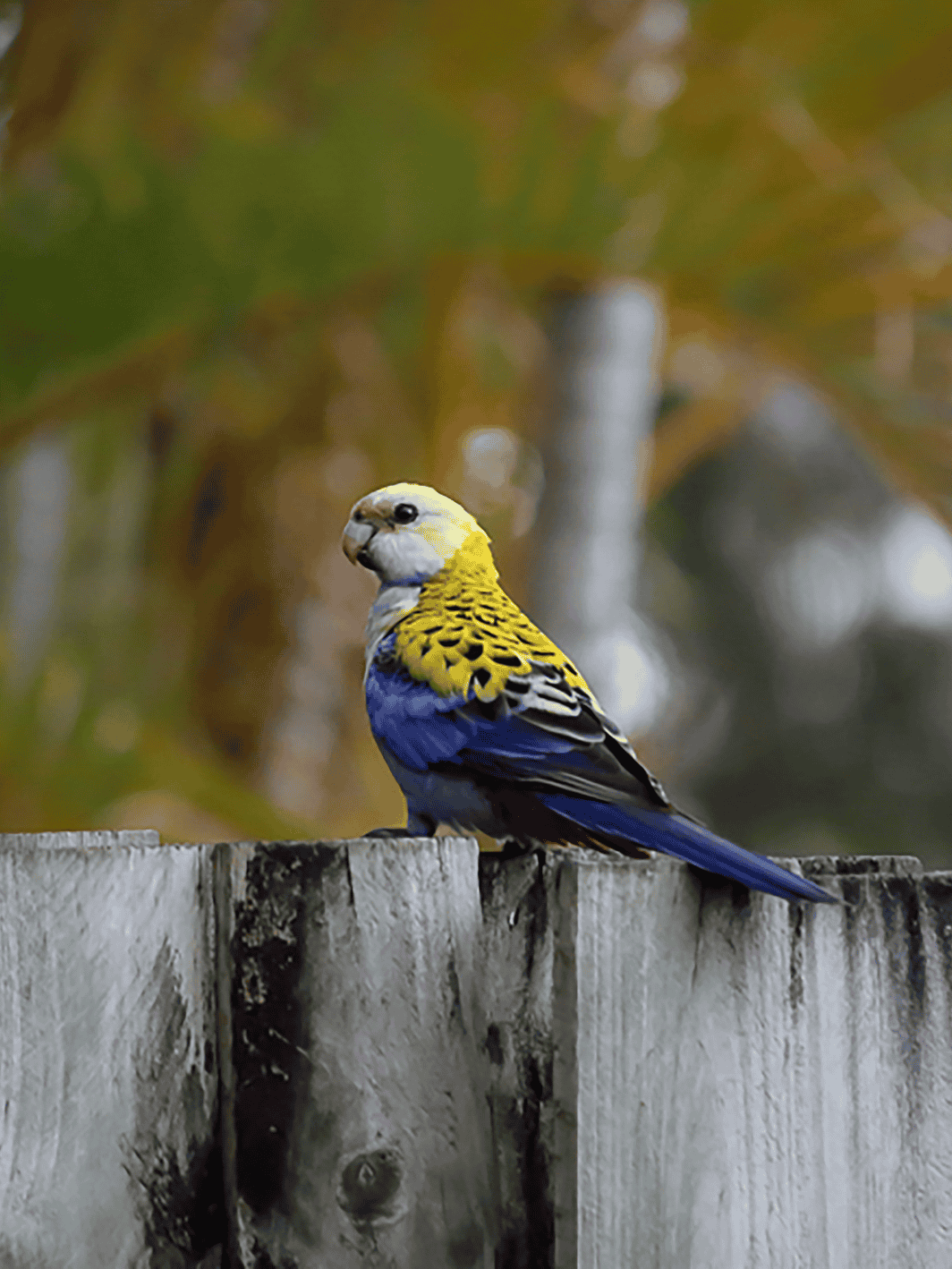
The Northern Rosella is a medium-sized parrot, around 28cm long. It has a black head and neck with a blue patch behind the eye, and white cheek patches. The back and wing coverts are black with yellow borders creating a scalloped pattern. And, its belly is red and blue with black edges.
Male vs female
Gender differences in Northern Rosellas are subtle. Males are typically slightly larger with a bigger beak. The blue patch on the nape is more spread out in males while more concentrated in females. Colors might also be slightly brighter in males, but this is not a reliable indicator.
Juvenile
Juvenile Northern Rosellas have a lot of green on them, particularly on the back and wings, which slowly changes to black as they mature. They also have a smaller beak and their cheek patches are more cream than white. The change from juvenile to adult plumage usually occurs at around one year old.
Size
11.4 - 12.6 in/3.2 - 3.9 oz
There's more to learn about Northern Rosella
View full detailsWestern Rosella
Platycercus icterotis
Also known as: Moyadong
General appearance
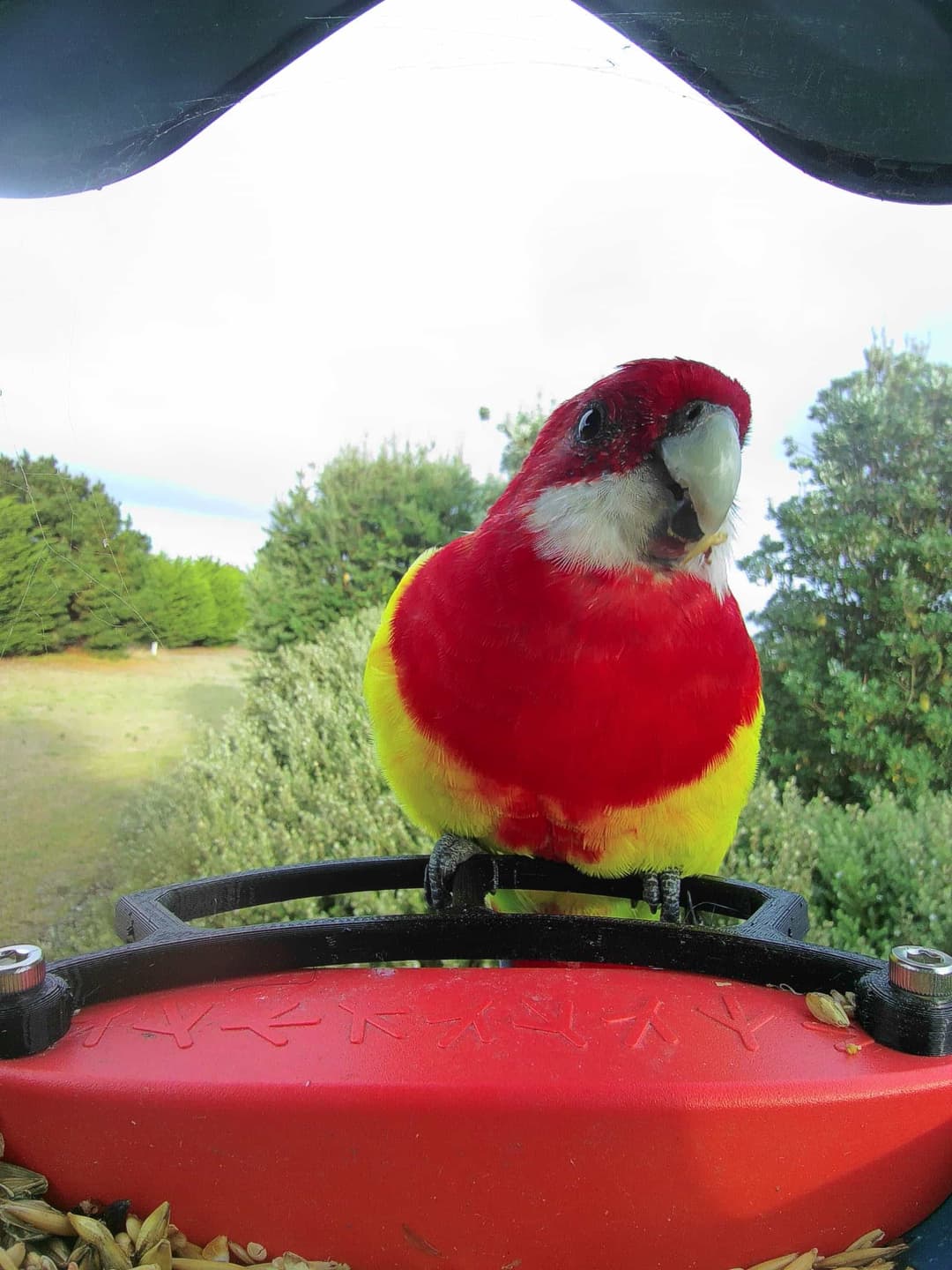
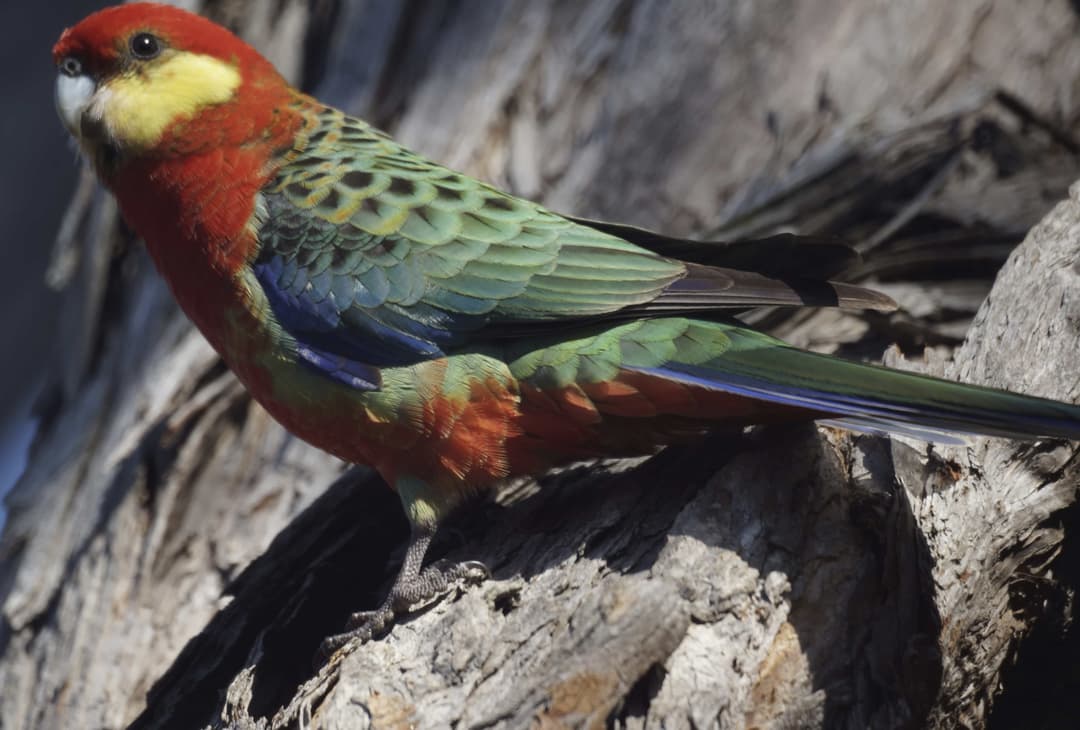
The Western Rosella is a small parrot, measuring up to 28cm in length, predominantly green and red in color with patches of blue on the cheeks and wings. Its back is emerald green with blackish edges. Its tail is a dark shade of blue and its beak is a horn color. This species is distinguished by its vivid color patterns and smaller size.
Male vs female
In terms of gender differences, males tend to have a brighter hue and their red forehead extends to the nape while females have a shorter red patch, starting from the forehead to above the eyes. Females also possess duller green, whereas males have vibrant green backs. Lastly, males have longer upper tail-coverts than females.
Juvenile
Juveniles are similar to females in coloration, but the red patch on their head is even smaller, and their green hues are significantly duller. In addition, juvenile beaks and irises are darker compared to adults. The young birds acquire the adult-like plumage after their first molt that occurs roughly a year after hatching.
Size
9.8 - 10.2 in/1.8 - 2.8 oz
There's more to learn about Western Rosella
View full detailsHow to tell the Northern Rosella from the Western Rosella
Visual differences
The Northern Rosella is a larger, medium-sized parrot (11-13 inches) with a black head, blue eye patch, and red-blue belly, while the Western Rosella is smaller (10-10.5 inches), showing a predominantly green-red color with blue cheeks and wings. Northern Rosellas have a white cheek patch, contrasting with Western Rosellas' yellow ("icterotis") cheek patch. Northern Rosellas have a black scalloped back pattern versus the Western Rosella's emerald green with black edges. The Western Rosella features a horn-colored beak and males have a longer red forehead, unlike the subtle gender differences in Northern Rosellas.
Key differences and behavior
The Northern Rosella and Western Rosella, both native to Australia, exhibit distinct behavioral traits. The Northern Rosella, residing in tropical woodlands, is less sociable and typically travels in family units that remain together until young birds mature. Conversely, the Western Rosella, inhabiting eucalyptus forests of southwest Australia, is more social, often seen mingling with other species and comfortably interacting in human settlements. In terms of diet, both species forage mainly on seeds, fruits, and insects, but Northern Rosellas also consume eucalyptus nectar, aiding in pollination. During breeding, Northern Rosellas nest near water sources, while Western Rosellas favor eucalyptus forests, though both use tree hollows. The Northern Rosella’s heavier build (3.5-3.9 oz) contrasts with the lighter Western Rosella (1.8-2.8 oz), which is the smallest of its genus. Both species share similar incubation habits, with females incubating eggs and both parents feeding chicks.
Still not sure? Here are more lookalikes!
Northern Rosella vs [Select a bird]

[Select a bird]
Pick a bird to compare
Western Rosella vs [Select a bird]
[Select a bird]
Pick a bird to compare