Greater Antillean Bullfinch or Lesser Antillean Bullfinch?
Here's how to tell the difference
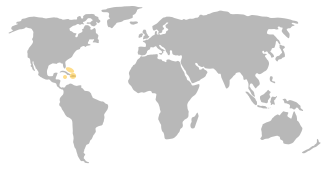

Greater Antillean Bullfinch


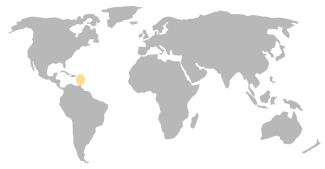
Lesser Antillean Bullfinch
Greater Antillean Bullfinch
Melopyrrha violacea
General Appearance
The Greater Antillean Bullfinch, a striking bird of the Caribbean region, is characterized by its robust body and strong bill designed for seed-cracking. Its plumage varies between islands, with most individuals displaying a deep black or dark gray coloration accented by vibrant red or orange patches on the throat, breast, and lower belly. The wings and tail are generally black, enhancing the contrast with the brightly colored areas. Observers note the bird’s swift but oftentimes erratic flight pattern as it moves between low bushes and shrubbery.
Male vs Female
Males of the Greater Antillean Bullfinch species tend to exhibit more intense coloration than females, with brighter and more extensive red or orange patches on the underparts. Females possess a more subdued coloration, often appearing in muted tones of gray or brownish-black, with less prominent or smaller patches of red or orange. The differences are subtle, so close observation is necessary for accurate identification.
Juvenile
Juvenile Greater Antillean Bullfinches typically lack the vivid red or orange plumage seen in adults, appearing mostly in shades of dull brown or gray. This less conspicuous coloration provides them with better camouflage from predators. As they mature, the vibrant patches gradually develop, marking their transition into adult plumage. Observers might catch these young birds in flocks with adults, learning foraging skills in the underbrush.
Size
5.1 - 6.9 in/0.6 - 1.1 oz
There's more to learn about Greater Antillean Bullfinch
View full detailsLesser Antillean Bullfinch
Loxigilla noctis
General appearance
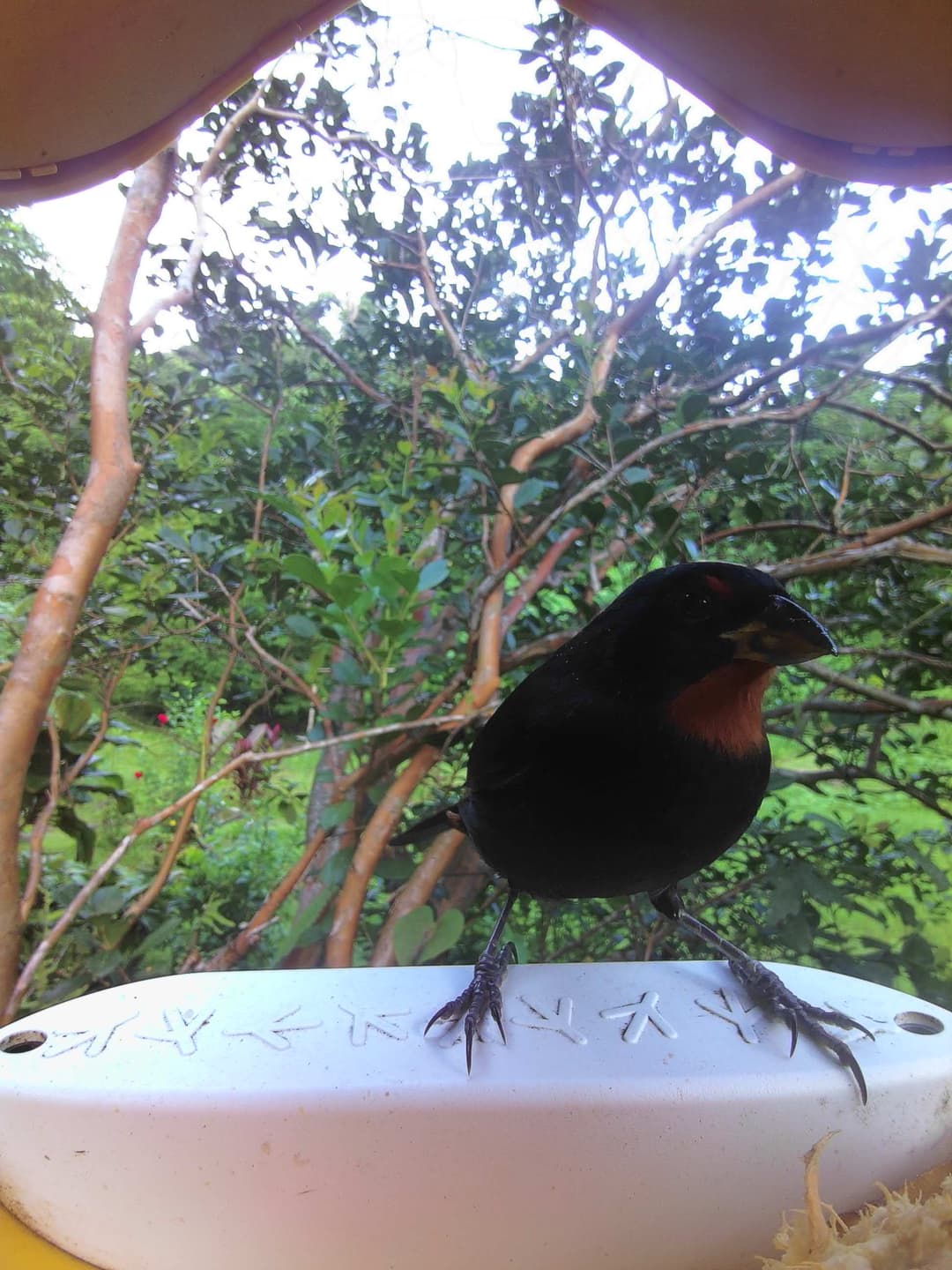
The Lesser Antillean Bullfinch is a small bird, typically 15 cm in length. Its primary coloration is black with a rich red throat and rump. These birds have stout beaks adapted for their seed diet, their beak's upper part is more extended over the lower part.
Male vs female
In this species, males have a more vibrant coloration than females. Males are primarily black with bright red throat patches and rump, while females have dark brown to grey feathers, and their red areas are less intense. Both sexes have dark colored eyes.
Juvenile
Juvenile Lesser Antillean Bullfinches have similar coloration to females but are generally duller. Their red areas are not as well defined and often appear more orange than red. They reach their adult coloration after their first molt.
Size
5.5 - 6.1 in/0.5 - 0.8 oz
There's more to learn about Lesser Antillean Bullfinch
View full detailsHow to tell the Greater Antillean Bullfinch from the Lesser Antillean Bullfinch
Visual differences
The Greater Antillean Bullfinch, with a length of 5.1-6.9 inches, tends to have a more subdued brownish plumage as juveniles, transitioning to brighter adult colors; they have a weight range of 0.6-1.1 ounces. In contrast, the Lesser Antillean Bullfinch averages 5.9-6.1 inches in length and weighs 0.46-0.82 ounces, with males having distinct black body coloration and red throat and rump, while females appear darker brown or grey. The Lesser Antillean's beak is stout with an extended upper part. These features, particularly plumage and size, aid differentiation.
Key differences and behavior
The Greater Antillean Bullfinch (Melopyrrha violacea) typically forages alone or in small groups in forest understoreys, while the Lesser Antillean Bullfinch (Loxigilla noctis) thrives in varied environments, including urban areas, often visiting bird feeders. The Greater Antillean is characterized by its loud insect-like calls, while the Lesser Antillean produces fast, clear notes. Both species share nesting habits in shrubs or small trees, but the Greater Antillean exhibits more vibrant courtship displays. Their diets are similar, consisting mostly of seeds, fruits, and insects. However, the Greater Antillean shows adaptability to human-altered habitats with its diverse diet extending to bird feeders offering fruits and seeds. Both birds form monogamous pairs, with shared parental care. Despite these similarities, their habitat preferences and social behaviors help distinguish them in the field.
Still not sure? Here are more lookalikes!
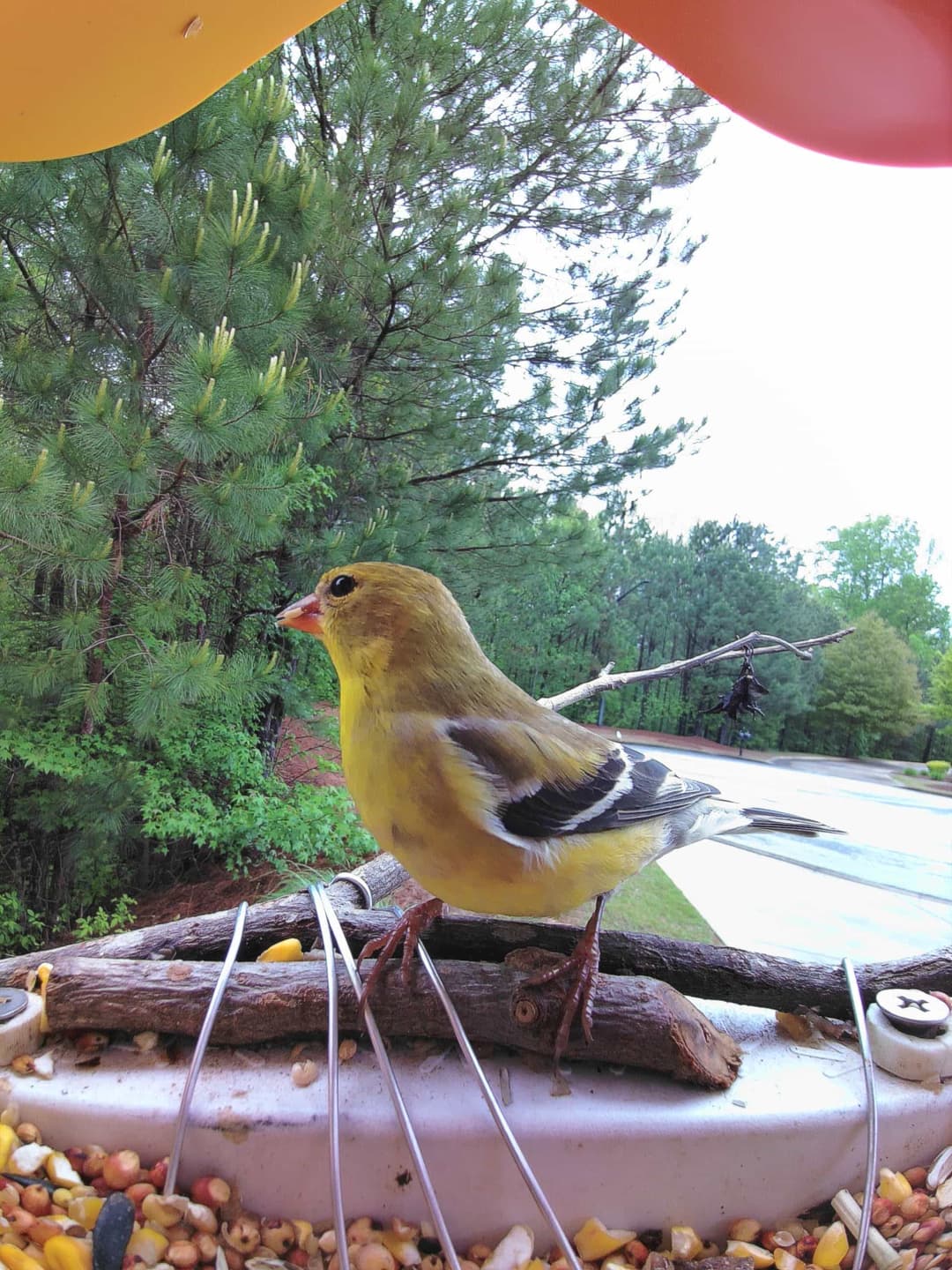
Greater Antillean Bullfinch vs American Goldfinch

Greater Antillean Bullfinch vs [Select a bird]

[Select a bird]
Pick a bird to compare
Lesser Antillean Bullfinch vs [Select a bird]
[Select a bird]
Pick a bird to compare