Eastern Rosella or Pale-Headed Rosella?
Here's how to tell the difference
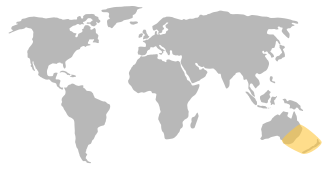
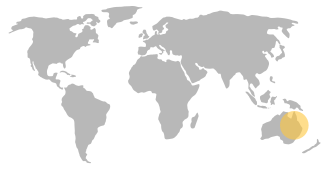


Eastern Rosella


Pale-Headed Rosella
Eastern Rosella
Platycercus eximius
General appearance
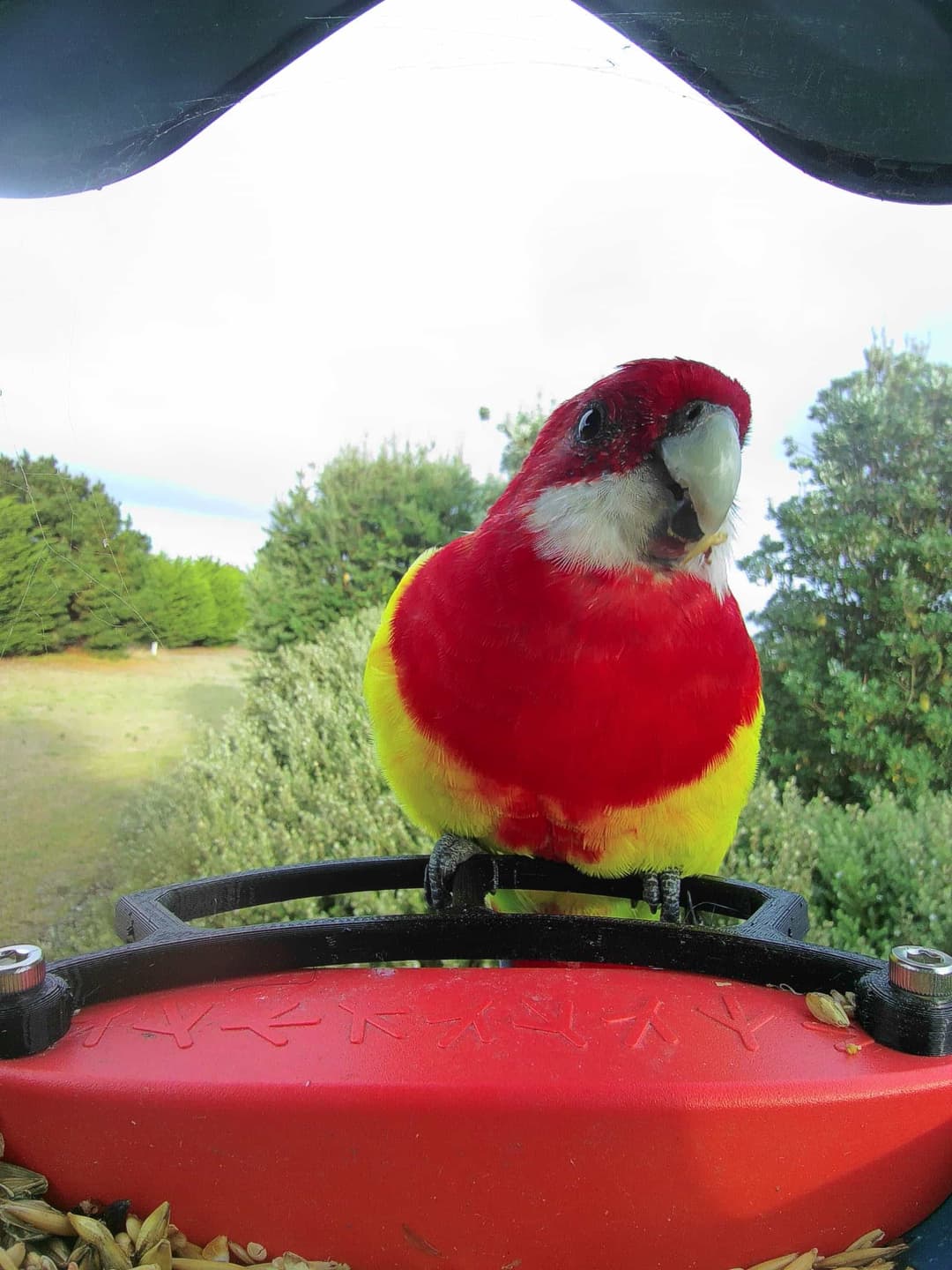
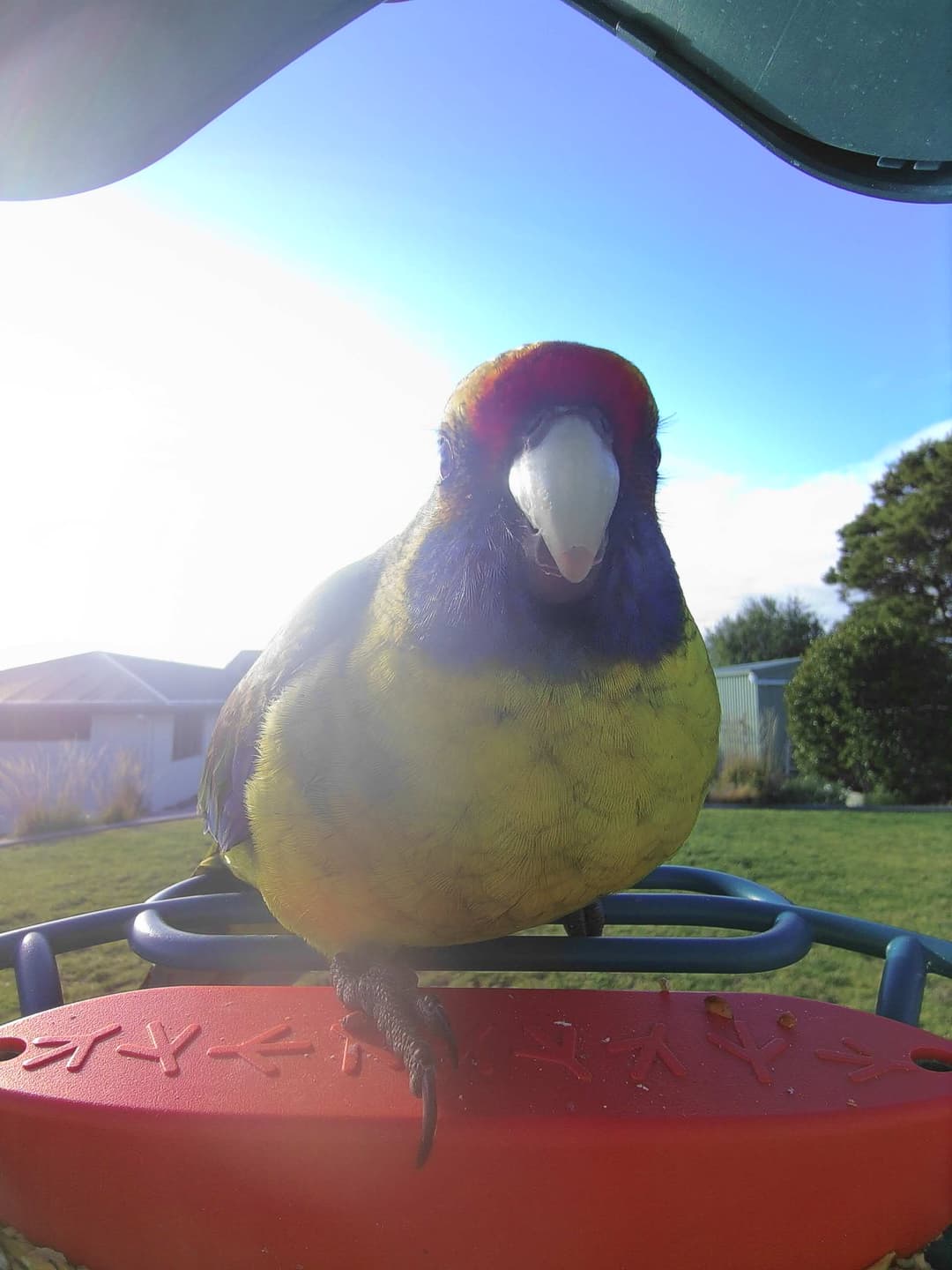
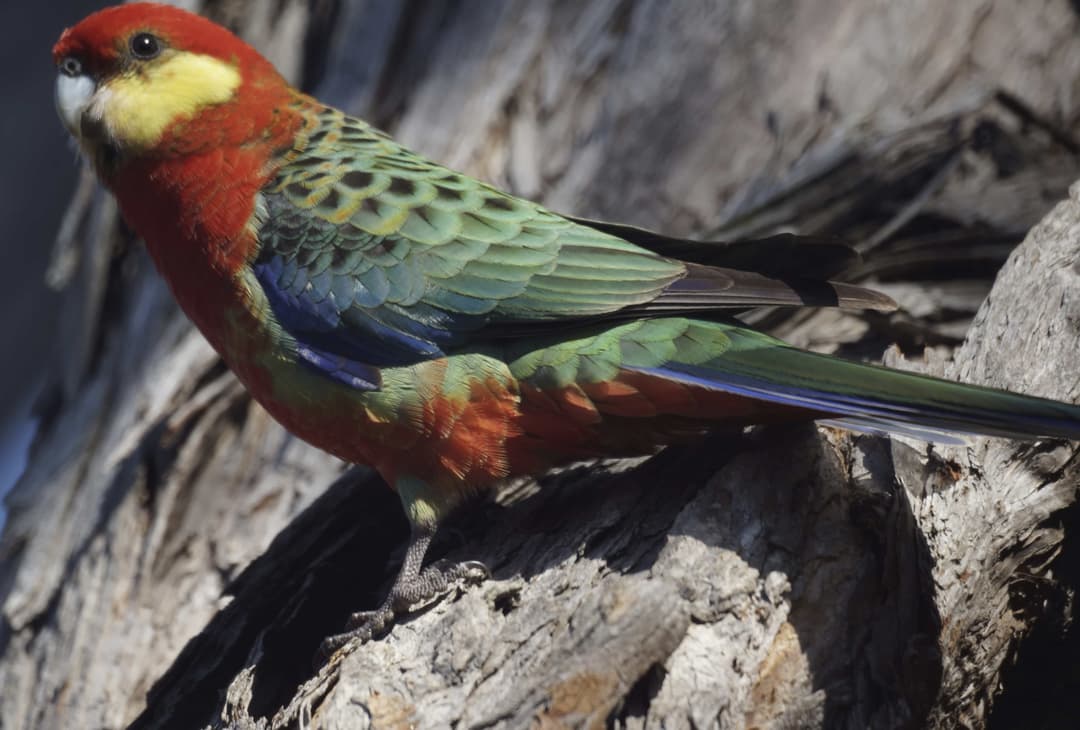
The eastern rosella is a medium-sized parrot known for its stunningly colorful plumage. It has a red head and white cheeks, with black and bright yellow back and shoulders. The underparts are yellowish to blue-green transitioning to a greenish-blue tail. The wings showcase a mix of bright blue and crimson shades. This parrot's bill is white, eyes brown and legs grey.
Male vs female
Males and females of this species are similar in coloration but can be differentiated by size and features. Males tend to be slightly larger, with a broader head and beak. Their plumage is also more vibrant than females', particularly the reds and blues. Additionally, the skin around the male's eye is bare and white, whereas the female’s is feathered.
Juvenile
Juvenile eastern rosellas resemble adults, but their coloring is duller. Their bill is a pale blue-grey, becoming white as they mature. The coloring on their chest is also more greenish compared to adults and they lack the stark white cheeks, which develop over time. Their eyes are a darker brown than adults.
Size
11.0 - 12.6 in/3.4 - 4.2 oz
There's more to learn about Eastern Rosella
View full detailsPale-Headed Rosella
Platycercus adscitus
General appearance
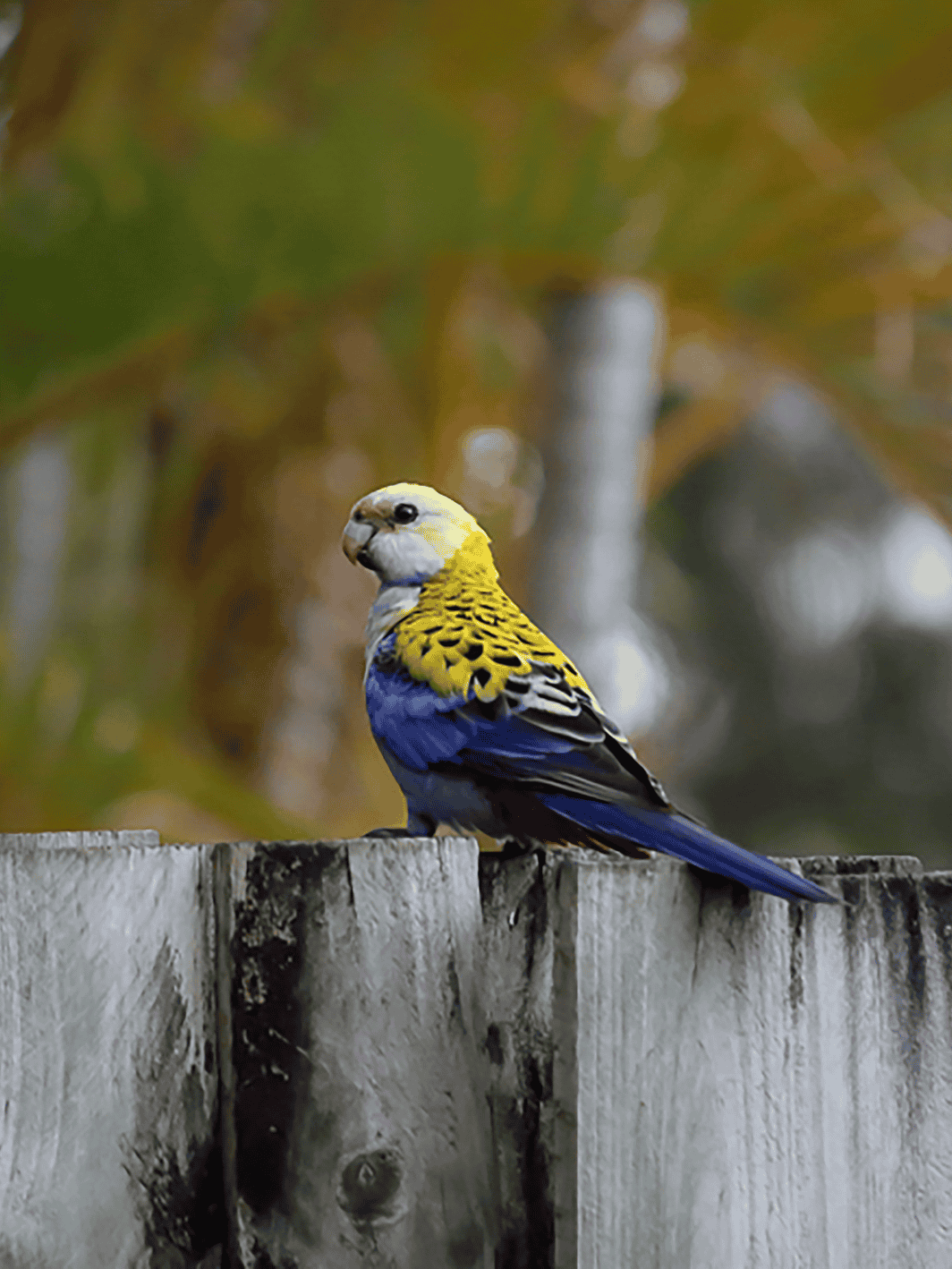
The pale-headed rosella is a large parrot species known for its striking colors. Its head, neck and underparts are predominantly pale yellow, while the back and wings feature shades of blue. The tail is long and gradates from dark blue to white at the tip. The bird's bright red underwing coverts are a prominent visual when in flight.
Male vs female
Both male and female pale-headed rosellas share similar colorations, which makes sexing difficult. On closer observation, males tend to be slightly larger and may possess more vibrant coloration. Females may have a more greenish tinge, especially on the nape. Further, the underwing streaks of red are usually not as prominent in females as they are in males.
Juvenile
Juvenile pale-headed rosellas exhibit more greener plumage on their backs and wings, which slowly turns into blue as they mature. Their heads are also not as strikingly pale compared to adults. As the young mature, they acquire the typical adult colouration. There's no distinct seasonal variation in the appearance of this bird.
Size
11.0 - 13.4 in/3.5 - 6.2 oz
There's more to learn about Pale-Headed Rosella
View full detailsHow to tell the Eastern Rosella from the Pale-Headed Rosella
Visual differences
The Eastern Rosella features a red head, white cheeks, and a vibrant mix of black, yellow, and blue on its body and wings, with a greenish-blue tail. In contrast, the Pale-Headed Rosella has a pale yellow head and neck, blue back and wings, and a long tail with dark blue to white gradient tips. Eastern Rosellas weigh 3.3-4.2 oz and measure 11-12.6 inches, while Pale-Headed Rosellas weigh 3.5-6.2 oz and measure 11-13.4 inches. Both species have similar beaks but differ mainly in coloration and size.
Key differences and behavior
Eastern Rosellas and Pale-Headed Rosellas share several similarities but exhibit distinct behavioral differences. Both are adept at nesting in tree cavities, with Eastern Rosellas favoring eucalyptus trees and Pale-Headed Rosellas showing adaptability, even nesting underground. While Eastern Rosellas are known for their urban presence and curiosity towards humans, Pale-Headed Rosellas are noisier and exhibit assertive behaviors. In terms of diet, both species forage for a variety of seeds, fruits, and insects, but Eastern Rosellas are more ground-oriented, whereas Pale-Headed Rosellas are often seen in mid-level branches. During courtship, Eastern Rosella males perform more visual displays like head bobbing, whereas Pale-Headed Rosellas focus on vocal exchanges. Both species lay 4-6 eggs with similar incubation periods. Eastern Rosellas weigh 3.3-4.2 oz and measure 11-13 inches, while Pale-Headed Rosellas are slightly heavier, weighing 3.5-6.2 oz and reaching up to 13.4 inches.
Still not sure? Here are more lookalikes!
Eastern Rosella vs [Select a bird]

[Select a bird]
Pick a bird to compare
Pale-Headed Rosella vs [Select a bird]
[Select a bird]
Pick a bird to compare