Neotropic Cormorant or Double-Crested Cormorant?
Here's how to tell the difference


Neotropic Cormorant

Double-Crested Cormorant
Neotropic Cormorant
Nannopterum brasilianum
General appearance
The Neotropic Cormorant is a medium-sized bird with a slender, elongated body and a distinctive long neck. It has predominantly black plumage that appears greenish and glossy in sunlight. The bill is thin and hooked, and the skin around the face and throat is a dull yellow that becomes more vibrant during the breeding season. The tail is long and wedge-shaped, aiding in identification.
Male vs female
Males and females of the Neotropic Cormorant species exhibit similar appearance, making it challenging to distinguish between them based purely on physical traits. Both sexes have similar plumage and size; however, males may be marginally larger. Behavioral observations, particularly during mating displays, are more reliable indicators when differentiating between the two.
Juvenile
Juvenile Neotropic Cormorants differ notably from adults, with brownish plumage that is lighter underneath, lacking the glossy sheen seen in mature birds. The bill is lighter in color, and the facial skin is less vivid. As they mature, juveniles gradually develop the adult plumage and coloration. Seasonal variations do not significantly alter their appearance.
Size
25.2 - 28.7 in/35.3 - 45.9 oz
There's more to learn about Neotropic Cormorant
View full detailsDouble-Crested Cormorant
Nannopterum auritum
General appearance
The Double-crested Cormorant is a large water bird with a long neck and a distinctive hooked beak. Its plumage is generally dark, with an iridescent blue-black sheen. During breeding season, adults exhibit striking orange skin around the base of the beak and a distinctive pair of white tufted crests.
Male vs female
Males and females are similar in appearance, both having dark plumage and orange facial skin, though males tend to be slightly larger in size. During the breeding season, the white crests are more prominent in both sexes.
Juvenile
Juvenile Double-crested Cormorants have brownish plumage rather than the dark iridescence seen in adults. Their underparts are paler, and they lack the distinctive orange facial skin and crests until they mature. This coloration can make them appear somewhat mottled.
Size
27.6 - 47.2 in/42.3 - 88.2 oz
There's more to learn about Double-Crested Cormorant
View full detailsHow to tell the Neotropic Cormorant from the Double-Crested Cormorant
Visual differences
The Neotropic Cormorant is smaller (64-73 cm, 1000-1300 g) than the Double-Crested Cormorant (70-120 cm, 1200-2500 g). Neotropic features glossy black plumage with a greenish tint, a slender hooked bill, and dull yellow facial skin that brightens during breeding. The Double-Crested has an iridescent blue-black sheen, prominent orange facial skin, and white feather crests during breeding. Juveniles of both are brown but Neotropic juveniles have lighter underparts. Double-Crested adults typically appear bulkier with distinct head crests and more dramatic coloration in the breeding season.
Key differences and behavior
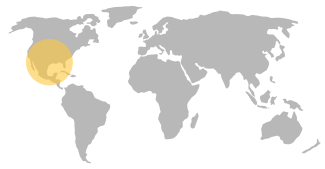
The Neotropic Cormorant (Nannopterum brasilianum) and Double-Crested Cormorant (Nannopterum auritum) can be distinguished by several visual and behavioral cues. The Neotropic is smaller (64-73 cm) with a slender body, glossy black plumage, and long, wedge-shaped tail. In contrast, the Double-Crested is larger (70-120 cm), with iridescent blue-black plumage and distinctive white tufted crests during breeding. The Neotropic has dull yellow facial skin, becoming vibrant in breeding, whereas the Double-Crested displays striking orange facial skin. Both species prefer similar habitats but differ in range, with the Neotropic in tropical zones and the Double-Crested in temperate regions. Juvenile Neotropics appear lighter, as do juvenile Double-Cresteds, although both mature to darker, shiny plumage. Behavioral similarities include wing-drying; however, Neotropics are noted for nest-building courtship, while Double-Cresteds present fish as gifts. Both species dive for fish but vary mainly in physical traits and geographic presence.
Neotropic Cormorant vs [Select a bird]


[Select a bird]
Pick a bird to compare
Double-Crested Cormorant vs [Select a bird]

[Select a bird]
Pick a bird to compare