Sugarbird or Cape Sugarbird?
Here's how to tell the difference
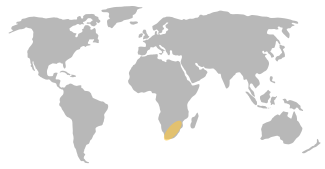

Sugarbird

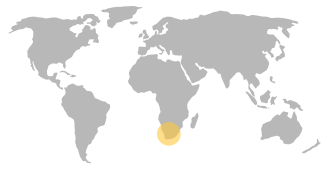
Cape Sugarbird
Sugarbird
Promerops
General appearance
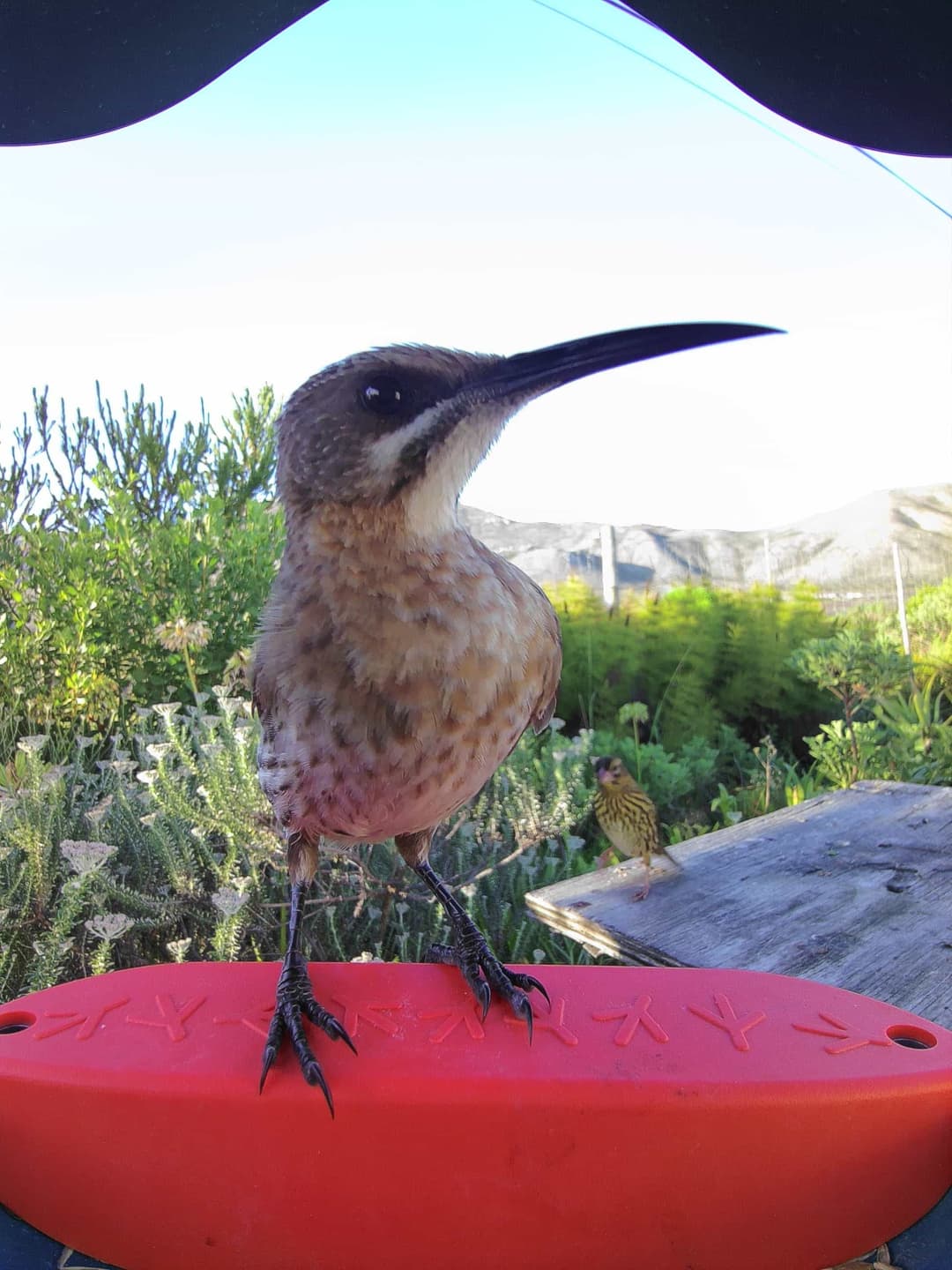
Sugarbirds are medium-sized birds with long tails and sharp, pointed beaks. They exhibit a gradient of brown to gray color with an iridescent quality to their feathers that can shine blue or green in certain light. Sugarbirds are notably recognized for their long tails exhibited by males.
Male vs female
Both males and females share the basic coloration, but males are significantly larger with longer tail feathers, which can measure up to double the bird's body length. Females, while still long-tailed, have shorter tails in comparison. Male sugarbirds also have a small patch of yellow plumage on the sides of the chest, whereas females do not.
Juvenile
Juvenile sugarbirds generally resemble females but are duller with much shorter tails. As they mature, male juveniles develop the characteristic long tail feathers. The yellow chest patches in males also become more pronounced with age.
Size
9.1 - 17.3 in/0.8 - 1.6 oz
There's more to learn about Sugarbird
View full detailsCape Sugarbird
Promerops cafer
General appearance
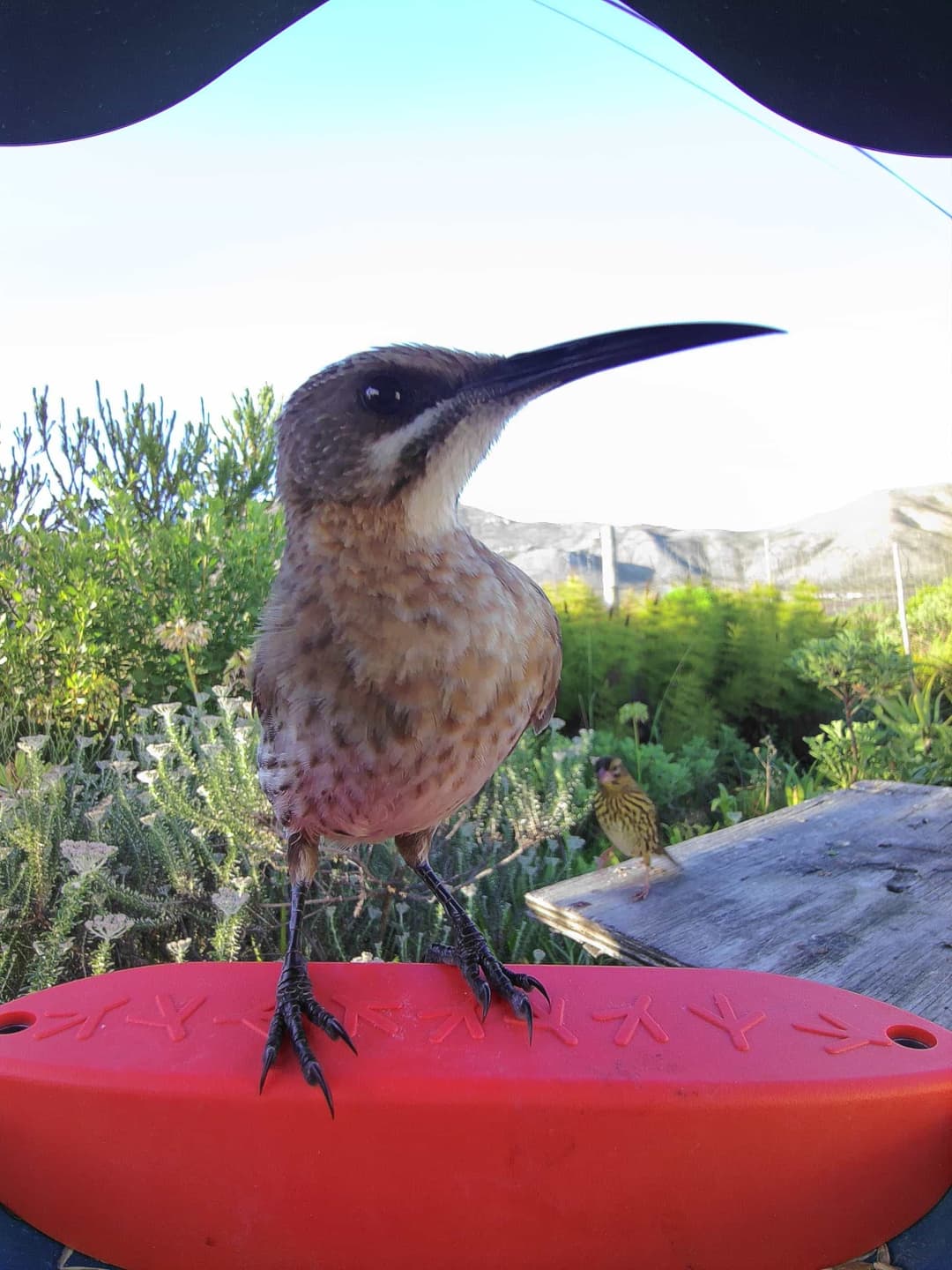
The Cape sugarbird is a medium-sized bird characterized by a long tail and an elongated body coated with brownish-grey feathers. Their underside is paler, almost white, and the chest shows distinctive yellow patches. They boast a slender beak, perfect for nectar feeding.
Male vs female
Sexually dimorphic, male Cape sugarbirds have longer tails than their female counterparts, reaching an impressive 38 cm, almost double the body length. Females are smaller, with a shorter tail. Males also have a conspicuous display of brown chest feathers while the females' are paler.
Juvenile
Juvenile Cape sugarbirds lack the vibrant coloration of adults, having a uniform brown color with less pronounced yellow underparts. They also lack the long tail feathers seen in adults, making them significantly less conspicuous in the wild.
Size
13.4 - 17.3 in/1.1 - 1.4 oz
There's more to learn about Cape Sugarbird
View full detailsHow to tell the Sugarbird from the Cape Sugarbird
Visual differences
The Sugarbird and Cape Sugarbird exhibit notable differences visually. Sugarbirds span 9 to 17 inches, with males displaying very long tails relative to body size. They feature iridescent brown-to-gray plumage and male-specific yellow chest patches. Cape Sugarbirds, slightly shorter at 13 to 17 inches, have brownish-grey upperparts with pale undersides and defined yellow chest patches. Males possess tails almost double their body length at 15 inches, longer than females. The Sugarbird's iridescence contrasts with the Cape's paler plumage; both have long, slender beaks adapted for nectar feeding.
Key differences and behavior
The Sugarbird and Cape Sugarbird, both found in South Africa's fynbos, exhibit notable behavioral differences. Sugarbirds thrive in Mediterranean climates, also adapting to gardens, while Cape Sugarbirds occupy warmer, drier regions, including alien vegetation. Both species engage in elaborate courting displays, but Sugarbird males sing and display vibrant plumage, whereas Cape Sugarbirds focus on aerial chases. Nesting habits share similarities; however, Sugarbirds often settle in gardens. Sugarbirds lay 2-3 eggs; Cape Sugarbirds typically lay 1-2 eggs, both primarily feeding chicks with insects and nectar. Their diets, focused on protea nectar, also include insects; both species visit feeders for nectar substitutes. Notably, Sugarbirds display territorial singing, a trait shared with Cape Sugarbirds. Size-wise, Sugarbirds range from 9-17 inches, while Cape Sugarbirds are 13-17 inches in length.
Sugarbird vs [Select a bird]

[Select a bird]
Pick a bird to compare
Cape Sugarbird vs [Select a bird]
[Select a bird]
Pick a bird to compare