Cape Robin-Chat or Red-Capped Robin-Chat?
Here's how to tell the difference
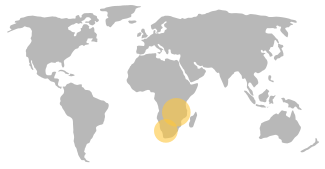


Cape Robin-Chat


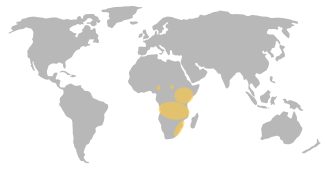
Red-Capped Robin-Chat
Cape Robin-Chat
Cossypha caffra
Also known as: Cape Robin
General appearance
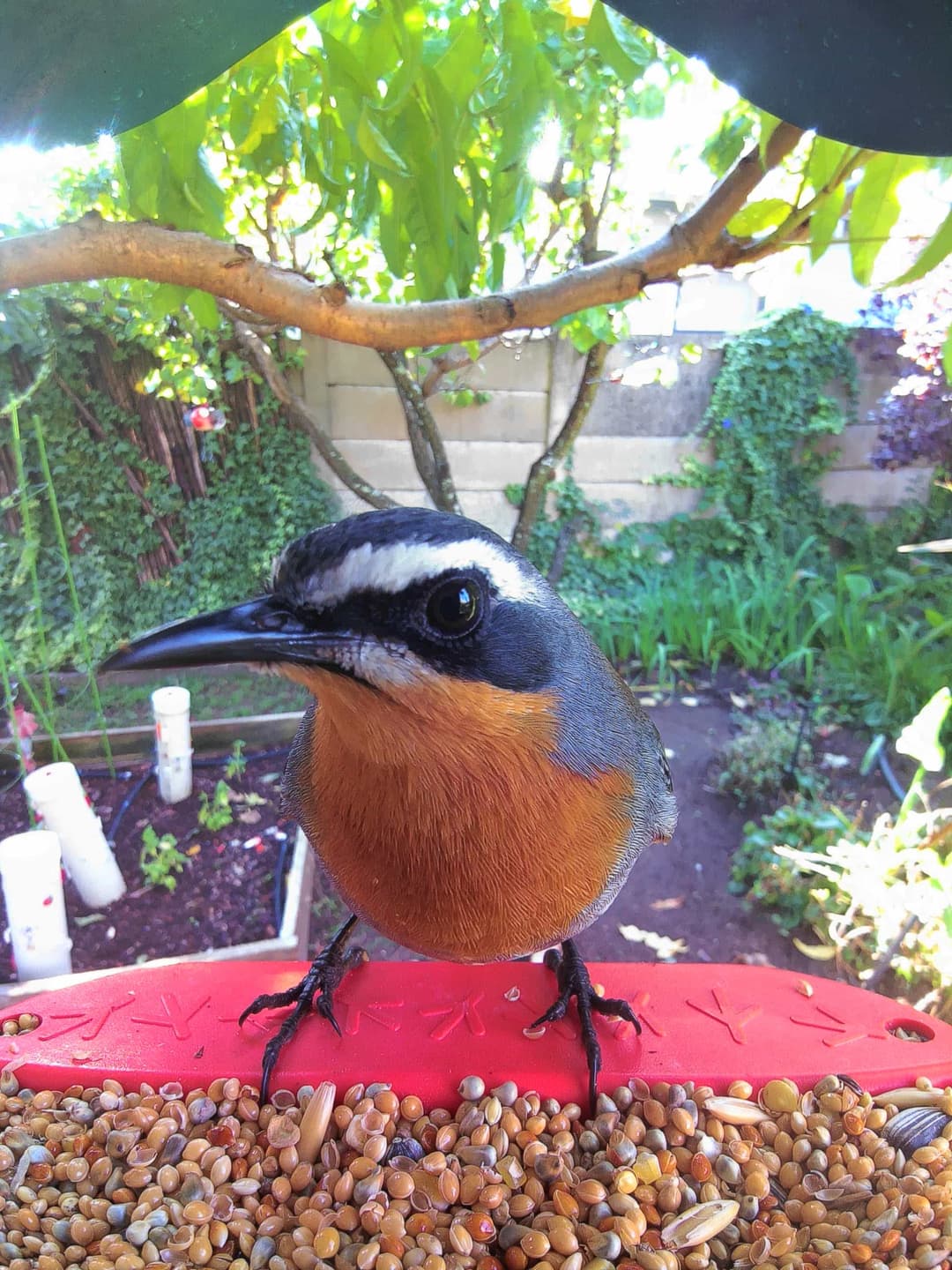
The Cape robin-chat is a small songbird with predominantly grey coloration. Distinctive features include a conspicuous white eyebrow, orange underparts, and a brownish-grey back. They have long legs, a short tail, and a slender, pointed beak, suitable for their insectivorous diet. They are found across southern Africa especially in forest and dense shrublands.
Male vs female
Cape robin-chats exhibit negligible sexual dimorphism, meaning males and females look very similar. They both share the distinctive grey and orange coloration, with males tending to be slightly brighter than females. However, this is a subtle difference and may not be discernible in the field.
Juvenile
Juvenile Cape robin-chats are similar in appearance to adults, but their plumage isn't as brightly colored. They have a more muted, greyish-brown coloration with duller orange underparts. Additionally, young birds don’t have the characteristic white 'eyebrows' seen in adults. As they mature, they gradually acquire the more vivid adult coloration.
Size
6.3 - 6.7 in/0.9 - 1.2 oz
There's more to learn about Cape Robin-Chat
View full detailsRed-Capped Robin-Chat
Cossypha natalensis
Also known as: Natal Robin
General appearance
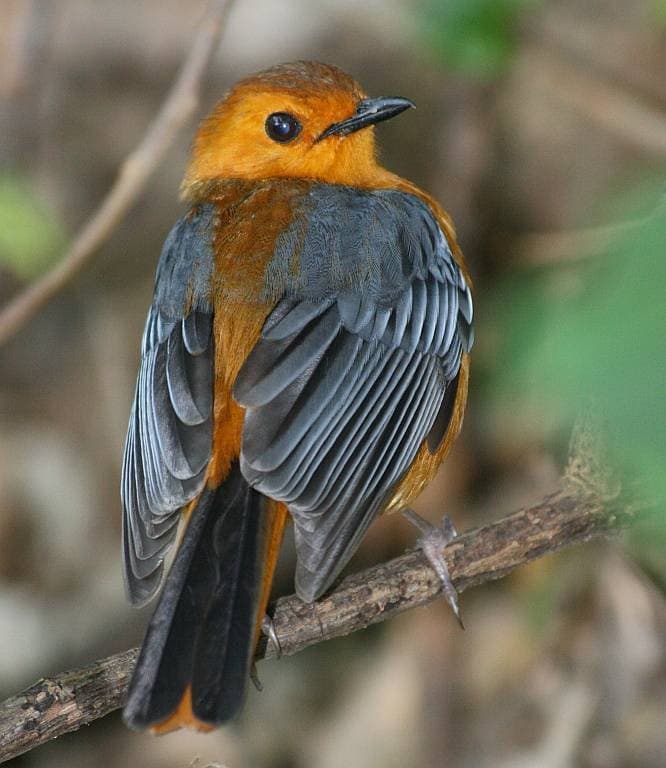
The red-capped robin-chat is a medium-sized bird with an average length of 17 centimeters. Its main body is characterized by grey-blue feathers, with striking red patches on the forehead and crown. Its wings and tail are somewhat darker, with thin white bars on the wings and outer edges of the tail. Its beak is black and eyes are dark brown.
Male vs female
Both male and female red-capped robin-chats share similar physical features and coloration making it hard to differentiate between the two. However, males tend to have a more prominent red 'cap' compared to females who often have a slightly duller cap. The male's song, a series of melodious whistles and sounds mimicking other birds, helps in identification.
Juvenile
Juvenile red-capped robin-chats exhibit subtly different coloration than adults. Their overall body coloration is more brownish than adults, with less obvious red caps. Juvenile’s red cap develops gradually as they mature, trasitioning from brown to the adult’s bright red. Their eyes are also lighter, generally a dull yellow or light brown.
Size
6.3 - 6.7 in/0.8 - 1.4 oz
There's more to learn about Red-Capped Robin-Chat
View full detailsHow to tell the Cape Robin-Chat from the Red-Capped Robin-Chat
Visual differences
The Cape Robin-Chat is a small bird, weighing 0.9-1.2 oz and measuring 6.3-6.7 inches, with grey plumage, a white eyebrow, orange underparts, and a slender, pointed beak. The Red-Capped Robin-Chat is similarly sized, measuring 6.7 inches and weighing 0.8-1.4 oz, but features grey-blue feathers with striking reddish-orange patches on the forehead and crown, dark wings, and thin white bars on its wings and tail. Both males and females of each species look similar, but the red cap of the Red-Capped Robin-Chat is more prominent in males.
Key differences and behavior
Cape Robin-Chats (0.9-1.2 oz, 6.3-6.7 in) and Red-Capped Robin-Chats (0.8-1.4 oz, 6.3-6.7 in) differ significantly in behavior and habitat preferences. Cape Robin-Chats are adaptable urban dwellers, frequently seen in gardens and fiercely defending their nesting sites. In contrast, Red-Capped Robin-Chats prefer dense vegetation in forests and are exceptional singers, mimicking other birds. Cape Robin-Chats are more territorial, while Red-Capped Robin-Chats exhibit dynamic courtship, sometimes offering food. Their diets are similar, focusing on insects and fruit, although Cape Robin-Chats visit feeders more often. Both species nest in dense vegetation, yet Cape Robin-Chats are more common in diverse environments, from shrublands to semi-deserts, while Red-Capped Robin-Chats mainly occupy riparian and montane forests. Their distinct vocalizations and habitat choices aid identification in the field.
Cape Robin-Chat vs [Select a bird]

[Select a bird]
Pick a bird to compare
Red-Capped Robin-Chat vs [Select a bird]
[Select a bird]
Pick a bird to compare