
Tree Swallow
Tree Swallow
Tachycineta bicolor
Quick Identification guide
Quick Identification guide
- •
Displays iridescent blue-green upperparts with a striking contrast to its pristine white underparts
- •
Features a small, pointed beak that is well-suited for catching insects in flight
- •
Exhibits a slender, streamlined body and long, pointed wings, aiding in its agile flight
What does a tree swallow sound like?
The Tree Swallow's vocalizations are a delightful blend of liquid twitters that create a cheerful series of sounds. Its call pattern is typically flat or undulating, expressing diverse types of calls - from buzzes and chirps, often recognised as chips, to trills and whistles. These collective notes and pitches showcase the bird's vibrant auditory communication.
Description
Did you know tree swallows feed their nestlings between 6,000 and 7,000 insects per day? These little guys have been the object of so much research, they are considered a model organism! While they like to flock by the thousands outside breeding season, when it rolls around, it's every bird for themselves. They like to set up shop in a variety of places: the only requirement is an entrance hole, either natural or artificial.
The tree swallow can weigh between 17to22grams and be from12to14centimeters tall.
The typical lifespan of the tree swallow is around 12 years. However, most don't live past their first year due to various factors such as predation and harsh weather. Relative to other swallow species like the barn swallow, with an average lifespan of about 4 years, the tree swallow has a comparably longer life expectancy. Another related species, the purple martin, has an average lifespan very similar to tree swallows, at around 13 years.
Did you know?
Most popular questions about tree swallow
How to recognise a tree swallow?
General appearance
The tree swallow measures between 5 to 6 1/4 inches or 13-16 cm. It displays a sharp contrast in colors between the top and bottom, with dark above and clean white below. Its wing shape is broad, long, pointed and tapered. The tail shape is notched and square-tipped.
Male vs female
The adult males and females of tree swallows have distinctive colorations. The adult males are glossy blue or green above, with a dark cap that extends down to the eye level. The females might show similar coloration, although possibly less glossy.
Juvenile
Juvenile tree swallows display a different coloration from adults. They are dusky brown above and often have a gray-brown wash across their chest. This is unlike the Bank Swallow, which exhibits a more prominent marking on the chest. With time, the juveniles' color changes to resemble those of the adults.
Often mistaken for
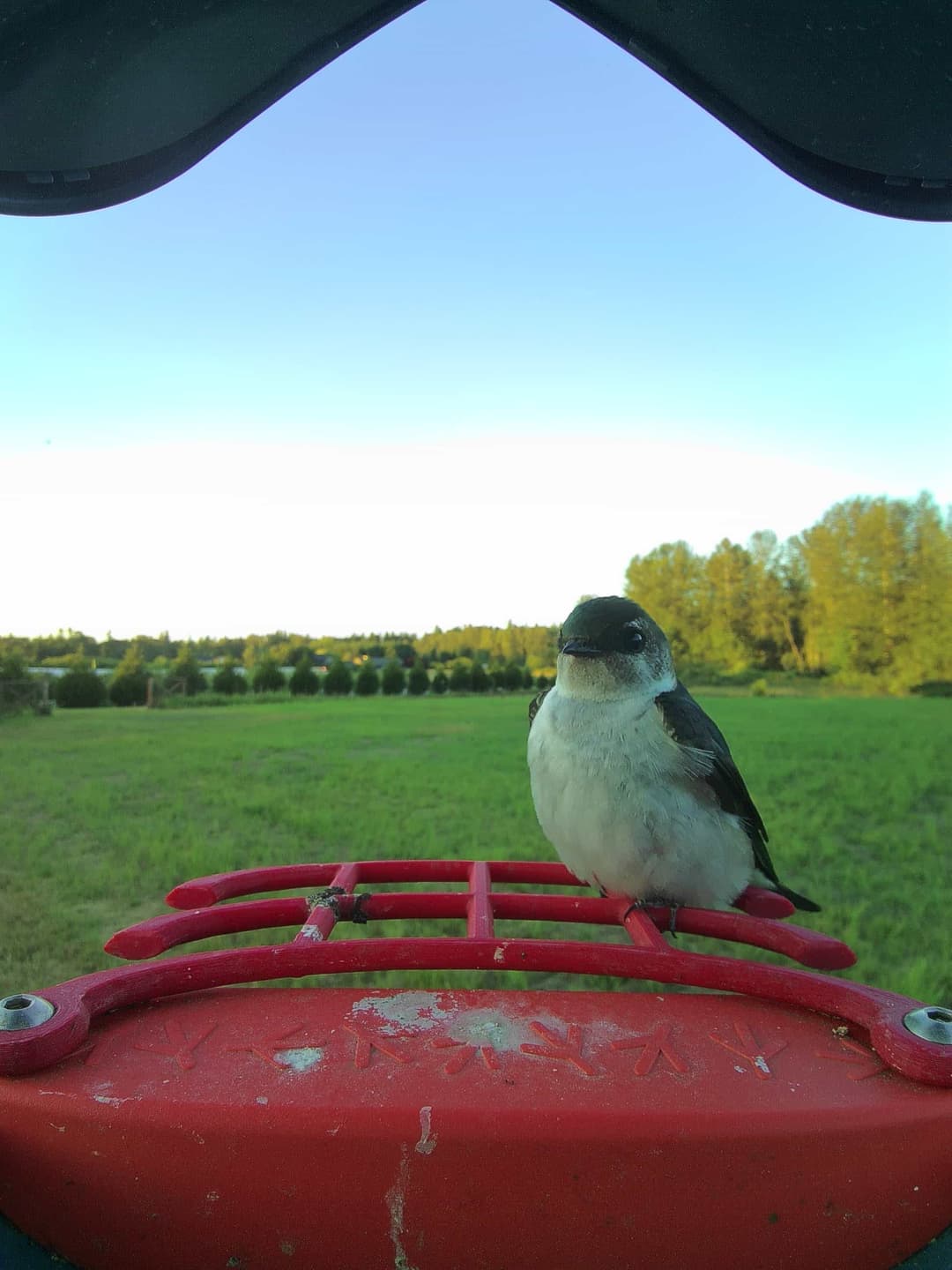
Violet-Green Swallow vs Tree Swallow
The Tree Swallow has a steely blue upper body and white underparts, while the Violet-Green Swallow features a greenish gloss on its back with distinct white patches on its face near the eyes and rump. Tree Swallows lack these white facial patches. Look for the clean, smooth coloration of the Tree Swallow.
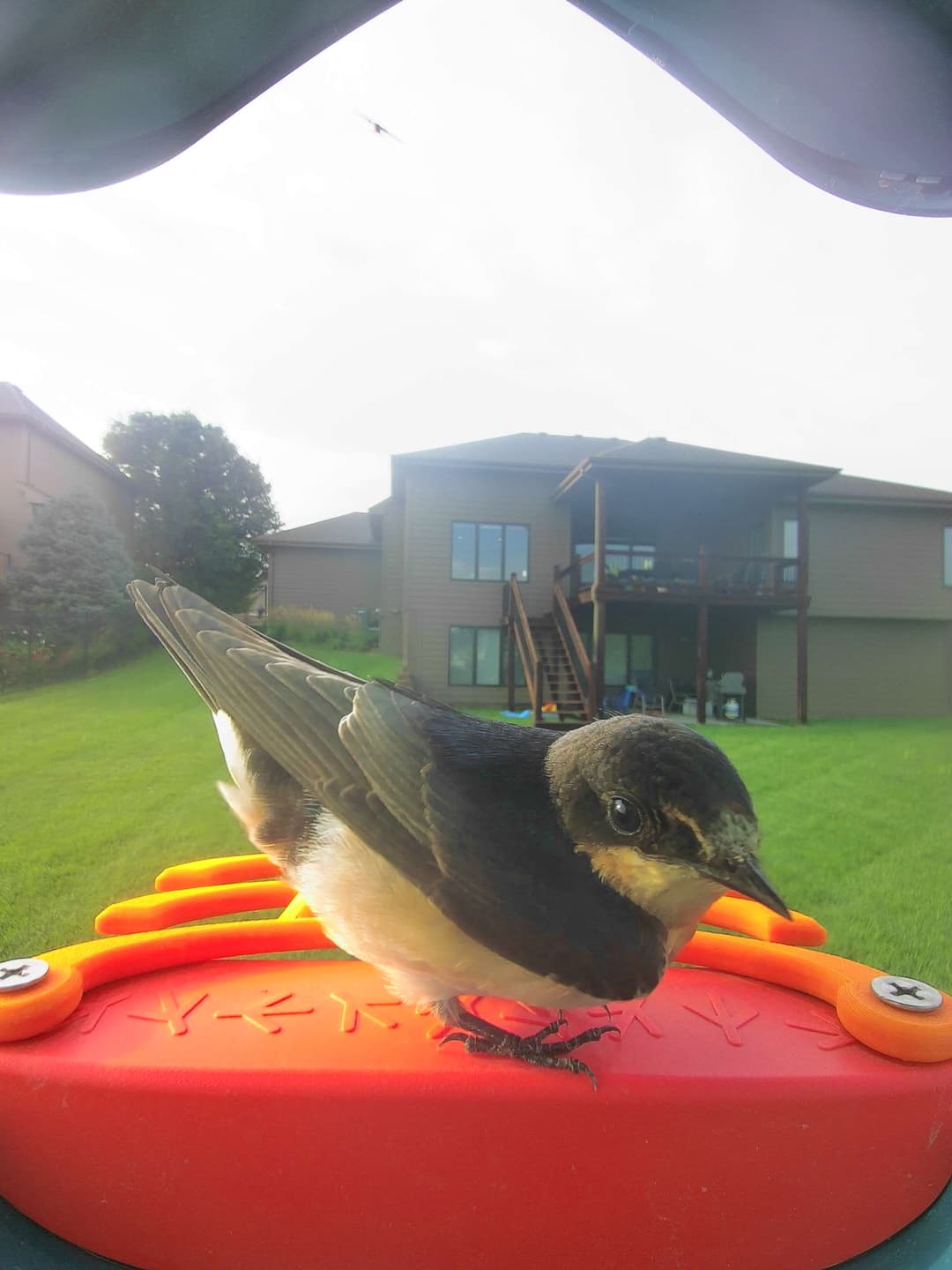
Barn Swallow vs Tree Swallow
Barn Swallows have a distinct reddish-brown throat and forehead, long forked tails, and a more slender body, differing from the Tree Swallow's uniform bluish upperparts and short, squared tails. Tree Swallows also lack the Barn Swallow's buffy underparts and elongated tail streamers.
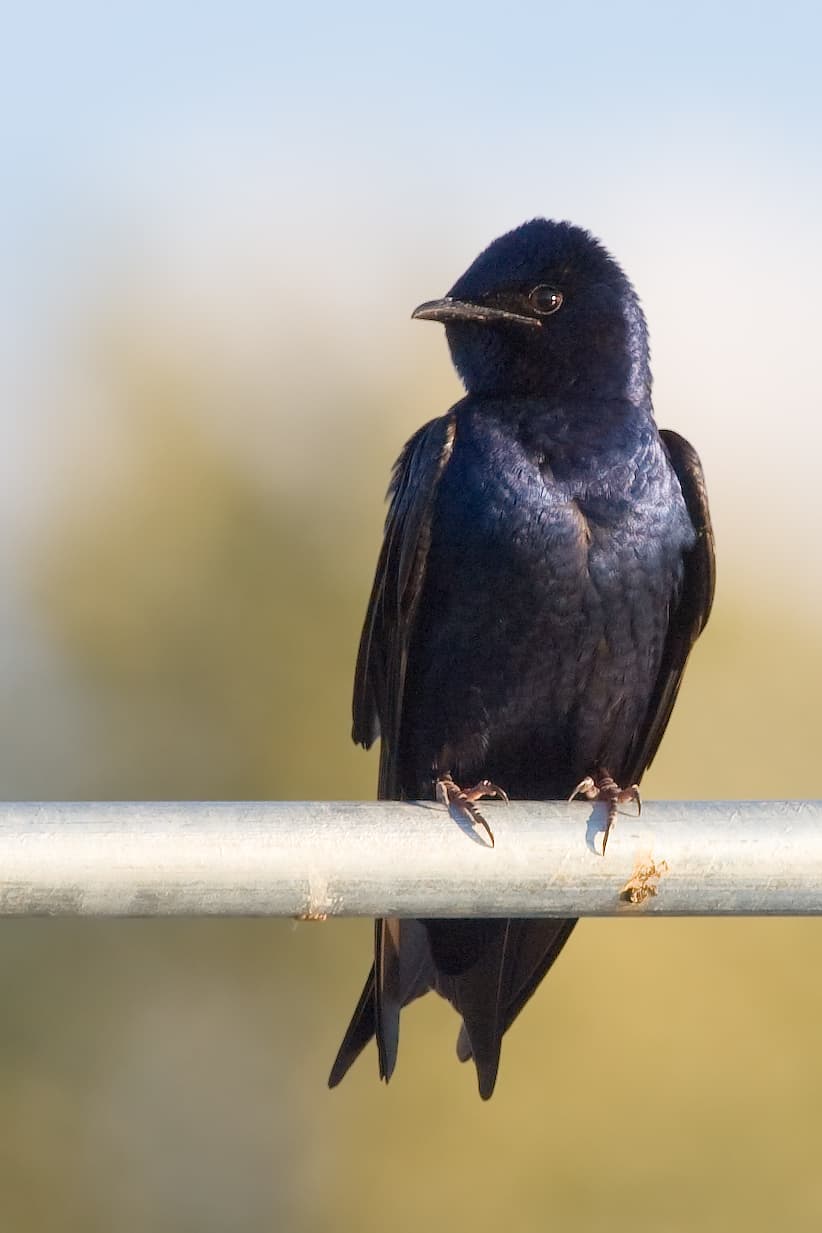
Purple Martin vs Tree Swallow
The Purple Martin is larger than the Tree Swallow, with a broader frame and uniformly dark blue-purple feathers that gloss all over, as opposed to the Tree Swallow's bright white belly. Additionally, Purple Martins have a heavier, chunkier appearance in flight compared to the slender and agile Tree Swallow.
Breeding and nesting habits of the tree swallow
Mating behaviors
The male tree swallow arrives on the nesting territory before the female. Courtship involves the male showing potential nesting sites to the female. Tree swallows often choose new mates each year, reflecting flexible pair bonding.
Nesting details
Tree swallows make use of natural nest sites such as holes in dead trees or old sapsucker holes in live trees. They frequently use nest boxes and sometimes nest in unusual places like holes in buildings or in the ground. Nests, mostly constructed by the female, are made from grass, weeds, rootlets, moss, pine needles, and other plant materials; they are usually lined with feathers from other bird species, added after the eggs are laid.
Eggs and chick-rearing
After laying the first eggs, the nest is lined with many feathers for insulation. Tree swallows care for and rear their chicks in these carefully constructed nests. To support these birds in gardens, homeowners can provide safe nest boxes and ensure the availability of suitable building materials like grasses and feathers.
What does a tree swallow like to eat?
Berries
Insects
Natural diet
Tree swallows primarily consume insects, predominantly during the summer months. Their insect diet includes flies, beetles, winged ants, and various other bugs. Additionally, they consume some spiders and sand fleas, which belong to the crustacean family. Unlike other swallow species, tree swallows' diet includes a significant portion of plant material, which can constitute up to 20% of their annual diet, with a greater emphasis on plant consumption during winter. Bayberries are the primary plant food source, but they also consume other types of berries and seeds.
Bird feeders
Tree swallows are not typically found at bird feeders as they primarily feed on insects and some plant material in their natural habitat. They are unlikely to visit feeders as their dietary needs focus on natural food sources found within their environment.
Attracting tree swallows with snacks
Tree Swallows are a delight to have around with their color and song. Tempt them into your outback by offering their favorite snacks. Tree swallows are insectivores, they love catching insects in mid-air. However, during tough winter months when insects are scarce, they readily eat berries. Stock your feeders with Dogwood, Juniper, Bayberry, and Honeysuckle berries. Don't forget to keep fresh water nearby!
Proper feeders for tree swallows
Offer your feathered friends' food in the right manner by selecting swallow-friendly feeders. A platform feeder or a shallow dish will work best. It's important that the feeder is in an open area where the swallows can skillfully swoop in and snag their snacks. Ensure the feeder is safe from predators and is cleaned regularly to prevent disease.
Fun tricks to attract swallows
Here's a fun trick: try playing calls of Tree Swallows. This tactic will make them curious and they might pay a visit to see who's around. Another trick is to imitate their favorite habitat. They prefer areas near bodies of water, so consider installing a bird bath or a water feature.
Choosing the right seeds
While insects and berries are a significant part of the swallow's diet, they may also peck at some seeds. We recommend Bird Buddy seeds as they've shown the best results. These seeds are carefully chosen by experts per season to ensure your backyard is a favorite stop for the feathered beauties.
Where can you find tree swallows?

Primary habitat
Tree swallows prefer open or semi-open areas near water bodies like marshes, meadows, and lakes, providing nesting sites and a good supply of flying insects.
Additional range
Beyond water bodies, they are known to nest in areas away from water around meadows or brushy areas. In winter, they predominantly reside around marshes and bayberry thickets along the coast.
Do they migrate?
The Tree Swallow is a migratory bird that undertakes seasonal movements between its breeding and wintering grounds. In spring, the species is known for migrating relatively early to its breeding range, which spans across North America, from the northern United States to Canada. This movement typically begins in late February to March, depending on weather conditions and geography. During migration, Tree Swallows travel by day in flocks, taking advantage of favorable weather and feeding conditions. Their southward migration starts surprisingly early, as early as July, and peaks in early fall. This utilizes a strategy of avoiding the harsher, colder months in their northern breeding territories. They migrate to the southern United States, Mexico, Central America, and the Caribbean for the winter. Key stopover and staging areas include wetlands, open fields, and other bodies of water, where they can feed on flying insects. Tree Swallows are often seen in large, synchronized flocks during this time. These migratory patterns ensure they efficiently exploit resources throughout the year, moving north in early spring and south in mid to late summer, maintaining their survival and reproductive success.
What is the role of tree swallows in nature and how to protect them?
Conservation status
The tree swallow is widespread and common, with its population apparently increasing in many areas, indicating it is not currently vulnerable or endangered. This suggests a stable conservation status. Key conservation efforts include maintaining open habitats and providing nesting boxes to support their breeding. However, habitat loss due to urban development and pesticides could potentially pose threats to the species. Continued monitoring and conservation initiatives, such as land preservation and minimizing pesticide use, are important to ensure long-term stability of their population.
Ecological role of tree swallows
Its role in the ecosystem
The Tree Swallow plays a notable role in pest control and seed dispersal within its ecosystem. With a diet primarily consisting of insects, especially flies, beetles, winged ants, and others, the Tree Swallow helps to regulate these bug populations, constituting a form of natural pest control. This feeding behavior can be beneficial for maintaining a natural balance in the ecosystem, and for the control of insects that could otherwise become pests or disease vectors. Moreover, the swallow's consumption of bayberries and other vegetation forms a part of its seed dispersal mechanism, as these seeds later get passed out of the bird's digestive system and into new locations. The locations where these seeds are 'dropped' can be kilometers away from where they were originally consumed, promoting plant diversity and the spread of certain plant species. In addition, the swallow's nesting behavior, particularly in dead trees or old sapsucker holes, could contribute to nutrient recycling in forest ecosystems. Hence, the ecological significance of the Tree Swallow spans across pest control, seed dispersal and nutrient recycling.
How to help protect tree swallows
Preservation tips
Habitat preservation strategies
To support the conservation of tree swallows, first ensure maintenance of their natural habitats including wetlands, fields, and open water bodies. Their nesting sites, typically in old woodpecker holes or other cavities, should be preserved. Installation of bird houses in swallow-populated areas could also be beneficial.
Community science initiatives
Engaging communities in science initiatives like RSBS (Robust Sampling for Bird Surveys) can create awareness. Involve local schools or community groups in monitoring tree swallow populations, nesting success, chick development or banding adults to track their migration. Additionally, harnessing citizen science platforms can encourage public participation and simultaneously collect valuable data.