
Rufous-Collared Sparrow
Rufous-Collared Sparrow
Also known as: Andean Sparrow
Zonotrichia capensis


Quick Identification guide
Quick Identification guide
- •
Features a distinct rufous collar around the neck, providing its namesake recognition
- •
Exhibits grey head and body with striking white throat and breast
- •
Has a robust, conical beak and bold facial markings with black and white stripes on the head
What does a rufous-collared sparrow sound like?
The rufous-collared sparrow produces a wide range of chirps, trills, and complex melodies. Its typical call, uttered repeatedly, is a sharp "tsip". The males perform intricate, variable songs, often beginning with squeaky notes and ending in trills. Different song patterns are noted, with individual birds often improvising over a basic set theme. Regional dialects are also identified in these sparrows' songs.


Description
When it comes to singing spots, rufous-collared sparrows do indeed play favourites. These tame and approachable birds will select a spot from which to perform and use it for the entirety of one season – and sometimes even for several! Females incubate the eggs themselves. However, males will pitch in and help out when it comes to feeding.
The rufous-collared sparrow can weigh between 17to31grams and be from12to14centimeters tall.
The typical lifespan of a Rufous-collared Sparrow is around 5 years. This is slightly less than the closely related Chipping Sparrow and Swamp Sparrow, which can live up to 11 and 8 years respectively. Factors influencing Rufous-collared Sparrow lifespan include predation and environmental conditions.
Did you know?
Most popular questions about rufous-collared sparrow
How to recognise a rufous-collared sparrow?
General appearance
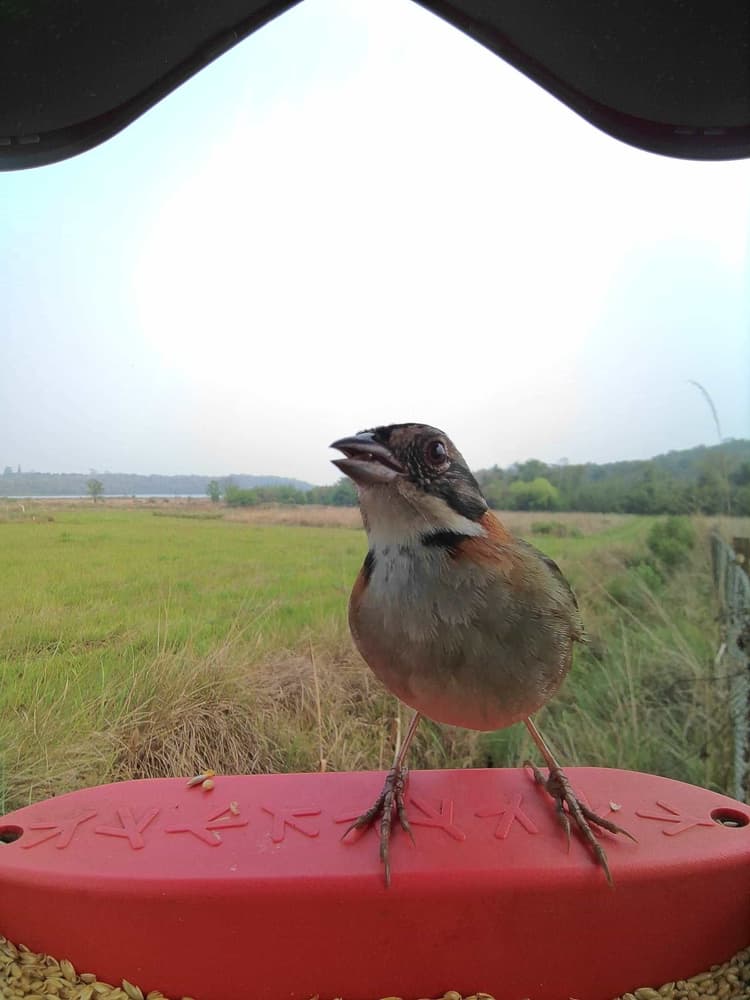
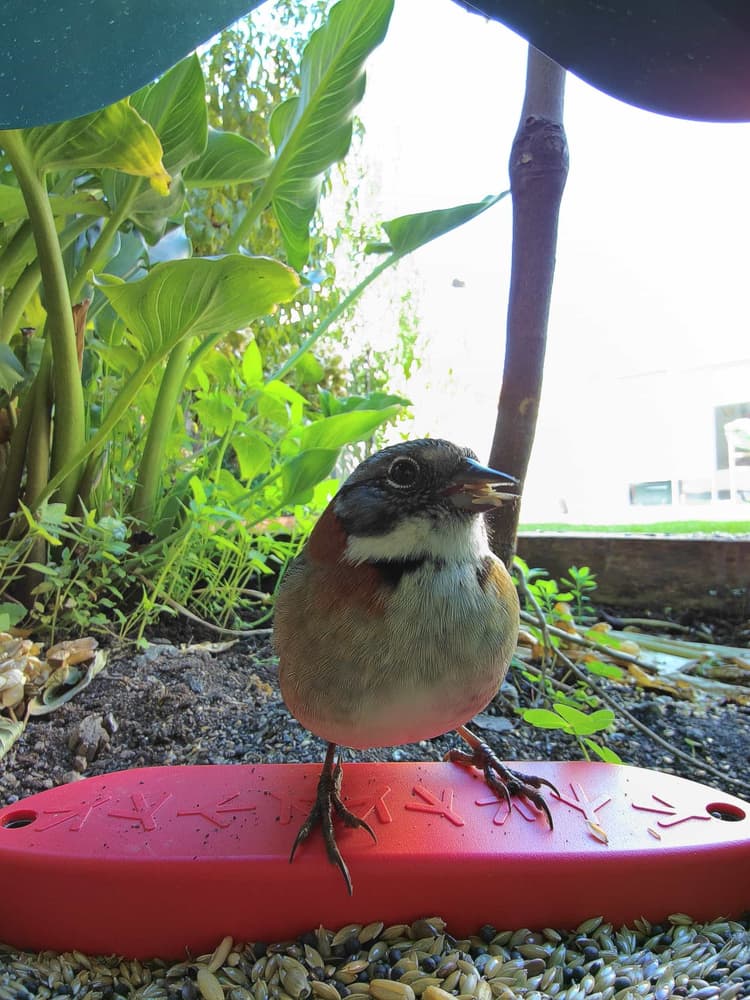
The rufous-collared sparrow is characterized by its striking coloration. This bird sports a grey head and nape with a black-streaked crown. Its distinguishing trait is a rufous or chestnut collar that surrounds its neck - hence its name. A broad, black streak extends from its beak, across its eye, and tapers off as it reaches the bird’s back. The majority of its body is brown with black streaking, while its underparts are off-white.
Male vs female
Both sexes of this species closely resemble each other, making them difficult to distinguish by just physical appearance. They share the same striking markings, from the rufous collar to the black-streaked brown back and grey head. Both males and females also have the same body size and shape.
Juvenile
Younger rufous-collared sparrows lack the adults’ striking markings. They are duller in color, with a blend of olive brown and buff streaking throughout their bodies. The characteristic rufous collar and black streaks only begin to develop as they mature. However, they usually show a hint of the collar, which can give a clue to their species.
Breeding and nesting habits of the rufous-collared sparrow
Mating behaviors
Rufous-collared sparrows engage in elaborate courtship displays involving song duets and aerial chases. Males sing to attract females and establish territories, often engaging in dance-like movements.
Nesting details
Nests are typically built in low shrubs or on the ground in gardens, open fields, and wooded areas. They are constructed from grass, twigs, and leaves, lined with softer materials like feathers. To encourage nesting in gardens, provide dense shrubs and avoid excessive pruning.
Eggs and chick-rearing
Females lay 2-4 eggs per clutch, incubating them for about two weeks. Both parents are involved in feeding and protecting the chicks. The young fledge approximately 9-12 days after hatching and remain dependent on parental care for a short period.
What does a rufous-collared sparrow like to eat?
Fruits
Insects
Seeds
Spiders
Natural diet
The rufous-collared sparrow primarily consumes seeds, insects, and small invertebrates. During breeding seasons, they often increase their intake of insects to provide adequate protein for their young. They forage on the ground, frequently in grassy areas and open fields. Their diet may include seeds from various grasses and weeds, small beetles, caterpillars, and spiders.
Bird feeders
At bird feeders, rufous-collared sparrows are known to eat a variety of seeds. They commonly consume millet, cracked corn, and sunflower seeds. These birds are versatile feeders and adapt quickly to the presence of bird feeders, often visiting gardens and yards where these food options are readily available.
Choosing the right feeder
To attract the rufous-collared sparrow to your yard, the type of feeder you choose matters a lot. These sparrows prefer rounded feeders hung from trees or stands. They are also attracted to ground feeders filled with Bird Buddy seeds, as they often feed on the ground in the wild.
Offering favorite treats
Rufous-collared sparrows have a varied diet, but they particularly love seeds. With this in mind, filling your feeders with high-quality Bird Buddy seeds which are selected by experts for the season will be irresistible to these birds. Remember, fresh and clean food will always attract more birds.
Creating an inviting environment
Despite their bold nature, rufous-collared sparrows like cover. Planting shrubs and small trees will make your yard more attractive to them. If you want to encourage them to stay longer and maybe even sing, provide water troughs and birdhouses as these promise food, water, and shelter, all which are essential for their survival.
Using fun tricks
If you want to go an extra mile to attract these sparrows, you can use realistic bird call devices to convince them that your yard is a safe haven. A rufous-collared sparrow cannot resist the call of its kind. Playing a slow, melodious sparrow song will catch their attention in no time!
Where can you find rufous-collared sparrows?
Primary habitat
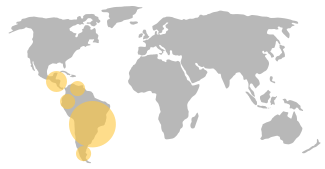
The rufous-collared sparrow prefers open and semi-open landscapes in cooler climate. It is typically found in highland regions in Central and South America.
Additional range
Unexpectedly, this bird also thrives in urban areas, freely occupying city parks and gardens.
Do they migrate?
The rufous-collared sparrow is known for its largely sedentary behavior, but some populations do exhibit migratory tendencies based on their geographic location. Generally, populations in the northern parts of their range, such as those in Colombia and Venezuela, tend to remain in place throughout the year. However, populations in higher altitudes or more temperate regions, such as those in the Andes, may show some altitudinal migration. This movement typically involves descending to lower elevations during colder months. In southern regions, such as in Chile and Argentina, some rufous-collared sparrows may migrate seasonally. These birds often move northward during the austral winter to escape the cold, returning to their breeding grounds in the austral summer. Key migratory routes are less defined compared to more widely-studied migratory species, and the specific timing and destinations can vary based on local environmental conditions and resource availability. Nevertheless, the rufous-collared sparrow's flexible migratory behavior allows it to adapt to diverse environments across its range from Central America to the southernmost parts of South America.
What is the role of rufous-collared sparrows in nature and how to protect them?
Conservation status
The rufous-collared sparrow is classified as a species of least concern, indicating it is common and not currently vulnerable or endangered. It is widely distributed across Central and South America. Key conservation efforts aren't urgently needed due to its stable population, though local studies focus on habitat preservation. The main threats are habitat alteration and urbanization, which can impact local populations. However, the species' adaptability to various environments aids its survival. Conservation efforts typically involve habitat management to ensure continued stability of its population.
Ecological role of rufous-collared sparrows
Its role in the ecosystem
The Rufous-collared Sparrow plays a key role in its ecosystem. As an omnivore, it helps control insect populations, thereby maintaining a balance in the food chain which is beneficial for plant populations and the overall health of its habitat. Furthermore, their diet includes seeds and fruit contributing to seed dispersal, which aids in plant propagation and diversification of the vegetation landscape. As prey, the sparrow plays a role in supporting the population of predator species, such as hawks and snakes. Their nest-building behaviors also contribute to the modification of their environment. Therefore, their survival is significant to ecological balance.
How to help protect rufous-collared sparrows
Preservation tips
Habitat preservation strategies
Key to Rufous-collared sparrow conservation is preserving and restoring its habitat. Minimize disturbances to habitats by regulating land use and forestry activities. Implement reforestation programs targeting areas where these birds are known to thrive. Practice sustainable farming to manage agricultural systems in harmony with nature, avoiding excessive use of dangerous pesticides.
Community science initiatives
Promote and participate in community science initiatives like bird counts to monitor populations of Rufous-collared sparrows. This data is crucial to recognize threats early and take appropriate action. Organize regular educational workshops and awareness campaigns about the importance of their conservation. Moreover, collaborate with local governments and NGOs to create or support initiatives for bird conservation.