
Common Pheasant
Common Pheasant
Also known as: Ring-Necked Pheasant
Phasianus colchicus


Quick Identification guide
Quick Identification guide
- •
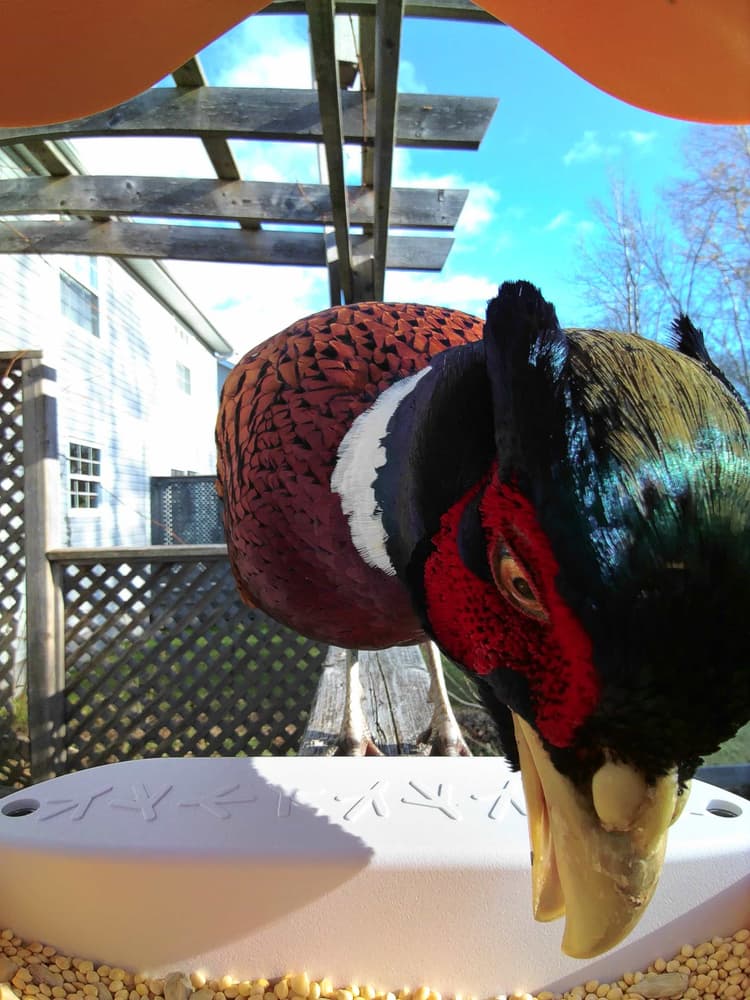
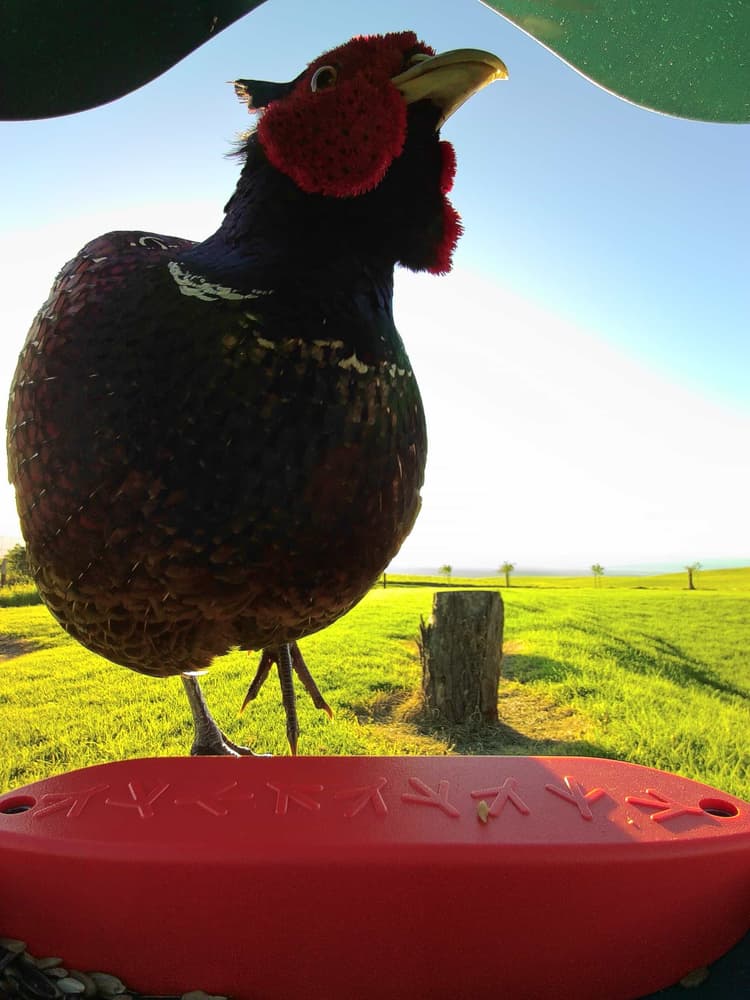
Male displays iridescent plumage with a blend of bold green, red, and bronze, complemented by a distinctive white ring around the neck
- •
Female features more subdued buff-brown feathers with delicate black speckling, providing effective camouflage
- •
Both sexes exhibit long, pointed tails and a robust body structure, with the male showcasing bright red facial wattles
What does a common pheasant sound like?
The common pheasant typically expresses a loud crowing "caw-cawk" sound, often accompanied by a resonant beating of its wings. It is known for its raucous, drum-like calls and occasionally, clear, sharp screams. Upon sensing danger, the pheasant takes flight while emitting a loud, distinctive cackle. This bird's call pattern can be characterized as quite flat.


Description
Did you know that common pheasants are fond of dust baths which they take frequently? A little self-care goes a long way... It removes oil, dirt, dead skin, old feathers, the sheaths of new feathers and parasites from their plumage. They are adaptable birds that can live in an incredible range of habitats. However, if the weather gets extremely cold, they sometimes just can't be bothered and will sleep for days at a time. Who knew pheasants were so relatable?
The common pheasant can weigh between 500to3000grams and be from50to70centimeters tall.
The common pheasant typically lives about 5-6 years in the wild but can live up to 18 years in captivity. However, many do not survive past their first year due to predation. Comparatively, other pheasant species such as the Ring-necked pheasant have similar lifespans of around 5 years, while the Golden pheasant can live up to 8 years.
Did you know?
Most popular questions about common pheasant
How to recognise a common pheasant?
General appearance
Common pheasants are medium to large-sized birds with long tails and sturdy bodies. Known for their striking plumage, they have a distinctive appearance characterized by rich colors and intricate patterns. Their wings are rounded, and they possess strong legs adapted for ground foraging.
Male vs female
Males, known as cocks, are vibrant with an iridescent copper and gold body, a green or purple head with a red wattle, white neck ring, and long, barred tails. Females, or hens, display more subdued, mottled brown plumage, aiding in camouflage during nesting. Males are larger and more flamboyant than females, which is typical of sexually dimorphic species.
Juvenile
Juvenile pheasants resemble females in coloration, being primarily brown and mottled, which provides camouflage. Distinguishing young birds from adults can be challenging until they mature, with males gradually developing brighter, more distinctive plumage as they age. Juvenile males begin to show hints of adult coloration in their second year.
Breeding and nesting habits of the common pheasant
Mating behaviors
The male common pheasant defends his territory by taking a raised perch and giving a crowing call while briefly drumming with his wings. He may have several mates, which associate with each other in a small flock within his territory. During courtship, the male struts in a half-circle around the female with his back and tail feathers tilted toward her, his near wing drooping, and his face wattles swollen.
Nesting details
Nesting occurs on the ground within dense cover. The nest is a shallow depression built by the female and lined with materials such as grass, leaves, and weeds. To encourage nesting in gardens, provide dense shrubbery for cover, and avoid mowing during the nesting season to prevent disturbance.
Eggs and chick-rearing
The female lays the eggs and is responsible for incubating and rearing the chicks. After hatching, the chicks are precocial and leave the nest quickly to follow the mother, feeding on insects and seeds as they grow.
What does a common pheasant like to eat?
Berries
Insects
Nuts
Plants
Seeds
Snails
Spiders
Worms
Natural diet
The common pheasant is omnivorous, with a diet that varies depending on the season and location. It primarily consumes a wide variety of grains, smaller seeds, fresh green shoots, buds, and roots. During the summer months, its diet includes more insects such as spiders, earthworms, and snails, occasionally eating lizards, snakes, frogs, and rodents. In winter, seeds become a more prominent part of their diet, as other food sources become scarce.
Bird feeders
Common pheasants are not typical visitors to residential bird feeders. However, if they do approach feeders, they are likely to be attracted to the grains or seeds present, especially during the winter months when natural food sources are limited.
Attract pheasants with tasty snacks
Common pheasants are particularly fond of grains, fruit and seeds. Hence, a great place to start is by providing a plentiful supply of Bird Buddy seeds in your yard or feeder. These seeds are picked by experts and vary according to the season, making them a healthy and appreciated snack for the pheasants.
Pick the right type of feeder
The common pheasant prefers feeders that are placed low to the ground. They do not perch and are more comfortable feeding directly off the ground or from platform feeders. You may want to consider a sturdy ground feeder, easily accommodating the bird without tipping over. Make sure the feeder is in a quiet and safe area, away from predators and high-traffic zones.
Create an inviting environment
Establishing a safe and comfortable environment is crucial in attracting pheasants. Providing cover like bushes or small trees can make a big difference, as these provide a retreat if they feel threatened and can also be used as roosting places. Remember to keep the area around the feeding spot clean and always make fresh food available.
Keep them coming back for more
Make your yard interesting by changing the type of seeds regularly and occasionally adding extras such as fruits or other grains. This will keep the pheasants curious and eager to come back. As you watch them, you'll notice that pheasants have their own 'songs' or calls as well. Perhaps, you could find a sing-along YouTube video of pheasant calls and play it softly near the feeder to make them feel even more at home!
Where can you find common pheasants?

Primary habitat
The common pheasant favors semi-open habitats such as brushy meadows, woodland edges, hedgerows, and mixed farmland. They are often found near water, particularly around marsh edges.
Additional range
They may also inhabit open grasslands, but are rarely found in very arid places. They can adapt to a variety of climates as long as they have access to water.
Do they migrate?
The common pheasant is generally a non-migratory bird, meaning it tends to stay in one place throughout the year. It is described as "apparently a permanent resident everywhere, both on native range and where introduced," indicating that it does not engage in long-distance seasonal migrations like some other bird species. Originally native to Asia, the common pheasant has been widely introduced to various parts of the world, including North America and Europe. In both its native and introduced ranges, it adapts well to a wide variety of habitats, particularly areas with a mix of farmland, woodlands, and wetlands. This adaptability further negates the need for migration, as it can find suitable resources in its established territories year-round. While individual movements can occur, such as dispersal in search of food, territory, or mates, these are generally limited in scope and do not constitute migration in the traditional sense. The common pheasant's strong adaptability and tendency to remain within established areas make it a sedentary species favoring stability in its habitat choice.
What is the role of common pheasants in nature and how to protect them?
Conservation status
The common pheasant is generally classified as common in North America, where it is intensively managed as a game bird. Some populations are not self-sustaining and rely on releases from game farms for maintenance. Key conservation efforts focus on habitat management and regulated hunting to ensure populations remain stable. Habitat loss and overhunting can pose significant threats, but current management practices largely help mitigate these risks. Overall, while specific populations may struggle without intervention, the species as a whole is not considered vulnerable or endangered.
Ecological role of common pheasants
Its role in the ecosystem
The Common Pheasant plays a significant role in the ecology of its habitat. It is omnivorous and has a varied diet that includes seeds, grains, green shoots, berries, insects, spiders, earthworms, snails, and sometimes lizards, snakes, frogs, and rodents. This broad diet makes it a vital player in pest control, reducing the population of potentially harmful insects and small animals. The pheasant also aids in seed dispersal, thus helping in the propagation of plant species. It feeds on the ground and sometimes in trees, suggesting that it can influence both terrestrial and arboreal ecosystems. Its behavior of scratching the ground to uncover food can contribute to soil aeration and nutrient cycling. Moreover, the females sometimes lay their eggs in others' nests, hinting at a possible role in brood parasitism. Overall, the Common Pheasant has a significant impact on its ecosystem, with contributions ranging from pest management to seed dispersal.
How to help protect common pheasants
Preservation tips
Habitat preservation strategies
To support the conservation of the common pheasant, ensure the preservation of its natural habitat, which includes forests, marshlands, and grasslands. This can be done through local land conservation efforts and advocating for protections against deforestation and wetland drainage. Additionally, promoting sustainable farming practices helps reduce habitat destruction caused by intensive agriculture.
Community science initiatives
Engage the local community in citizen science projects that track common pheasant populations and monitor their habitat conditions. This can involve conducting annual bird counts or reporting sightings through mobile apps. Public education and awareness campaigns on the importance of preserving the common pheasant and its habitat are vital. Collaborate with local schools, NGOs and nature centers to facilitate these initiatives.