
Red Junglefowl
Red Junglefowl
Gallus gallus
Quick Identification guide
Quick Identification guide
- •
Displays vibrant plumage with iridescent golds, greens, and rust on the body and tail
- •
Features a distinctive red comb and wattles on the head, accentuating the overall appearance
- •
The male has an arched blackish and white tail, while the female is more subdued with mottled brown feathers
Description
Cock-a-doodle-doo, you've just been visited by the domestic chicken's wild ancestor! Chickens were domesticated from the red junglefowl some 8,000 years ago. Though it is certainly their most famous one, cock-a-doodle-doo is not their only call: they have a variety of complex vocalisations to advertise what they are doing or how they feel.
The red junglefowl can weigh between 485to1450grams and be from41to78centimeters tall.
The typical lifespan of the red junglefowl is approximately 15 years in the wild. This is similar to other junglefowl species such as the grey junglefowl which also has a lifespan of 15 years. However, in captivity, red junglefowls can live up to 20 years, slightly longer than most other junglefowl species.
Did you know?
Most popular questions about red junglefowl
How to recognise a red junglefowl?
General appearance
The Red Junglefowl has a combination of reddish-brown, gold, tan, and metallic green colorations, with a dark tail. An adult can grow on average to a length of 28-32 inches. They typically have a prominent ‘comb’ atop their head, a fleshy growth or crest hanging from the neck, and long leg spurs.
Male vs female
Male red junglefowl are more colourful than females, having a brighter plumage, with abundant gold, red, and green hues. Their tail-feathers are elongated, forming a dark fan-like structure. Females, on the other hand, are mainly brown with occasional white and red patches. They are smaller in size and have less pronounced combs and wattles.
Juvenile
Juvenile red junglefowl have subtle colour variation which intensifies as they reach adulthood. They are generally pale brown, and gradually develop adult-like features. It may be difficult to discern sex in very young specimens as their sexual plumage does not fully develop until they mature.
Breeding and nesting habits of the red junglefowl
Mating behaviors
The red junglefowl engages in elaborate courtship displays, with males showcasing vibrant plumage and performing visual displays to attract females. These displays often include vocal calls, feather fluffing, and dancing to demonstrate fitness and dominance.
Nesting details
Red junglefowl typically nest on the ground in shallow depressions lined with leaves and grass. They prefer secluded areas, such as dense undergrowth or beneath shrubs. In gardens, creating covered areas with soft ground and providing an abundance of natural materials can encourage nesting.
Eggs and chick-rearing
Females lay 4 to 6 eggs per clutch and incubate them for about 21 days. After hatching, chicks are precocial and leave the nest quickly under the mother's guidance. The mother leads them in searching for food and provides protection from predators. Creating a safe, sheltered environment with plenty of food sources supports chick development.
What does a red junglefowl like to eat?
Fruits
Insects
Scraps
Seeds
Small animals
Spiders
Natural diet
Red junglefowl primarily feed on seeds, fruits, and insects found on the forest floor. They forage through leaf litter for seeds from various grasses and plants, as well as fallen fruits. Insects such as beetles, ants, and termites form a crucial part of their diet, providing essential protein. Additionally, they consume small vertebrates and invertebrates, like lizards and snails, when available. The red junglefowl adapts to seasonal changes by altering its feeding behavior to whichever food sources are most abundant.
Bird feeders
At bird feeders, the red junglefowl may consume a variety of commercially available seeds and grains, such as cracked corn, millet, and sunflower seeds. They are also attracted to kitchen scraps and leftovers, including bread and cooked rice. Some individuals may show a preference for foods high in fats, like suet, especially during colder months. Despite being wild, they easily adapt to human offerings, which can supplement their natural diet and provide additional nutrients.
Setting the ground
Red junglefowl are wild birds often attracted to shrubs and tall trees, which provide them with cover. Design your yard to mimic this habitat by planting dense shrubs and tall trees. You could also add a water feature as these birds are attracted to places where they can drink and bathe.
Feeder types and placement
Choose ground feeders, platform feeders or hanging feeders for the red junglefowl. Try to place them near thickets or bushes where the fowls can quickly dart into for safety. This will make them feel more secure and they'll be more likely to visit often.
Favorite snacks
Red junglefowl love to eat bird seeds, grains, fruits, worms, insects and sometimes small reptiles. You could try a variety to see what attracts them most. And don't forget that Bird Buddy seeds have proven to be quite appealing to them. These seeds are chosen by experts for the season and have shown impressive results in attracting red junglefowl.
Fun tricks
A fun trick could be playing red junglefowl calls on a speaker; this could pique their curiosity and attract them towards your yard. Once they are regulars, you could even organize a sing-along session by playing soothing music. Just remember not to disturb them and always respect their space.
Where can you find red junglefowls?
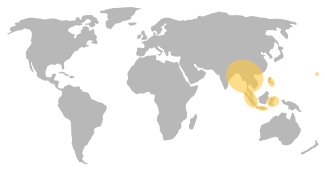
Primary habitat
Red junglefowl inhabits tropical and subtropical rainforests, scrub, and cultivated areas in Southeast Asia.
Additional range
This bird can also adapt to living in mangrove forests and even high-altitude regions, extending its range to India and South China.
Do they migrate?
The red junglefowl is primarily a non-migratory bird. It is the wild ancestor of domestic chickens and is native to the tropical and subtropical regions of Southeast Asia. The species typically inhabits jungles, forests, and shrublands where it can be found year-round. Red junglefowl are distributed across countries such as India, Bangladesh, Sri Lanka, Myanmar, Thailand, Laos, Cambodia, Vietnam, and parts of Indonesia and the Philippines. They tend to stay within a relatively confined area, adapting to the resources available in their habitats rather than migrating large distances. Behaviorally, red junglefowl are known to undertake short-distance movements, often influenced by local environmental conditions, such as food availability or habitat changes due to seasonal variations. However, these are not considered migratory movements in the traditional sense, as they do not involve predictable, long-distance seasonal migrations between distinct geographic regions. In summary, the red junglefowl is a resident species that maintains its territory throughout the year, relying on the rich biodiversity of its native habitat to meet its ecological needs.
What is the role of red junglefowls in nature and how to protect them?
Conservation status
The red junglefowl is currently classified as "Least Concern" regarding its conservation status, indicating it is relatively common. Key threats include habitat loss due to deforestation, hybridization with domestic chickens, and hunting. Despite these pressures, the species remains widespread across its native range in South and Southeast Asia. Conservation efforts focus on habitat protection and managing genetic integrity through captive breeding programs and hybrid control. Continued monitoring is essential to ensuring the species maintains its population stability despite ongoing environmental changes and human activities.
Ecological role of red junglefowls
Its role in the ecosystem
The red junglefowl (Gallus gallus) is ecologically significant as an ancestor of the domestic chicken and a part of biodiverse ecosystems in Southeast Asia. It contributes to pest control by feeding on insects, including harmful agricultural pests, which helps maintain the balance between beneficial and detrimental insect populations. This, in turn, can reduce the need for synthetic pesticides. Additionally, red junglefowl play an essential role in seed dispersal. As they forage, they consume seeds and later excrete them in different locations, facilitating plant gene flow and enhancing forest regeneration. Their foraging behavior also aids in soil aeration, promoting healthy soil ecology. By serving as prey for a variety of predators, such as snakes and birds of prey, red junglefowl are integral to food webs, maintaining the ecological balance. Thus, the red junglefowl's activities support ecosystem resilience and biodiversity conservation.
How to help protect red junglefowls
Preservation tips
Habitat preservation strategies
To conserve the red junglefowl, prioritize the protection of its habitats which includes tropical forests and scrublands. This can be accomplished through policies that deter deforestation and land degradation. Engage in reforestation programs when necessary. Also, regulate hunting and trade of this species to prevent their numbers from dwindling.
Community science initiatives
Involve local communities in conservation efforts. Develop educational programs to raise awareness about the importance of the red junglefowl to the ecosystem and their current endangered status. Set up citizen science projects that monitor the population, nesting habits and general health of the species. Every collected data contributes significantly to the preservation efforts.