
Red-Winged Starlings
Red-Winged Starlings
Onychognathus
Quick Identification guide
Quick Identification guide
- •
Notice the glossy black plumage with a subtle iridescent sheen that covers most of the body
- •
Distinctive reddish-brown patches are visible on the wings, especially when they are spread
- •
Features a slim body structure with a relatively long tail and a short, slightly curved bill
Description
The red-winged starling genus consists of 11 species of birds that have become increasingly common in cities; particularly the red-winged starling. Their natural habitat are cliffs, after all, and tall buildings can also be a type of cliff! They are super-social when not breeding, but during breeding season, it's best to leave them alone as they will attack any trespassers who get too close to the nest, no matter what their size... or species!
The red-winged starlings can weigh between 73to160grams and be from20to40centimeters tall.
Red-winged starlings typically live up to 12 years in the wild. This lifespan aligns with those found among similar species within the starling family. For example, the common starling often lives up to 15 years, while the European starling enjoys a similar lifespan of about 10 to 15 years. However, under ideal conditions in captivity, some starling species can live significantly longer, exceeding two decades.
Did you know?
Most popular questions about red-winged starlings
How to recognise a red-winged starlings?
General appearance
Red-winged starlings are typically large, gregarious birds, whose body lengths reach roughly 27-30 cm. They display dark plumage with sleek hints of metallic green and deep purple, offset by signature red flight feathers viewed when in flight or during displays. Their eyes are pale yellow, and they have pointed bills which are yellow-to-orange with a black tip.
Male vs female
Males and females are similar in appearance with males slightly larger than females. Males have more extensive red in their wings, with the red tending to be more vibrant. Females' flight feathers have a duller hue, usually more brownish-red than males, and are less extensive.
Juvenile
Juvenile red-winged starlings have even more dull plumage compared to females, with less red visible in their wings. Their eyes are darker than adults, generally brown, and the bill is uniformly dark. As they mature, flights feather take on their namesake red hue, with males and females depicting their relative extents and variations of red.
Breeding and nesting habits of the red-winged starlings
Mating behaviors
Red-winged starlings engage in courtship displays involving vocalizations and wing-spreading by males to attract females. Pair bonding is strong, and mates often stay together for multiple breeding seasons.
Nesting details
Nesting typically occurs on cliff ledges or buildings, with nests made from twigs, grass, and feathers. In gardens, providing ledges and native plant materials can attract these birds.
Eggs and chick-rearing
Females lay 2-4 pale blue eggs, incubating them for about two weeks. Both parents partake in feeding the chicks with insects and fruits until they fledge after 3-4 weeks.
What does a red-winged starlings like to eat?
Fruits
Insects
Nectar
Scraps
Seeds
Snails
Spiders
Natural diet
Red-winged starlings primarily feed on a variety of natural food sources such as fruits, berries, seeds, and insects. These birds are known to consume fruits from native plants and trees, often foraging in bushes and canopies. Additionally, they supplement their diet with insects such as beetles, caterpillars, and grasshoppers, which provide essential protein.
Bird feeders
At bird feeders, red-winged starlings are commonly attracted to suet and seed mixes, especially those containing sunflower seeds and peanuts. They may also enjoy bakery scraps and other human food leftovers. While they are not frequent feeder visitors, providing a varied selection of seeds and suet can entice them to visit occasionally.
Setting up the right environment
You can encourage red-winged starlings to visit by creating a bird-friendly environment in your yard. This includes providing open spaces, roosting spots, and bird baths. Ensure that your yard is safe from predators like cats. Planting trees and shrubs native to your area can also attract these birds.
Food to attract red-winged starlings
Red-Winged Starlings are omnivorous. Their diet consists of fruits, insects, and seeds. They particularly enjoy berries. You can also use Bird Buddy seeds, which are preferred by many bird species. These seeds are chosen by experts for each season, ensuring you always have the best to offer.
Choosing the right feeder
Tube feeders are a good choice for red-winged starlings. They are easy to use and clean. Their design facilitates easy feeding for the birds and keep the seeds dry. Be sure to place the feeder in an open, safe location where the starlings will feel comfortable.
Tips to encourage frequent visits
Keep the bird feeder filled and fresh. Consistency in the supply of food will help them recognise your yard as a reliable source. Further, provide a clean supply of water for them to drink and bathe. You can also play bird sounds to attract them. Who knows, you might just get a sing-along going.
Where can you find red-winged starlingses?
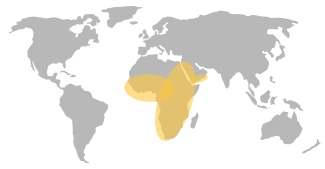
Primary habitat
Red-winged Starlings prefer rocky habitats, from coasts to mountains, and are common in southern and eastern Africa.
Additional range
Remarkably, they have adapted to urban environments, often nesting on buildings.
Do they migrate?
The red-winged starling is primarily a resident bird species, meaning it does not undertake long-distance migrations. The species is found across much of sub-Saharan Africa, particularly in eastern and southern regions, including countries like South Africa, Namibia, Botswana, Zimbabwe, and Kenya. Red-winged starlings adapt well to different environments, from natural habitats like cliffs and open savannas to urban areas. Their movements are generally local and are primarily influenced by the availability of food and breeding conditions. Some seasonal altitudinal movements might occur, particularly in response to changes in climate and food availability at different altitudes, but these are not considered true migrations. As opportunistic feeders, red-winged starlings might explore larger areas outside their usual vicinity if food resources become scarce. During breeding seasons, they tend to return to more favorable nesting sites, which could involve some short-distance travel back to familiar territories. In summary, the red-winged starling remains largely in the same regions year-round, with only minor local movements rather than long migratory journeys.
What is the role of red-winged starlingses in nature and how to protect them?
Conservation status
The red-winged starling is currently considered common and not under immediate threat. This bird species often thrives in various environments, including urban areas, which helps maintain stable population levels. Key conservation efforts are not specifically targeted at red-winged starlings due to their stable status. However, broader conservation initiatives that protect habitats also benefit them. Significant threats are not prevalent, but habitat destruction and urban expansion could pose challenges in the future. Continued monitoring and habitat preservation remain important to ensure their long-term sustainability.
Ecological role of red-winged starlingses
Its role in the ecosystem
Red-winged Starlings play an essential role in their ecosystems serving as both pest controllers and seed dispersers. First, by feeding on a variety of insects and other invertebrates, these birds help control pest populations, contributing to the ecological balance and health of their habitats. Their diverse diet includes harmful insects that can be agricultural pests, thus benefiting local farming communities. Moreover, Red-winged Starlings play a vital role in seed dispersion. They consume a wide range of fruits, and by excreting the seeds in different locations they greatly aid the lifecycle of numerous plant species and contribute to biodiversity. Consequently, as seed dispersers, they are critical for forest regeneration and in maintaining healthy ecosystems. So, their existence helps in perpetuating flora and limiting harmful insect species in their ecosystems.
How to help protect red-winged starlingses
Preservation tips
Habitat preservation strategies
Preserve habitats of red-winged starlings by restricting infrastructure development in areas where they are known to inhabit. We should also restore ecosystems that have been damaged, such as forests and grasslands, ensuring these starlings have a suitable place to nest and forage. Implement protected areas where necessary.
Community science initiatives
Engage communities nearest to the habitats of red-winged starlings in citizen science initiatives. Encourage them to record and report sightings, which can help understand the starling's distribution and population trends. Run educational programs to raise awareness of the importance of biodiversity and the role these starlings play in the ecosystem. Partnership with local schools and community centers could be beneficial.