
Red-Billed Quelea
Red-Billed Quelea
Also known as: Red-Billed Weaver, Red-Billed Dioch
Quelea quelea
Quick Identification guide
Quick Identification guide
- •
Features a bright red beak that stands in contrast to its body plumage
- •
Exhibits mottled brown and cream coloring across its back and wings, which aids in camouflage
- •
Displays a relatively small and compact body with a subtle contrast between plumage elements
What does a red-billed quelea sound like?
The red-billed quelea has a rich repertoire of vocalizations. Typical calls include a sharp, repetitive "chis-ick" often used as an alarm call, and a softer, high-pitched twittering during feeding. Breeding males produce a complex song consisting of rapid trills, whistles, and buzzing, often integrating mimicry of other species. Calls are generally sharp and cheerful, while songs induced by breeding season have increased complexity and musicality.
Description
Some like it hot and that's definitely the case of red-billed queleas. The most numerous undomesticated bird on Earth packs up and leaves at the mere hint of cool weather. Plenty of heat to go around where they live, thankfully. And food as well. These gregarious birds travel in flocks a million strong and devastate fields, earning them the nickname of Africa's feathered locust.
The red-billed quelea can weigh between 15to26grams and be from11to13centimeters tall.
The red-billed quelea typically lives up to 8 years in the wild. This small bird's lifespan is relatively average when compared to its close relatives like the Southern Red Bishop that lives around 11 years, and the Yellow-crowned Bishop with 9 years. Despite their prolific breeding, quelea's life is often threatened by predation and harsh environmental factors.
Did you know?
Most popular questions about red-billed quelea
How to recognise a red-billed quelea?
General appearance
The Red-billed Quelea is a small bird, approximately 12 cm long and weighing around 20–30 grams. They typically have reddish or pinkish bills and brown bodies. Depending on the season, their plumage can vary from a nondescript brown to a dramatic black, white, and red during the breeding season.
Male vs female
Distinguishing between sexes in Red-billed Quelea can be challenging. Males have more distinctive features, particularly during breeding season. Their plumage turns darker with a black face and throat, a white belly and a bright red bill. They also have a well-defined white line over their eyes, resembling spectacles. Females, on the other hand, have more subdued brown-grey plumage and lack the bright red bill.
Juvenile
Juvenile Red-billed Queleas resemble the adult females in colouration, but their plumage is even less distinctive. Juveniles have a fine streaking on their upperparts and pale underparts. Their bills are more on the brownish side, and they lack the red colouration that gives the species its name until they reach maturity.
Breeding and nesting habits of the red-billed quelea
Mating behaviors
Red-billed queleas engage in elaborate courtship displays, where males showcase their vibrant plumage and perform aerial displays to attract females. Once paired, they often form monogamous bonds for the breeding season.
Nesting details
Queleas build compact, spherical nests using grasses and twigs. These are typically situated in thorny trees or bushes to deter predators. They may occasionally nest in large colonies, often near water sources.
Eggs and chick-rearing
Females lay 2-4 eggs per clutch, with both parents sharing incubation duties. Once hatched, chicks are fed regurgitated seeds by both parents and fledge within two to three weeks. Parents remain attentive to the fledglings until they are independent.
What does a red-billed quelea like to eat?
Insects
Seeds
Natural diet
The red-billed quelea primarily feeds on seeds from grasses like millet, sorghum, and other small grains found in their natural habitats. During the breeding season, they supplement their diet with insects and larvae to provide extra protein needed for chick development.
Bird feeders
While not commonly visiting bird feeders due to their particular habitat preferences, red-billed queleas might consume small seeds if available, such as millet or cracked corn. They typically prefer natural food sources available in their environments.
Enticing the red-billed quelea
To successfully attract the Red-Billed Quelea, having a consistent source of food in your yard or feeder is essential. Create a welcoming environment by selecting a feeder that's easy to access. This would mean a feeder with perches for the birds to sit and feed.
Food selection
Red-Billed Quelea enjoy a diverse diet, but they are particularly fond of seeds. The Bird Buddy seeds are a great option as they are specifically selected by bird experts based on the season. Regularly filling your feeder with these premium seeds will almost certainly entice these lovely birds.
Encouraging continuous visits
Keeping a clean feeder and its surrounding area greatly encourages the Red-Billed Quelea to return. Regular cleaning prevents the growth of mold and build-up of old seeds, ensuring fresh, delicious seeds for the birds every time they come to visit.
Fun tricks and songs
These birds enjoy a lively environment. Consider adding a birdbath or a water feature in your yard, as the sound of moving water is attractive to these birds. And while they might not stay for a sing-along, their own song is a pleasant sound that will make your yard feel even more alive.
Where can you find red-billed queleas?
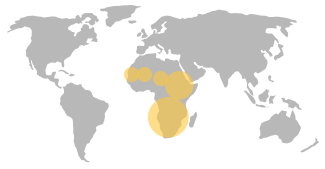
Primary habitat
The red-billed quelea primarily inhabits Sub-Saharan Africa. It prefers warm, tropical savannahs near surface water.
Additional range
Unexpectedly, this bird can also thrive in agricultural areas, particularly grain-producing regions which provide abundant food.
Do they migrate?
The red-billed quelea is known for its partial migratory behavior, largely driven by seasonal changes in rainfall and the availability of food resources. These small birds follow a broad and complex migration pattern across sub-Saharan Africa, largely influenced by the wet and dry seasons. During the wet season, which varies across regions from November to April, red-billed queleas move into areas with abundant rainfall and lush vegetation, which promote the growth of seeds and insects—primary food sources for these birds. Key migratory movements are observed from more arid regions such as parts of the Sahel, southern Africa, and East Africa towards wetter regions like the southern savannas and highlands. As the dry season approaches, typically around May to October, the birds migrate back towards drier regions where seeds have matured and natural resources remain available. The timing and routes also depend on local environmental conditions and may result in some regional differences. Key locations for the red-billed quelea include Botswana's Okavango Delta, Tanzania's Serengeti, and the Sahel regions of West Africa. Their precise routes are dictated by local ecologies and can include vast flock movements across countries in search of suitable feeding grounds.
What is the role of red-billed queleas in nature and how to protect them?
Conservation status
The red-billed quelea is classified as "Least Concern" due to its vast population and extensive range across sub-Saharan Africa. It is considered one of the most numerous bird species globally. While not vulnerable or endangered, their population can pose threats to agriculture, as they often damage cereal crops, leading farmers to implement control measures. Key conservation efforts are minimal due to its abundance, although there is a focus on balancing population control with minimizing environmental harm. Significant threats include habitat alteration and climate change, which can affect food availability and breeding conditions.
Ecological role of red-billed queleas
Its role in the ecosystem
The Red-billed Quelea is a small weaver bird native to Sub-Saharan Africa. Ecologically, it plays a substantial progressive role in seed dispersal, contributing to the proliferation of various plant species, thus aiding in biodiversity. On the other hand, in vast swarms, they can also play a destructive role as they are known as one of the most destructive grain-eating birds on the planet, often causing significant damage to agricultural crops. Their population fluctuations, therefore, can have impactful ramifications on local ecosystems, including impact on the flora and changes in the food availability for their predators. Despite the damages caused to crops, they constitute a significant food source for many bird predators, contributing to the ecosystem's dynamism.
How to help protect red-billed queleas
Preservation tips
Habitat preservation strategies
Establish Protected Areas: Develop designated conservation zones to preserve key red-billed quelea habitats. Introduce legislation to safeguard crucial breeding and nesting areas from disruption or destruction. Community involvement: Engage local communities in these initiatives to increase awareness and ensure respect for these zones. Reforestation: Red-bill queleas thrive in areas with abundant vegetation, promoting reforestation can help create and preserve their habitats.
Community science initiatives
Citizen Science: Encourage local communities to participate in bird observations and count initiatives, providing essential data for conservation strategies. Environmental Education: Implement environmental education programs in schools to grow future nature stewards, ensuring longer term preservation of habitats. Collaborate with Scientific Community: Form partnerships with universities and research institutions to further study red-billed queleas and monitor population trends, contributing to an effective conservation approach.