
Pin-Tailed Whydah
Pin-Tailed Whydah
Vidua macroura


Quick Identification guide
Quick Identification guide
Male
- •
dramatic black and white plumage on the head and upper body
- •
long, elegant tail feathers that are significantly longer than the body
- •
bright red conical beak providing a striking contrast to the body
Female
- •
soft brown plumage overall with subtle streaking
- •
Lacks the male's long tail, having a short and tidy tail
- •
orange to red conical beak less vibrant than the male
What does a pin-tailed whydah sound like?
The pin-tailed whydah typically sings a melodious, rich warbling song, often as part of its display behavior. Its vocal repertoire also includes various whistles, chattering, and mimicry. Its call is high-pitched and rasping, described as a sharp "tzeeee". The bird's vocalization is notable for its variety and the male’s songs are long, complex, and continuously changing.


Description
Pin-tailed whydahs are one of 100 species of parasitic birds in the world. What does this mean? Well, females use around 20 different birds as unwilling foster mothers for their young. They just lay the eggs in another's nest and then leave. They are most recognisable by the long tail feathers that males grow during mating season – twice as long as their body!
The pin-tailed whydah can weigh between 12.2to18.8grams and be from11to32centimeters tall.
The pin-tailed whydah typically lives for about ten years in captivity. In the wild, they generally have shorter lifespans due to threats like predation. Comparatively, their close relatives, the indigobirds, have a similar lifespan of around nine to ten years. Both these species fall well within the average lifespan range for small passerine birds, which is typically between 2 and 15 years.
Did you know?
Most popular questions about pin-tailed whydah
How to recognise a pin-tailed whydah?
General appearance
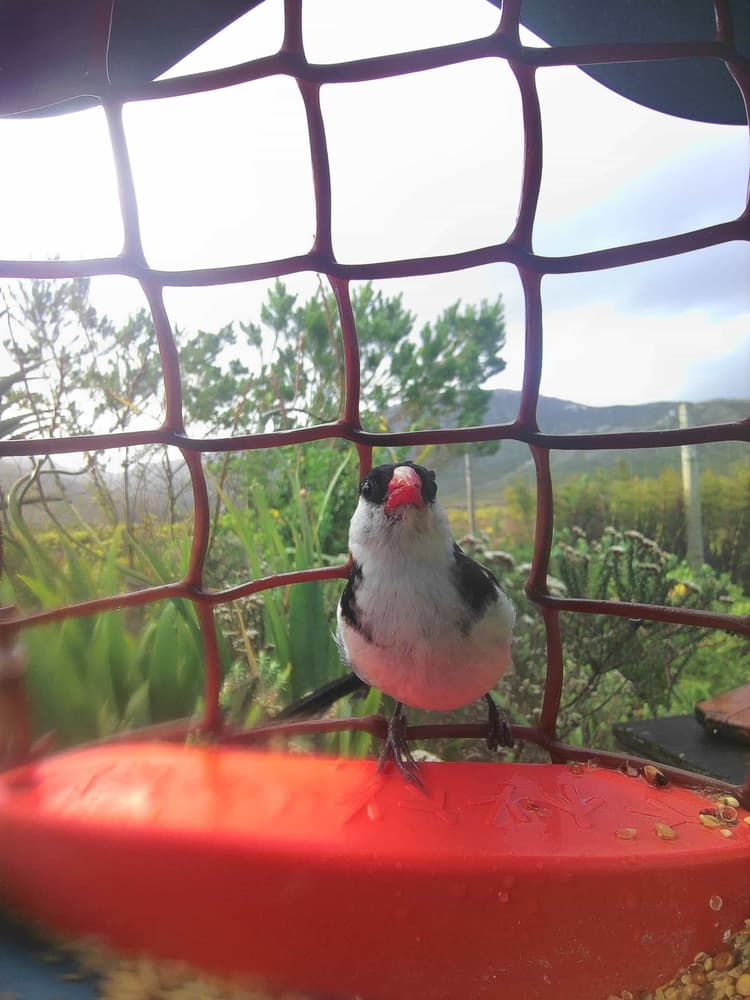
The Pin-tailed Whydah is an African bird that is popular for its spectacular courtship display. They have strong, conical beaks, and their body colour is generally black and white. However, their colour and physical traits go through noticeable transformations with age, gender, and season.
Male vs female
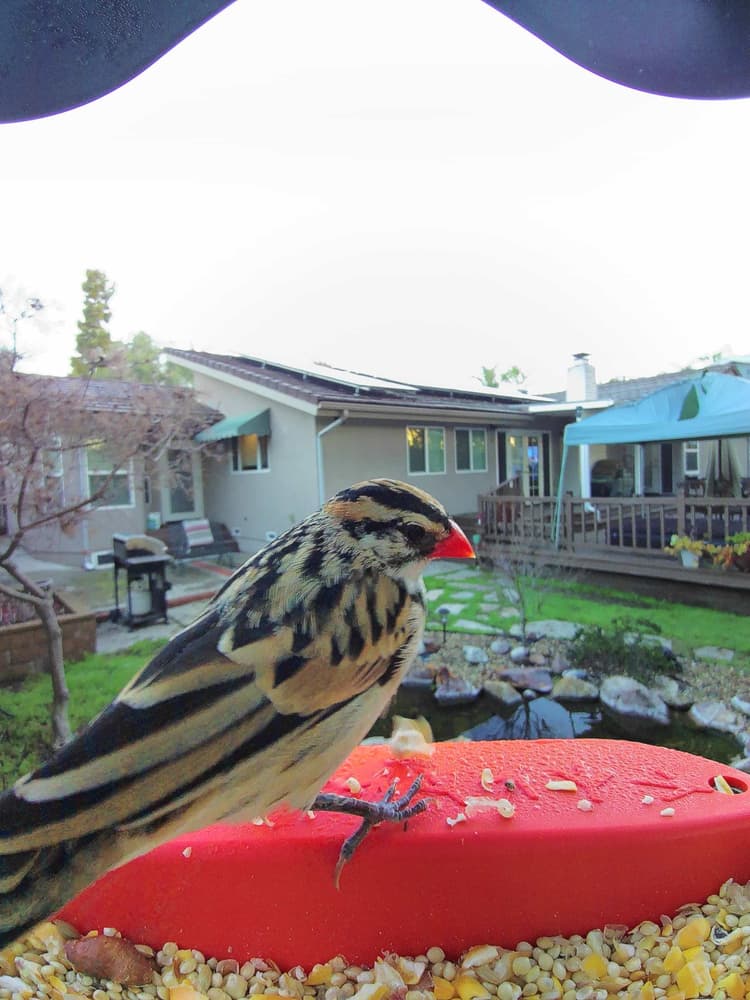
During breeding season, the adult male transforms into an unmistakeable, long-tailed bird, with a striking black and white colouration. With their elongated black tail feathers, they can be almost 12 inches long. The non-breeding males and females are similar in appearance, being brown and streaky. They do not have elongated tail feathers and are significantly smaller, about 4.6 inches long.
Juvenile
Juvenile Pin-tailed Whydahs resemble non-breeding females in appearance. They are brown, with a streaky pattern, and lacking the distinctive tail feathers of adult males. Their beak starts as blue-grey and turns to a more pinkish brown before becoming the adult's red. These observations can help in identifying the species in the wild.
Breeding and nesting habits of the pin-tailed whydah
Mating behaviors
The pin-tailed whydah exhibits elaborate courtship displays where males use their strikingly long tails and dance to attract females. They are known for their polygamous mating system, with males courting many females within their territory.
Nesting details
Pin-tailed whydahs do not build their own nests; instead, they are brood parasites, laying eggs in the nests of other birds, such as waxbills and finches. These host nests are typically constructed from grass and located in shrubs or low trees.
Eggs and chick-rearing
Whydah eggs closely resemble those of their hosts, facilitating unnoticed placement. The host birds unknowingly incubate the eggs and rear the whydah chicks alongside their own. To create a suitable habitat in gardens, provide dense shrubbery and ensure a diversity of small seed-eating birds to increase the likelihood of successful brood parasitism.
What does a pin-tailed whydah like to eat?
Bird eggs
Insects
Seeds
Natural diet
The pin-tailed whydah primarily feeds on seeds and grains from natural grasslands and fields. It targets small seeds from grasses such as millet and sorghum. Occasionally, it may consume small insects for additional protein, especially during the breeding season when the need for nourishment is higher.
Bird feeders
At bird feeders, the pin-tailed whydah is often attracted to mixtures containing small seeds like millet and nyjer. It may also be drawn to suet or seed cakes if they contain elements resembling its natural diet. The bird's preference for smaller seeds assists it in finding suitable food in suburban and urban environments.
Set up your feeder
To attract pin-tailed whydahs, you'll need the right kind of bird feeder. A hanging tube feeder with sizeable ports can work well, as this allows the birds to easily access the seeds.
Offer favorite snacks
Fill your feeder with small seeds like millet and thistle. Pin-tailed whydahs are particularly fond of these. But, for the best results, we recommend Bird Buddy seeds. These seeds are chosen by bird experts for the season, offering maximum attraction.
Ensure a safe environment
Pin-tailed whydahs will be more likely to visit – and stick around – if they feel safe. Place your feeder in a quiet spot away from busy areas. A location near shrubs or trees is ideal as it provides quick escape routes from predators.
Create an inviting habitat
Plant native shrubs and trees to make your yard feel more like a natural habitat. This not only provides additional food sources like insects and berries, but it also offers shelter and nesting opportunities.
Enjoy the sing-along
Pin-tailed whydahs are known for their songs. To encourage a sing-along, put up a few perches around your yard. They'll provide perfect stages for the birds to show off their vocal talents!
Where can you find pin-tailed whydahs?
Primary habitat
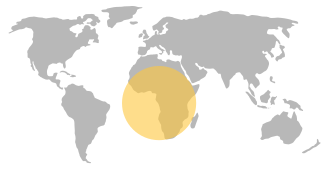
The pin-tailed whydah predominantly inhabits open or lightly wooded grassland areas in sub-Saharan Africa.
Additional range
This bird has extended its range to other areas, such as Southern California, due to introduction by humans. It can adapt to different climates but prefers a warm environment.
Do they migrate?
The pin-tailed whydah generally does not engage in long-distance migrations. Instead, it is considered a resident or locally nomadic species within its range, primarily found across sub-Saharan Africa. The bird is adaptable to various environments, including savannas, grasslands, and gardens near human habitation. Its movement patterns are largely influenced by seasonal changes in food availability and breeding opportunities, leading to short-distance dispersals rather than structured migratory routes. Pin-tailed whydahs might relocate locally to take advantage of better conditions during breeding seasons, especially in response to rainfall which influences the availability of seeds—a key component of their diet—and suitable breeding sites. However, these movements do not equate to the large-scale migrations observed in many other bird species. In recent years, the pin-tailed whydah has been introduced to non-native areas, including parts of the United States and Puerto Rico, where it continues similar non-migratory, local movements within those environments. This adaptability to new and diverse habitats reflects its resilience and ability to thrive beyond its native range.
What is the role of pin-tailed whydahs in nature and how to protect them?
Conservation status
The pin-tailed whydah is considered a common species and is not currently listed as vulnerable or endangered. It is widespread across sub-Saharan Africa and has established new populations in other regions, including parts of the United States, due to its adaptability. Key conservation concerns include habitat alteration and competition with native bird species in introduced areas. However, there are no significant conservation efforts specifically targeting this bird, as it is not considered at risk. Its adaptability and wide distribution help it maintain stable populations despite these challenges.
Ecological role of pin-tailed whydahs
Its role in the ecosystem
The Pin-tailed Whydah, known for its distinct long tail and parasitic breeding habits, plays a crucial role in maintaining the ecological balance. It indirectly contributes to pest control in the ecosystem by laying its eggs in the nests of other bird species. The growing Whydah chicks increase the food needs in the surrogate nest, therefore the parent birds eat more insects, reducing potential pest populations. The Whydah birds also facilitate seed dispersal, contributing to plant biodiversity. Seeds stuck to their feet or feathers are carried to new locations. Furthermore, some undigested seeds from their diet are dispersed via their droppings. However, due to their parasitic nature, their ecological role also includes potentially disrupting the population dynamics of their host birds, affecting avian diversity. As such, the Pin-tailed Whydah exemplifies the complex interplay of beneficial and detrimental effects that a single species can have within its ecosystem.
How to help protect pin-tailed whydahs
Preservation tips
Habitat preservation strategies
Undertake habitat restoration efforts to increase areas suitable for nesting and feeding of Pin-tailed Whydahs. Support the sustainability of grassland and savanna ecosystems, which are their natural habitats. Responsible land management, including limiting industrial activities and urban expansion that may destruct their habitats, is crucial. Promote sustainable agricultural practices, as excessive use of pesticides can harm these birds or their food sources.
Community science initiatives
Implement community-based monitoring programs to gather information on the current population status, threats, and breeding patterns of the Pin-tailed Whydah. Organize awareness campaigns to enlighten the public about the importance of conserving this species and their role in maintaining ecological balance. Encourage citizens to report sightings and create bird-friendly spaces in their yards. Promote involvement in citizen science bird counts and projects like eBird that collect vital data for bird conservation science.