
Pied Butcherbird
Pied Butcherbird
Cracticus nigrogularis

Quick Identification guide
Quick Identification guide
- •
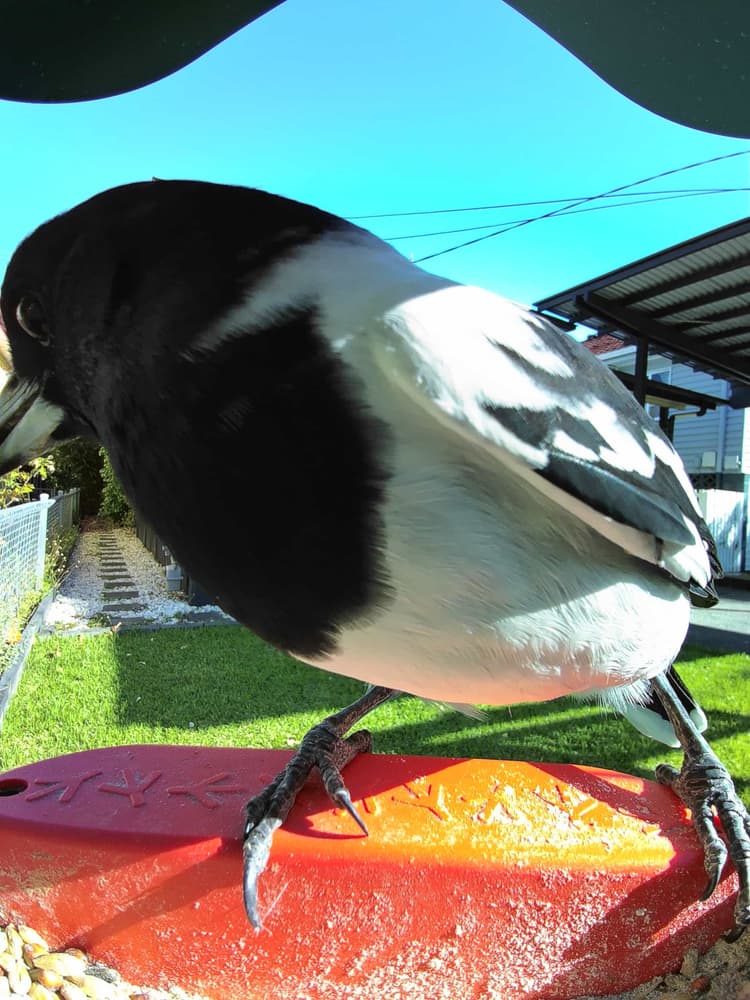
Features a striking combination of black and white plumage, with a prominent black hood covering the head and throat down to the breast
- •
Presents a slender, slightly curved bill that is strong and well-suited for its predatory nature
- •
Displays white underparts and broad white wing patches which are evident when in flight
What does a pied butcherbird sound like?
The Pied Butcherbird is known for its strong, melodious songs, primarily at dawn and dusk. It combines its own compositions with mimicry of other species and environmental sounds. Its calls are flute-like, usually starting with a single note followed by complex motifs. Males tend to sing more complex songs, used in territorial defence and courtship. Their common calls include a crisp, sharp whistle and a 'churring' noise. Young birds have less complex vocalizations, acquiring the full song over several years. They are one of the most musical in the avian world.

Description
Move over, Beethoven, there's a new maestro on the scene: the pied butcherbird! Not only does one of their calls sound remarkably like Beethoven's Fifth, they love to freestyle and go with the flow. They have three types of songs, called a day song, sung when alone or in a chorus; a whisper song, consisting of a ton of mimicry, sung from a tree in wet and windy weather; and a breeding song, used to serenade all night until dawn!
The pied butcherbird can weigh between 105to159grams and be from28to32centimeters tall.
The pied butcherbird typically lives for around 15 to 20 years in the wild. This is similar to other related species such as the grey butcherbird, which also has a lifespan of up to 20 years. These lifespans are relatively long for birds in their size range.
Did you know?
Most popular questions about pied butcherbird
How to recognise a pied butcherbird?
General appearance
Pied butcherbirds are medium-sized birds characterized by their sleek black and white coloration. They generally have white undersides and black wings and back. An identifying feature is a distinct black bib which extends from its black head down towards its white breast, alongside a long hooked bill perfect for preying.
Male vs female
Males and females are nearly identical in external appearance. However, the females are generally a little smaller than the males. They do not exhibit significant sexual dimorphism, making them difficult to differentiate in the wild based on physical traits alone.
Juvenile
Juvenile pied butcherbirds have a duller coloration compared to adults. Their feathers are brownish-black instead of the striking black color seen in adults. They lack the distinct black bib characteristic of the adults and instead display a brown neck. Over time, their coloration darkens, and the black bib develops as they mature into adults.
Breeding and nesting habits of the pied butcherbird
Mating behaviors
Pied butcherbirds engage in complex courtship displays that include singing duets and offering food to potential mates. Males often use their vocal abilities to attract and communicate with females.
Nesting details
They typically construct cup-shaped nests in trees or shrubs using twigs and grasses. The nests are often situated in the fork of a branch for stability. In gardens, providing native shrubs and trees can create an inviting nesting habitat.
Eggs and chick-rearing
Females lay 3-5 eggs and incubate them for about 25 days. Both parents participate in feeding the chicks, which fledge roughly 3 weeks after hatching. The young continue to receive parental care and feeding for several weeks until they are independent.
What does a pied butcherbird like to eat?
Berries
Fruits
Insects
Nectar
Seeds
Small animals
Natural diet
The pied butcherbird's natural diet primarily consists of insects, small reptiles, and other small vertebrates. They also consume fruits and seeds occasionally. These birds are known for their predatory behavior, often hunting by perching in trees or on powerlines to spot their prey before swooping down for the catch.
Bird feeders
At bird feeders, pied butcherbirds may consume meat scraps, minced meat, and small chunks of pet food. They can be attracted to feeders that offer protein-rich foods similar to their natural diet. These birds, however, are less likely to be interested in typical seed mixes that attract other bird species.
Setting up the perfect feeder
To attract a Pied Butcherbird to your yard, you need to provide them with an environment that matches their natural habitat. Opt for a bird feeder that mimics tree branches, as these carnivorous birds love to perch on high areas for hunting. Also, place your feeder in a quiet, predator-free location to create a safe dining spot. Ensure that the feeder is regularly cleaned to maintain sanitation.
Choosing the right snacks
Pied Butcherbirds are known for their carnivorous preferences, but you can offer them several types of food. These include insects, small reptiles, and rodents. However, since it's hard to provide these in an urban setting, try offering Bird Buddy seeds. These seeds, chosen by experts for each season, have been experienced to get the best results in attracting Butcherbirds. Remember, fresh water for drinking and bathing is also a must.
Entertaining your feathered friends
This bird species is known for its melodious singing, and you can encourage this behaviour by creating a calm and quiet environment. You can also try playing bird songs in the background to stimulate their singing response. Make sure not to have loud noises around as they may scare off the birds.
Where can you find pied butcherbirds?

Primary habitat
The pied butcherbird typically inhabits open woodlands, arid scrublands, and rural areas in Australia, particularly in the northern and central parts.
Additional range
Beyond rural and semi-arid areas, pied butcherbirds surprisingly adapt to urban environments such as city parks and suburban gardens.
Do they migrate?
The pied butcherbird is primarily a resident bird in Australia, meaning it largely stays in one place year-round rather than engaging in long-distance migration. However, some local movements can occur in response to changes in food availability or environmental conditions. These movements are generally more altitudinal or local rather than migratory in the traditional sense. In parts of their range, such as inland areas, pied butcherbirds might move short distances towards more coastal regions or further afield during times of drought or extreme heat. Conversely, in other regions, they may move locally from one part of their territory to another seasonally. There is no well-defined migratory route or key locations associated with pied butcherbirds, nor is there a specific timing for such movements, as they are dictated by local conditions rather than a predictable migratory pattern. The species is widespread across a variety of habitats, including open woodlands, scrublands, and urban areas, where those capable of moving may exploit resources as needed.
What is the role of pied butcherbirds in nature and how to protect them?
Conservation status
The pied butcherbird is currently classified as a species of least concern, indicating that it is common and not at immediate risk of extinction. It inhabits a wide range in Australia, enjoying a stable population due to its adaptability to different habitats, including urban areas. Key conservation efforts are not prominently needed at this time, although monitoring is essential to ensure its continued health. Threats include habitat degradation from urban development and agricultural expansion, although these have not yet significantly impacted the species. Ongoing habitat preservation contributes to its stable conservation status.
Ecological role of pied butcherbirds
Its role in the ecosystem
The Pied Butcherbird, an Australian native bird, has a significant ecological role in maintaining balance in the ecosystem. Known for their carnivorous diet, these birds are effective natural pest controllers, preying on invertebrates, small birds, mammals, and reptiles that may otherwise exist in overwhelming numbers. They are also secondary consumers which helps to stabilize populations of primary consumers and indirectly impacts primary producers in the food chain, demonstrating a crucial aspect of ecosystem dynamics. In addition to pest control, their foraging habits might contribute to the aeration and turnover of soil, potentially influencing nutrient cycling in the ecosystem. Furthermore, while Pied Butcherbirds are not primarily known for seed dispersal, their movement across various habitats and the indirect dispersal through waste can still contribute to plant proliferation and biodiversity. Thus, these birds have multilayered ecosystem roles that underline their ecological significance.
How to help protect pied butcherbirds
Preservation tips
Habitat preservation strategies
Maintain the pied butcherbird's natural habitat by promoting reforestation in deforested areas and preventing further deforestation. As these birds thrive in woodland and farmland regions, focus should be given to these areas. Ensure local governments enforce strict regulations regarding urban development and industrialisation in the pied butcherbird's habitat range.
Community science initiatives
Encourage local communities and schools to participate in citizen science projects focused on the pied butcherbird. These projects could involve monitoring butcherbird populations, reporting sightings and documenting changes in behavior and breeding patterns. This data can provide critical information to support conservation efforts. Online platforms like eBird can be used to record and share observations.