
Oriental Magpie-Robin
Oriental Magpie-Robin
Copsychus saularis


Quick Identification guide
Quick Identification guide
- •
Displays a sleek black head with contrasting white underparts and shoulders for a striking profile
- •
Features a long, slender tail that's predominantly black with white edges visible during flight
- •
Equipped with a slender, slightly curved black beak perfect for foraging and feeding


Description
Oriental magpie-robins are the national bird of Bangladesh, having also been immortalised on their currency. They carry their tail high, sometimes dramatically opening it like a fan. These fantastic birds have got quite the pipes and will sing incessantly during breeding season. Unfortunately, their melodious song is also the reason why they were – and someplaces still are – very popular in the caged bird trade.
The Oriental magpie-robin can weigh between 29to51.5grams and be from19to21centimeters tall.
The Oriental magpie-robin typically lives up to around 8-10 years in the wild. Compared to other related species like the American robin which has a lifespan of about 2 years, and the Australian magpie that lives for around 23-25 years, the lifespan of an Oriental magpie-robin is average. Their lifespan can be longer in captivity, but is dependent upon the care and conditions provided.
Did you know?
Most popular questions about Oriental magpie-robin
How to recognise an Oriental magpie-robin?
General appearance
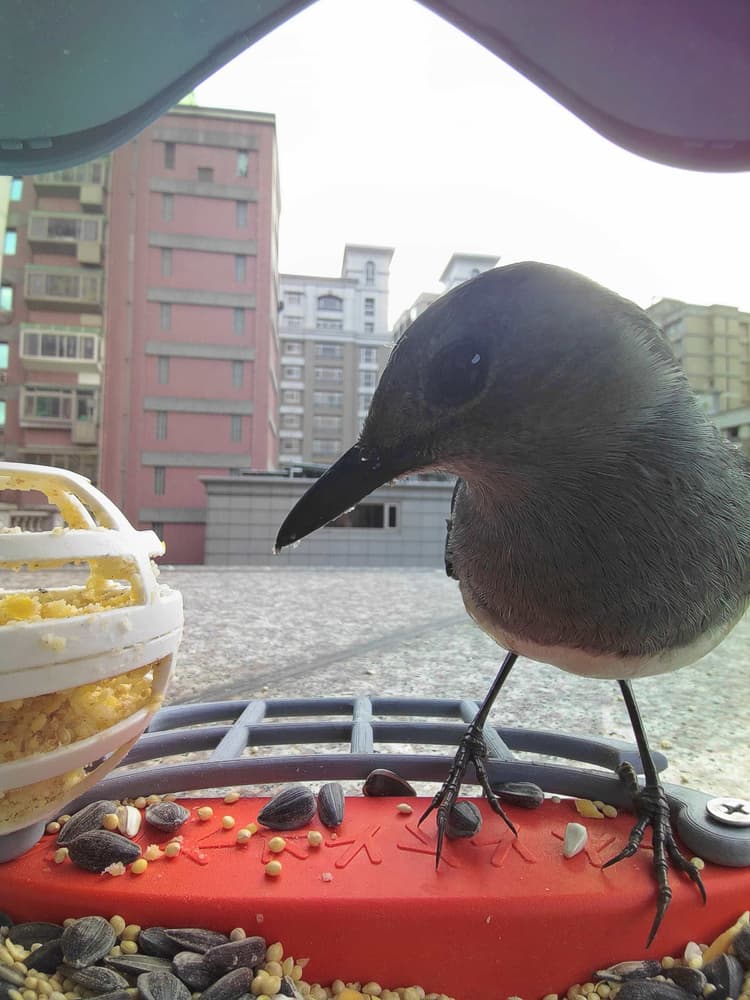
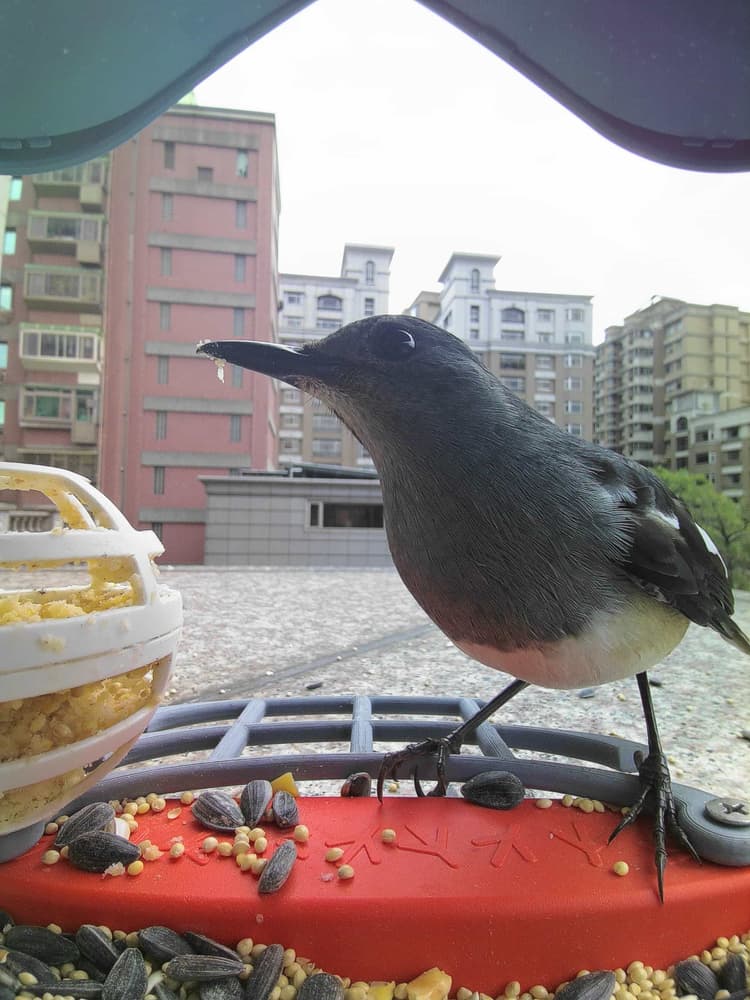
The Oriental magpie-robin is a small passerine bird, predominantly black and white in coloration. It has a long tail, strong legs, and sharp curved beaks. It measures around 19 cm in length and displays flight patterns characterized by rapid flapping followed by a short glide.
Male vs female
Males and females display sexual dimorphism - males are glossy black on the upper side while females are gray. Males have a white shoulder patch that becomes more prominent during the breeding season. Females, on the other hand, have a more subdued white wing patch. Both genders have white underparts but males have a black central stripe.
Juvenile
Juveniles resemble females, but can be distinguished by their shorter tails and more spotted plumage. They also don't have the distinctive black and white coloration of adults. Instead, they have a more muted, brownish-grey color. As they mature, their coloration slowly starts to resemble that of adults.
Breeding and nesting habits of the Oriental magpie-robin
Mating behaviors
The Oriental magpie-robin engages in elaborate courtship displays, where the male sings melodious songs and performs flight displays to attract the female. These displays are crucial in establishing pair bonds during the breeding season.
Nesting details
The species prefers nesting in tree hollows or crevices. They also adapt to urban environments, occasionally nesting in gardens and verandas. Nests are constructed using leaves, twigs, and grasses.
Eggs and chick-rearing
Females lay 3-5 eggs, with both parents participating in incubation and feeding. Chicks are fed a diet rich in insects to support their rapid growth. Parents ensure protection from predators.
What does an Oriental magpie-robin like to eat?
Aquatic animals
Fruits
Insects
Nectar
Seeds
Small animals
Snails
Spiders
Worms
Natural diet
The Oriental magpie-robin primarily feeds on insects such as beetles, grasshoppers, and caterpillars. They also consume spiders and other small arthropods. Additionally, they are known to eat small vertebrates like lizards and frogs. Fruits and berries can also be part of their diet, especially during certain seasons or when insect prey is scarce.
Bird feeders
While visiting bird feeders, Oriental magpie-robins might consume offerings like mealworms, suet, and small pieces of fruit. They may also eat seeds if other more preferred foods are unavailable. Offering live or dried insects can attract them to feeders more successfully.
Set up the right feeders
Oriental magpie-robins prefer feeders that are up high and spacious, where they can comfortably perch. Try installing platform feeders or tray feeders in your yard.
Provide the right foods
This bird species enjoys a varied diet, including insects, berries, and fruits. You can tempt them into visiting with mealworms, blueberries, or apples. However, for optimum results when it comes to seeds especially for feeders, we recommend Bird Buddy seeds. These are expertly selected and highly nutritious, and frequently prove irresistible to these charming birds.
Create a bird-friendly habitat
To further entice these birds, you can make your yard more appealing by providing a water source such as a birdbath, planting native plants and trees, and providing nesting opportunities via nest boxes.
Play magpie-robin songs
Oriental magpie-robins are known for their beautiful melodies. Playing recordings of their songs can potentially attract them to your yard and even initiate a sing-along, as these birds are known to join in when they hear familiar tunes.
Where can you find Oriental magpie-robins?

Primary habitat
The Oriental magpie-robin typically resides in open woodlands, gardens and dense scrub. They prefer warm tropical climates.
Additional range
Its range extends from the Indian Subcontinent and parts of Southeast Asia. Surprisingly, it can also adapt to live in urban and suburban settings.
Do they migrate?
The Oriental magpie-robin is generally a resident bird, meaning it tends to stay in one place throughout the year. It is widely distributed across South Asia and Southeast Asia, inhabiting countries such as India, Bangladesh, Sri Lanka, Thailand, Malaysia, and the Philippines. These birds prefer open woodlands, gardens, and cultivated areas, adapting well to human presence. While the species is mostly sedentary, some localized movements can occur, particularly in response to seasonal changes in food availability and habitat conditions. This could involve altitudinal migration in mountainous regions or short-distance dispersal during the non-breeding season. However, these movements are not well-documented as long migrations and are much less pronounced than in true migratory species. In general, Oriental magpie-robins maintain relatively stable territories, often returning to the same breeding sites annually. Their adaptable nature and diverse diet, including insects and fruits, aid in their continued residence within familiar areas.
What is the role of Oriental magpie-robins in nature and how to protect them?
Conservation status
The Oriental magpie-robin is currently categorized as "Least Concern" by the IUCN, indicating it is relatively common and not immediately at risk. Key threats include habitat loss due to urbanization and deforestation, as well as trapping for the pet trade in some regions. Conservation efforts are focused on habitat protection and legal regulations to minimize trapping. Public awareness campaigns also aim to reduce demand in the pet trade. Overall, while not endangered, maintaining healthy populations relies on continued habitat preservation and enforcement of wildlife protection laws.
Ecological role of Oriental magpie-robins
Its role in the ecosystem
The Oriental magpie-robin is a small passerine bird that plays a noteworthy role within its ecosystem. On the ecological front, it can be viewed as a bioindicator species, as it is sensitive to environmental changes, providing insights into environmental health. The diet of this bird mainly consists of insects like beetles, ants, moths, spiders, and a variety of other invertebrates, thus aiding in keeping these populations in control. Furthermore, the Oriental magpie-robin also feeds on berries and fruits, which contributes to seed dispersal in their habitat, aiding in plant proliferation. Besides, it is also involved in the food chain, acting as prey for larger predators, thereby contributing to the energy flow within ecosystems. In urban areas, Oriental magpie-robins have been known to control pests, acting as natural pest control. Thus, by controlling pests, dispersing seeds, and providing relevant environmental indications, the Oriental magpie-robin fulfills a complex and multifaceted role within its ecosystem.
How to help protect Oriental magpie-robins
Preservation tips
Habitat preservation strategies for oriental magpie-robin
Prioritize maintenance and recovery of natural habitats, this includes limiting deforestation and human activity that alters their environment. Introduce policies to protect sites that are vital for their breeding. Implement restoration efforts for degraded habitats by incorporating native plant species to provide ample food and shelter.
Community science initiatives for oriental magpie-robin conservation
Encourage citizen science projects that involve local communities in monitoring population trends and reporting sightings. Promote educational outreach to raise awareness about the species' conservation status. Workshops can be organized to spread information about the bird's importance. Native tree-planting drives can also be beneficial.