
Moorhen
Moorhen
Also known as: Waterhen, Swamp Chicken
Gallinula chloropus


Quick Identification guide
Quick Identification guide
- •
Features dark plumage with a distinctive white undertail that stands out in flight
- •
Possesses a bright red frontal shield paired with a yellow-tipped red beak
- •
Shows long legs with large, unwebbed toes that are highly adaptable to marshy terrains
What does a moorhen sound like?
The moorhen, a bird species, vocalizes through sharp, loud, and fast-paced cackling and clucking calls. The call often comprises a repetitive "kruk" or "krick" sound or a high-pitched "kik-kik-kik". Moorhens may use different pitch, rhythm, and intensity for alarm, to signal territorial boundaries, or for courtship. They do not produce traditional songs, but the male may use a softer clucking while courting a female.


Description
Did you know that moorhens cannot be found in moorland? A more accurate name for this bird would actually be waterhen! These water birds are known to get extremely territorial come breeding season, and are not afraid to throw down; with their own species or the occasional duck, it doesn't matter. When chicks feel threatened, they will grab onto the nearest one of their parents for dear life so they can be flown to safety.
The moorhen can weigh between 173to343grams and be from30to38centimeters tall.
The typical lifespan of a moorhen is about 10-15 years. This is a relatively long lifespan compared to other bird species. For comparison, other birds in the Rallidae family like the coot and the rail live about 10-15 years as well or less, showing that moorhens have a similar lifespan to their closest relatives.
Did you know?
Most popular questions about moorhen
How to recognise a moorhen?
General appearance
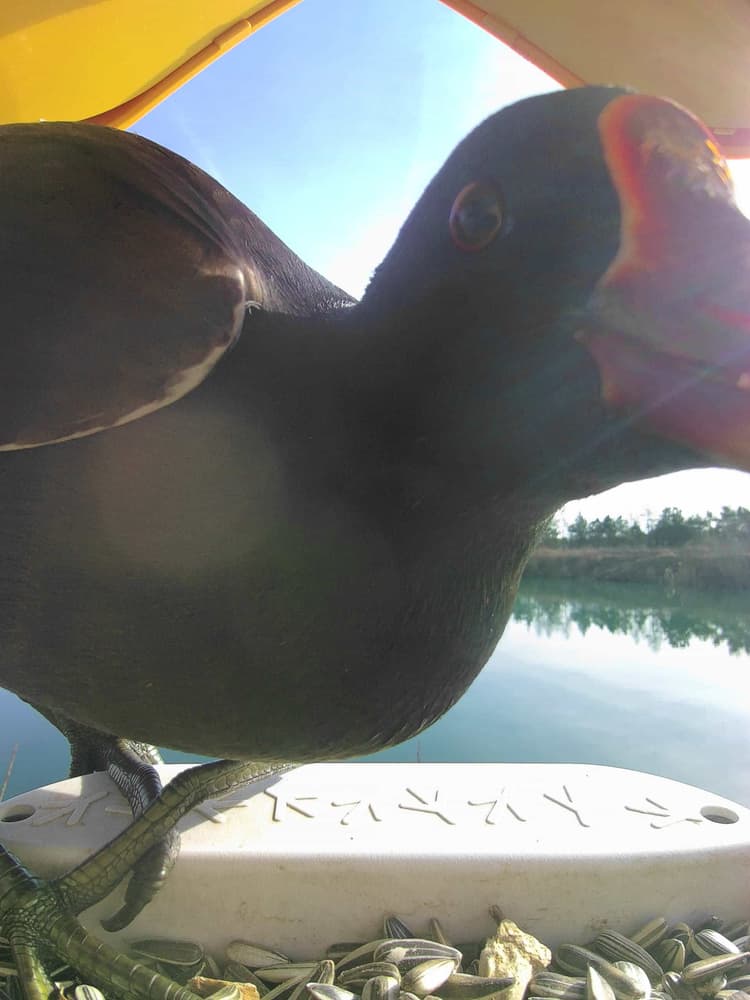
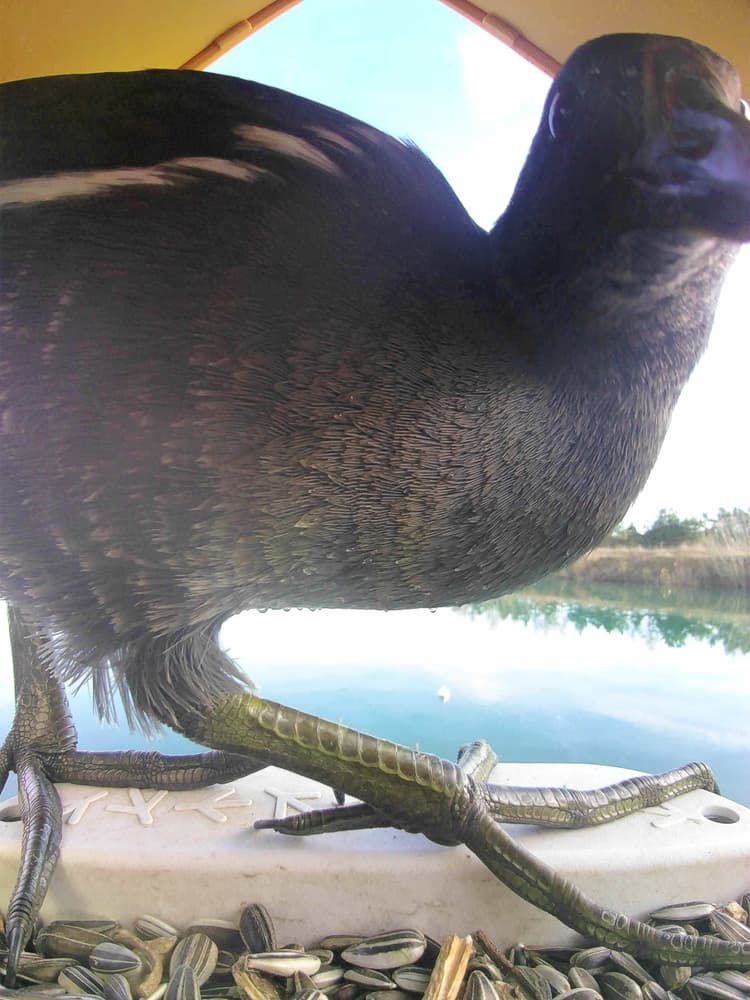
Moorhens, also known as Marsh Hens or River Chickens, are medium-sized water birds that are members of the rail family. They have a distinctive blackish plumage with a white line along the flanks and a red bill with a yellow tip. Their short tail, when raised, exposes a white under-tail, while their long, greenish legs have toes without webbing.
Male vs female
Male and female moorhens share the same physical traits and coloration, making them sexually monomorphic. Both genders possess the same blackish body, white flank line, and uniquely colored bill and legs. Seasonal variations in appearance are minimal and do not significantly affect the bird’s overall look.
Juvenile
Juvenile moorhens exhibit drab coloration as compared to adults. They sport a greyish-brown body color with a paler underpart while the characteristic red and yellow bill color of adults is replaced by a pale pink or flesh color. As they mature and transition into adulthood, their coloration intensifies and they develop the distinctive traits of the species.
Breeding and nesting habits of the moorhen
Mating behaviors
Moorhens engage in elaborate courtship displays, including mutual preening and synchronized swimming. Pair bonds are formed prior to nesting season, with males often showcasing territories via vocal calls.
Nesting details
Moorhens typically nest near water bodies in dense vegetation. They build bowl-shaped nests using reeds and grasses. In gardens, providing dense shrubbery near ponds can create suitable habitats for nesting.
Eggs and chick-rearing
Females lay 5-10 eggs per clutch, incubating them for about three weeks. Both parents partake in feeding and protecting chicks, which leave the nest shortly after hatching to follow parents.
What does a moorhen like to eat?
Aquatic animals
Carrion
Crustaceans
Fruits
Insects
Plants
Scraps
Seeds
Snails
Spiders
Worms
Natural diet
Moorhens have an omnivorous diet and consume a variety of natural food sources. They typically feed on aquatic vegetation, algae, and seeds. In addition to plant matter, they eat invertebrates such as insects, mollusks, and worms. Occasionally, small fish and amphibians are also part of their diet, especially when they forage in freshwater habitats.
Bird feeders
At bird feeders, moorhens are known to consume grains and seeds like cracked corn, wheat, and sunflower seeds. They may also enjoy fruits such as apples or berries. While not common visitors to bird feeders, they may occasionally take advantage of offerings that resemble their natural diet's seeds and grains.
Attracting moorhens: snacks and feeders
Moorhens tend to prefer a diet rich in aquatic plants, seeds, fruits, and insects. Higher protein options such as Bird Buddy seeds are particularly beneficial because they are chosen seasonally by experts for nutritional balance. Moorhens are ground feeders, so ensure your feeder is low to the ground or even water level, with an easy escape route to cover, as they are shy birds.
Additional tips for attracting moorhens
Since moorhens are water-loving birds, incorporating water sources such as a pond or bird bath in your yard can be tempting. For fun, consider adding a 'floating feeder'. This could be as simple as a piece of wood where seeds can be sprinkled. With a pleasant environment, favorite snacks, and a touch of creativity, you will have these charming birds visiting your yard or feeder before you know it!
Where can you find moorhens?
Primary habitat
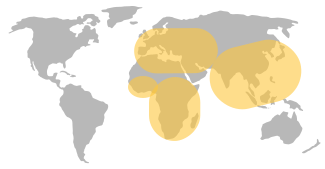
Moorhens are typically found in wetland areas such as marshes, rivers, and ponds, often with dense vegetation.
Additional range
Though primarily in Western Europe, they have a wide range from North Africa to the Middle East, Asia, and Australasia. Due to their adaptability, they also inhabit urban parks and gardens.
Do they migrate?
The moorhen, commonly known as the common moorhen or Gallinula chloropus, exhibits varied migratory behaviors based on geographical location. In temperate regions, moorhens are generally resident birds, staying in one place year-round. However, populations in northern Europe and Asia are partially migratory. These migratory moorhens typically move southward in late autumn to escape harsh winter conditions. Their migration route involves traveling from northern breeding areas in countries like the UK, Scandinavia, and the Baltic region to milder climates in southern Europe and North Africa. Key locations for wintering include the Mediterranean basin, including Spain, Italy, and the northern regions of Africa such as Morocco and Algeria. Migration timing varies, often starting between September and November, returning to their breeding grounds in March or April. The timing is influenced by weather and food availability. Moorhens rely on wetlands and freshwater habitats during migration and wintering, such as lakes, ponds, and marshes. In contrast, populations in warmer climates, like those in South Asia, the Middle East, and parts of Africa, tend to be sedentary, remaining in the same areas throughout the year.
What is the role of moorhens in nature and how to protect them?
Conservation status
The moorhen is classified as "Least Concern" by the IUCN, indicating it is common and not currently at risk of extinction. It inhabits wetlands across Europe, Asia, and Africa. Key conservation efforts focus on protecting wetland habitats from degradation and pollution. Significant threats to moorhens include habitat loss due to agricultural expansion, pollution, and drainage of wetlands. Conservationists also monitor water quality and implement measures to protect breeding sites. Overall, the species is stable, benefiting from widespread and adaptable habitat preferences.
Ecological role of moorhens
Its role in the ecosystem
The Moorhen plays a crucial role in the ecosystem as they help maintain a healthy balance. Their diverse diet consisting of insects, small aquatic creatures, and plant material aids in pest control, reducing the population of potential harmful insects for both humans and other wildlife. Moorhens also partake in seed dispersion, whereby they transport seeds acquired from their feeding locations to new areas through their excretion, assisting in plant propagation. This not only leads to increased plant diversity but also assists in preventing soil erosion. Furthermore, Moorhens are an essential food source for many predators - their eggs and chicks are preyed upon by birds like herons and mammals such as foxes. This makes them a critical link in the food chain, supporting biodiversity. Hence, their presence or absence serves as a health indicator for wetland ecosystems.
How to help protect moorhens
Preservation tips
Habitat preservation strategies
Moorhens thrive in wetlands, marshes, and rivers. To conserve them, we need to focus on preserving and restoring these habitats. Avoid polluting these areas, be cautious of encroaching infrastructure development, and promote the growth of native plants which provide shelter and food for moorhens. Engage with local and national environmental agencies to advocate for the preservation of these crucial habitats.
Community science initiatives
Community participation is vital in moorhen conservation. Encourage the local people to participate in bird observation and monitoring projects, contribute to citizen science platforms to help record and track moorhen populations, and conduct educational campaigns to raise awareness of the importance of wetland conservation. Collaborate with universities, research institutions, and wildlife organisations to develop grassroots initiatives that will provide the necessary support to the moorhen population.