
Monk Parakeet
Monk Parakeet
Also known as: Quaker Parrot
Myiopsitta monachus


Quick Identification guide
Quick Identification guide
- •
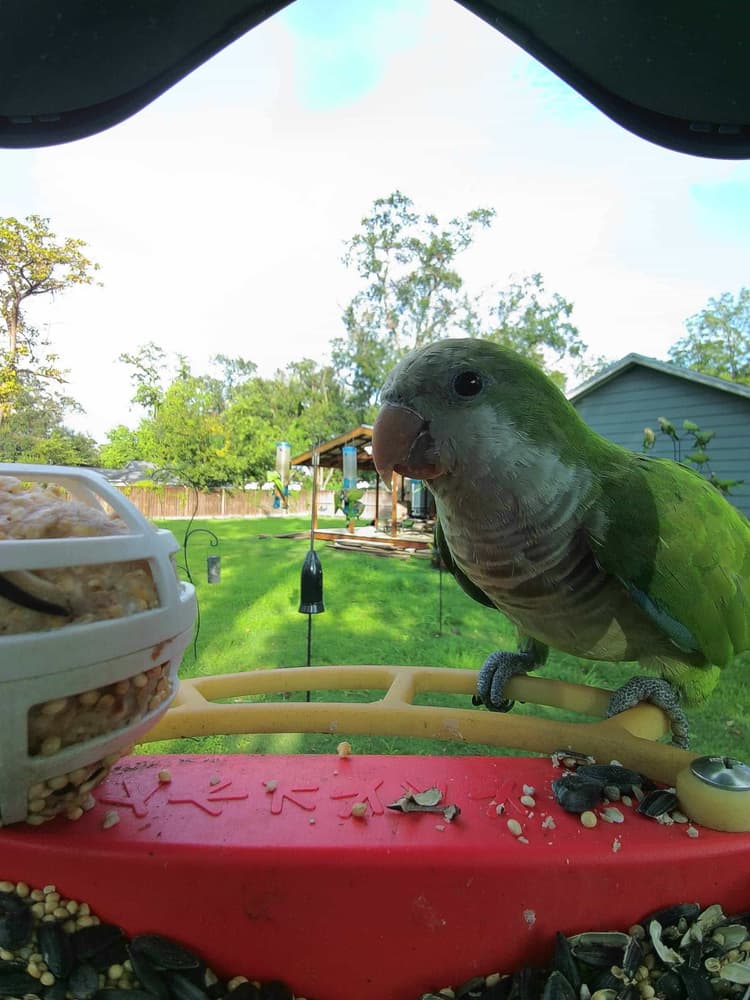
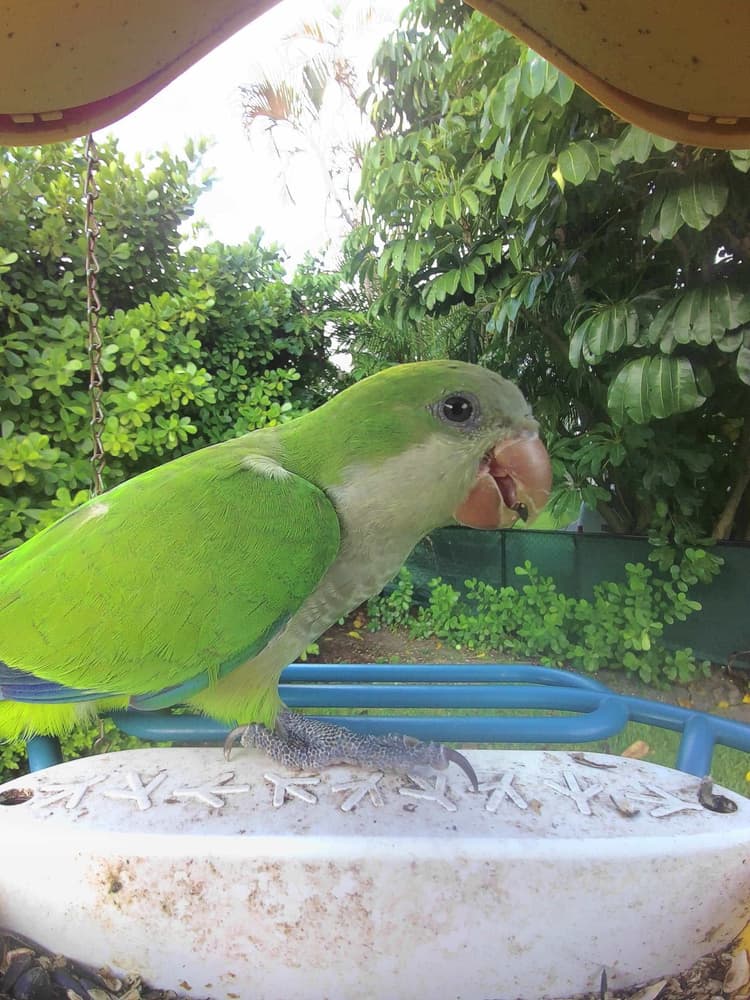
The vibrant green plumage with a distinctive gray forehead and chest contrasts with most other parrots
- •
Features a strong, curved beak suited to foraging and manipulation
- •
Exhibits a sturdy, medium-sized body with a long tail and blue flight feathers adding remarkable color to its appearance
What does a monk parakeet sound like?
The monk parakeet vocalizes with a distinctive loud, harsh and screeching eeeh-eeeh sound. Its full array of calls is diverse, typically including types such as a flat chirp or chip, a rattling noise, and a raucous sound. The characteristic patterns and types of these calls often create a cacophony that is a distinctive auditory signature of this parakeet species.


Description
If you think you know cute, then you haven't seen monk parakeets' courtship ritual! A pair will grab on by their beaks and shake their heads. Aw! Did you know that they are the only species of parakeet to nest communally? They live in huge nests that can weigh over a ton and contain up to 200 individual nests. Upkeep is a full-time job and all members pitch in to keep their house looking and feeling like a home.
The monk parakeet can weigh between 90to120grams and be from28to29centimeters tall.
The typical lifespan of a Monk Parakeet is 15 to 20 years in the wild but can live up to 25 years in captivity. This lifespan is significantly longer than some related parakeet species like the Budgerigar, which lives up to 10 years. However, larger parrots such as Macaws and Cockatoos tend to live much longer, often exceeding 50 years.
Did you know?
Most popular questions about monk parakeet
How to recognise a monk parakeet?
General appearance
The Monk Parakeet, with a length of around 11 inches or 28 centimeters, is medium-sized. The majority of its body is a green color that is paler below, complemented by gray on the forehead, throat, and chest. The most noticeable color is blue, visible on the outer part of its wings, especially in flight. This bird is roughly the same size as a Robin. The obvious defining features for identification include the green, blue, white and yellow coloration, the long and pointed tail, and the pointed, tapered wing shape.
Male vs female
The Monk Parakeet does not exhibit sexual dimorphism, meaning that the males and females share similar physical characteristics and coloration, making it quite difficult to distinguish between the two based purely on appearance.
Juvenile
Monk Parakeet juveniles display a similar color pattern as adults but may be slightly duller. With time, as they mature, they develop the characteristic brighter coloration of adults. There are no major seasonal variations in their appearance.
Breeding and nesting habits of the monk parakeet
Mating behaviors
Monk parakeets form monogamous pairs during the breeding season. Courtship involves mutual preening and calling. Pairs remain together year-round within the colony, maintaining strong social bonds.
Nesting details
Monk parakeets build large, communal stick nests on deciduous and evergreen trees, palm trees, and man-made structures. They use thorny twigs for nest construction, which may deter predators. Nests can exceed 5 feet in diameter and weigh over a ton, containing multiple chambers for each pair. The structures are occupied year-round, serving as homes in cold climates.
Eggs and chick-rearing
Each pair lays 4 to 8 eggs per clutch. Eggs are incubated by both parents for about 24 days. Chicks are born altricial and depend on parents for feeding and protection. Colony members, including nonbreeders, assist in rearing young, increasing survival rates through cooperative care.
What does a monk parakeet like to eat?
Berries
Flowers
Fruits
Insects
Nuts
Seeds
Natural diet
Monk Parakeets primarily consume seeds, buds, fruits, berries, nuts, and blossoms. They sometimes feed on crops such as sunflower, corn, wheat, sorghum, and rice, which contributes to their reputation as agricultural pests. However, this reputation remains mostly unconfirmed.
Bird feeders
During U.S. winters when natural foods are less available, Monk Parakeets are known to visit backyard bird feeders to supplement their diet.
Tempting monk parakeets with favorite snacks
Monk parakeets are especially fond of fruits, veggies, and seeds. Some of their favorite snacks include apples, oranges, broccoli, cucumbers, and carrots. For seeds, Bird Buddy seeds are a top choice as they are hand-picked by experts for the seasons.
Choosing the right feeder
Use a platform or tray feeder for Monk Parakeets. These types of feeders are broad and flat, which is convenient for the parakeets as they prefer to feed in groups. Ensure that the feeder is installed in a quiet, secure area. Keep the feeder clean to prevent disease transmission and keep fresh food out regularly.
Fun tricks to attract more monk parakeets
Monk Parakeets are attracted to colorful garden decorations and birdhouses. You can also use sound to attract them - they are social birds and enjoy a 'singing' environment. A bird feeder near a windchime or a soft music playing device can be an inviting and soothing place for them to visit and maybe stay for a sing-along!
Where can you find monk parakeets?

Primary habitat
Monk Parakeets are originally native to the grasslands of South America. They are a fast-flying, long-tailed species known for building big stick nests on tall structures.
Additional range
In the U.S., they can be spotted in cities such as New York, Chicago, Portland, San Diego, Houston, Dallas, New Orleans, and Miami, where releases or escapes have led to feral populations. They are the most common naturalized parrot species in the U.S.
Do they migrate?
The monk parakeet, also known as the Quaker parrot, is non-migratory and stays in one place throughout the year. Native to temperate and subtropical regions of South America, particularly Argentina, Bolivia, Brazil, and Uruguay, monk parakeets have adapted to urban and rural environments. Known for their social behavior and communal nesting habits, they build large, stick nests where they live year-round. In regions outside their native range, such as parts of North America and Europe, monk parakeets have established feral populations. These populations also remain in place year-round, as these areas provide sufficient food and mild climates. Their adaptability to various environments, ability to find food, and tolerance for a range of temperatures reduce the necessity for migration. Key locations for monk parakeet populations include urban areas in the United States such as New York, Chicago, and coastal regions of Texas and Florida, as well as cities in Spain and Italy. They have demonstrated resilience to cold temperatures by seeking shelter within their large, insulative nests, enabling them to survive in these non-native regions throughout the year.
What is the role of monk parakeets in nature and how to protect them?
Conservation status
The monk parakeet is considered to be of low conservation concern, with a global breeding population estimated at 20 million. Common in both its native South America and several U.S. cities, the species is not vulnerable or endangered. Historically managed as an agricultural pest, efforts to control U.S. populations have ceased, as they have stabilized without spreading. While no significant conservation programs are currently active, the main historical threat has been their impact on agriculture.
Ecological role of monk parakeets
Its role in the ecosystem
Monk Parakeets are notable contributors to their ecosystems. Their social behaviors and nesting practices create thriving colonies that can influence the local environment. As they forage for food, they play a significant role in seed dispersion, aiding in the distribution and germination of various plant species. As a result, they can help maintain local biodiversity and contribute to a healthy, balanced environment. In addition to this, their practice of dropping to the ground in search of food can also help in controlling some ground pests, as they feed on a variety of insects. However, it's important to note that their impacts vary across different ecosystems, and in some places, they may be considered as invasive species. Overall, their ecological role is multi-faceted – from forging symbiotic relationships within their colonies to interacting with their environment in ways that aid pest control and seed dispersion.
How to help protect monk parakeets
Preservation tips
Habitat preservation
Preserve and maintain existing habitats of Monk Parakeets. Protect urban wildlife habitats including public parks and gardens where they build colonies. Limit tree trimming in these areas, especially during nesting periods. Promote the planting of native vegetation that can serve as food sources for these birds.
Community science initiatives
Increase public awareness about the importance of Monk Parakeets. Engage communities in citizen science projects that monitor and record sightings. Use the data collected for research and policy-making. Report any illegal trapping or selling of Monk Parakeets to local authorities. Encourage schools to incorporate conservation education in their curriculum, focusing on the local wildlife including Monk Parakeets.