
Eurasian Sparrowhawk
Eurasian Sparrowhawk
Also known as: Northern Sparrowhawk, Sparrowhawk
Accipiter nisus
Quick Identification guide
Quick Identification guide
- •
Displays a slender body and long tail, aiding in its agile flight
- •
Boasts grey upperparts and a russet barred underbody
- •
Features sharp, pointed wings and a distinct yellow eye
What does a Eurasian sparrowhawk sound like?
The Eurasian sparrowhawk is known for its distinctive, repetitive “ke-ke-ke” call, which is high-pitched and insistent, often carried out when the bird is alarmed or agitated. The female’s call is deeper in comparison to the male, who boasts a high-pitched and fast call, especially during the mating season. However, sparrowhawks are typically silent when not disturbed or during non-breeding seasons. They lack a typical birdsong.
Description
The super-agile Eurasian sparrowhawk can reach speeds of 75 mph. Bad news if you're a songbird. Did you know that these raptors are able to identify and hunt sick birds? Talk about a rough day for them!
The Eurasian sparrowhawk can weigh between 110to350grams and be from28to40centimeters tall.
The Eurasian sparrowhawk typically lives up to 10 years, although the longest recorded lifespan is 20 years. Compared to related species, it enjoys a moderate lifespan: the goshawk lives up to 19 years, whereas the peregrine falcon can reach 20 years. Sparrowhawks face a high mortality rate during their first year of life but it decreases significantly in adulthood.
Did you know?
Most popular questions about Eurasian sparrowhawk
How to recognise a Eurasian sparrowhawk?
General appearance
The Eurasian sparrowhawk (Accipiter nisus) is a small raptor known for its slender, agile body with rounded wings and long, narrow tail. Adults have distinctly bluish-grey upperparts, crisp narrow tawny stripes on cream underparts, and bright yellow or orange eyes. They are slightly larger than a pigeon, averaging between 28-38cm in length.
Male vs female
Male and female sparrowhawks exhibit noticeable dimorphism. Males are smaller, with a wingspan of 59-64cm, and weigh between 110-196 grams. Their chests and flanks have a red-orange tint. Females are larger, with wingspans of up to 80cm, and weigh between 185-342 grams. They have brown backs and display a more grey-brown coloration on their chests and flanks.
Juvenile
Juveniles exhibit a slight difference in colour, compared to adults. Their upperparts are brown with paler fringes, while their undersides have broader, drop-shaped brown stripes on a duller white background. Their eyes are pale yellow. Distinctly, they develop their adult plumage after the first major moult, about a year after hatching.
Breeding and nesting habits of the Eurasian sparrowhawk
Mating behaviors
Eurasian sparrowhawks engage in elaborate aerial displays during courtship. Males perform a 'sky-dancing' flight to attract females, characterized by rapid wing beats and steep dives.
Nesting details
Sparrowhawks build stick nests high in trees, often using the same site annually. Forests and suburban gardens are typical nesting locations. Nests are constructed with twigs and lined with softer materials like bark and leaves.
Eggs and chick-rearing
Females lay 3-6 eggs, incubated for about 35 days. Both parents participate in rearing, with the male providing food and the female brooding chicks. Young fledge approximately 4-5 weeks after hatching, though they remain dependent for several weeks.
What does a Eurasian sparrowhawk like to eat?
Birds
Natural diet
The Eurasian sparrowhawk primarily preys on smaller birds, which constitute the bulk of its diet. It hunts a variety of bird species, including but not limited to, tits, finches, sparrows, and thrushes. Other occasional prey includes mammals such as bats or small rodents, reptiles, and insects. The sparrowhawk exhibits a diverse diet adaptable to the availability of prey species in its habitat.
Bird feeders
While Eurasian sparrowhawks do not consume bird feed directly, they are known to visit areas with bird feeders because these locations attract smaller birds. The concentration of potential prey around feeders provides sparrowhawks with convenient hunting opportunities, as they can ambush unsuspecting birds focused on the seeds or suet available in these areas.
Preferred food of eurasian sparrowhawks
Eurasian Sparrowhawks are predominantly bird eaters, with a diet primarily consisting of smaller birds. To attract them, you can tempt them with fresh poultry or meats. However, while doing so, ensure to place the meats strategically, such as on bird feeders or platforms designed for birds of prey, as this can increase the likelihood of attracting these majestic creatures.
Using appropriate feeders
The use of larger feeders or platforms is suggested, as Eurasian Sparrowhawks are known for their larger size and preference for spacious places. Feeders which are strong, sturdy and have good support will be favored by these birds.
Fostering a suitable habitat
Sparrowhawks largely prefer wooded environments. Therefore, preserving trees or shrubs in your garden would make an appealing habitat for them. Also, maintaining an environment that hosts a good population of small birds, which comprise their main diet, can attract these hunters.
Using bird buddy seeds
While Sparrowhawks are not seed eaters themselves, having an ample supply of Bird Buddy seeds can attract a variety of smaller birds to your garden. This, essentially, makes your yard a buffet for Sparrowhawks and increases the likelihood of them visiting your garden. Bird Buddy seeds are ideal as they are handpicked by experts for each season and cater to the dietary needs of a range of garden birds.
Quiet and safe environment
Ensure your garden is quiet and safe without too much human intervention. This would make Sparrowhawks more likely to visit. These birds are naturally wary, so it's important to keep noise levels down and avoid sudden movements when they are present.
Where can you find Eurasian sparrowhawks?
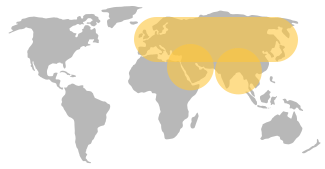
Primary habitat
Eurasian sparrowhawks typically inhabit forests, woodlands, and sometimes urban areas throughout temperate Europe and Asia.
Additional range
Beyond their primary range, these hawks have adapted to environments like parks and gardens in cities, demonstrating resilient versatility.
Do they migrate?
The Eurasian sparrowhawk exhibits both resident and migratory behaviors, depending on the geographical region. In temperate zones such as Western Europe, many individuals remain year-round due to milder climates and sufficient prey availability. However, populations from northern Europe and Asia, where winters are harsher, typically migrate southward. Migration usually occurs in autumn, from September to November, and in spring, from March to May. Northern sparrowhawks travel mainly along traditional routes, moving from Scandinavia and Russia to Southern Europe, the Mediterranean, and North Africa. Major flyways include crossing the Baltic Sea, through Finland and Eastern Europe. Key resting sites include the Iberian Peninsula and the Italian Peninsula, where birds refuel and rest. Some sparrowhawks cross the Mediterranean Sea to winter in North Africa, primarily in countries like Tunisia and Algeria. In Asia, migratory paths extend into the Middle East, reaching as far as Iran and the Indian subcontinent. Migration is typically solitary, but they may join flocks of other raptors. The extent and exact routes of their migration largely depend on local climatic conditions and prey availability, offering a dynamic pattern each year.
What is the role of Eurasian sparrowhawks in nature and how to protect them?
Conservation status
The Eurasian sparrowhawk is classified as "Least Concern" by the IUCN, indicating it is relatively common and not currently at risk of extinction. It inhabits a wide range across Europe, Asia, and parts of Africa. Key conservation efforts focus on habitat protection and monitoring to ensure stable populations. Significant threats include habitat loss, pesticide exposure, and human persecution, although these have lessened over recent decades due to conservation measures and legal protections. Their adaptability to various environments has also contributed to their stable population numbers.
Ecological role of Eurasian sparrowhawks
Its role in the ecosystem
The Eurasian sparrowhawk plays a crucial role in maintaining ecological balance as a bird of prey. Its diet mainly consists of small birds and mammals, thereby helping in pest management by keeping their population under control. This natural pest control is essential for agriculture and forestry by limiting the damage pests can inflict on crops and trees. It also ensures that certain species do not overpopulate, leading to an imbalance in the ecosystem. Although the sparrowhawk does not directly contribute to seed dispersal, it indirectly influences vegetation distribution by preying on small birds which are primary seed dispersers. Furthermore, it holds significance as an indicator species. Changes in their population size can provide early signs of ecological changes. Known as a top predator, a decline in their numbers could signal a problem which could be affecting other species in the food chain. The Eurasian sparrowhawk also contributes to eco-tourism, as bird watchers and wildlife enthusiasts frequently seek their sightings. Therefore, the significance of the Eurasian sparrowhawk to the ecosystem encompasses pest control, maintaining biodiversity, indicating environmental health, and enhancing tourism.
How to help protect Eurasian sparrowhawks
Preservation tips
Habitat preservation strategies
Support the conservation of the Eurasian Sparrowhawk by advocating policies that protect its natural habitats. Create awareness about the importance of maintaining mature woodlands, as these are critical nesting spaces for these birds. Conserve farmlands specifically hedgerows that play a significant role as hunting grounds. Promote sustainable forestry practices and advocate against activities that lead to habitat fragmentation and destruction, such as deforestation and urbanization.
Community science initiatives
Engaging the community in the conservation of the Eurasian Sparrowhawk is pivotal. Organize bird watching events to raise awareness about the species and its needs. Invite citizens to report sightings and participate in breeding bird surveys, which helps monitor local populations. Encourage community-led initiatives to build nest boxes in areas of low nest availability. In schools, incorporate lessons about Eurasian Sparrowhawks, cultivating an early appreciation for the species and nature overall.