
Common Nightingale
Common Nightingale
Also known as: Rufous Nightingale, Nightingale
Luscinia megarhynchos
Quick Identification guide
Quick Identification guide
- •
Features plain brown upperparts with a reddish tail and rump, offering a warm, earthy appearance
- •
Possesses a pale, unmarked throat and off-white underparts that provide a subtle contrast
- •
Displays a slim build with a long, rounded tail and a straight, slender beak, ideal for its insectivorous diet
What does a common nightingale sound like?
The Common Nightingale's vocalizations are renowned for their richness and complexity. They produce a melodious song featuring a diverse range of notes, including whistles, trills, and gurgles, often delivered in an intricate, fluty sequence. The male’s song is designed to establish territory and attract mates, typically sung during the breeding season, both day and night. Their calls, in contrast, are more straightforward, consisting of a harsh "krrr" sound used for communication such as alarm calls. Nightingales are notable for singing louder at night, which helps their unique vocalizations stand out in the quieter surroundings.
Description
For centuries nightingales have appeared in literature as symbols for love, beauty and poetry, and have been beloved by authors like John Milton and Samuel Taylor Coleridge. And for good reason, as their song is truly a thing of beauty. They can produce over 1,000 different sounds because the part of the brain that is responsible for creating sounds is larger than in other birds. Although in literature the nightingale is often referred to as a female, it’s only males that sing.
The common nightingale can weigh between 16to39grams and be from16to17centimeters tall.
The typical lifespan of the Common Nightingale (Luscinia megarhynchos) is about 1-5 years in the wild, though some individuals may live longer. This lifespan is relatively short compared to some related species, such as the European Robin (Erithacus rubecula), which can live up to 13 years under favorable conditions. The Black Redstart (Phoenicurus ochruros), another relative, typically lives around 2-5 years. Nightingale's shorter lifespan is influenced by factors like predation, migration risks, and environmental changes.
Did you know?
Most popular questions about common nightingale
How to recognise a common nightingale?
General appearance
The Common Nightingale is a small bird with an unmistakable voice. It measures about 15-16 cm in length, with a wingspan of 23-26 cm. Its plumage is primarily a warm, reddish-brown color on the upper body, with a slightly lighter, buff hue on the underside. The tail is also a notable reddish-brown. The bird has a plain face with a subtle brown eye stripe and a fairly long, straight beak well-suited for its insectivorous diet. The overall impression is that of a rather plain yet elegantly proportioned bird often more noticed by its song than its appearance.
Male vs female
Both male and female Common Nightingales appear similar in their plumage and size, making it difficult to distinguish between them visually. There are no significant differences in coloration or size that are apparent to the human eye. The primary distinction may be observed in their vocal capabilities during the breeding season. Males are known for their melodious and complex songs, performed to attract mates and mark territory, whereas females are generally quieter.
Juvenile
Juvenile Common Nightingales differ from adults primarily in their plumage, which tends to be mottled with rufous and brown shades, giving them a subtly speckled appearance. This intricate patterning provides better camouflage against predators. As they mature, these juveniles adopt the plainer, more uniform coloration seen in adult birds, losing much of the mottled appearance they are born with. Juveniles also lack the mature vocal capabilities of adult males, with their song becoming more developed as they age.
Often mistaken for
Breeding and nesting habits of the common nightingale
Mating behaviors
The Common Nightingale is known for its melodious singing, which plays a crucial role during courtship. Males are more vocal, especially during the night, to attract females. The courtship display includes a sophisticated song repertoire designed to impress mates. These birds exhibit a territorial nature, with males defending their breeding territory vigorously. Pair bonding occurs as a result of the male's singing ability and the suitability of the territory he controls.
Nesting details
Nightingales prefer nesting in dense shrubs or low dense vegetation to ensure protection from predators. Their nests are typically close to the ground, built within thick foliage. The female constructs the nest using materials like grass, leaves, and twigs, forming a cup-shaped structure. This species often thrives in wooded areas, forests, and sometimes gardens, where suitable shrubs offer the necessary cover. To make gardens more inviting for nesting, introducing native dense shrubs and ensuring minimal disturbance can provide a suitable habitat.
Eggs and chick-rearing
A typical Nightingale clutch consists of 4 to 6 eggs. The female primarily incubates the eggs over an incubation period of 13 to 14 days. Once hatched, both parents share responsibilities in feeding and caring for the chicks. The chicks are altricial at birth, meaning they are born blind and featherless, relying entirely on parental care. Over the next two weeks, the chicks develop rapidly and fledge the nest approximately 11 to 13 days after hatching.
What does a common nightingale like to eat?
Fruits
Insects
Seeds
Spiders
Natural Diet
The Common Nightingale, known for its melodic song, is primarily insectivorous, meaning it relies largely on insects for sustenance. In the spring and summer months, these birds consume a variety of invertebrates, including beetles, ants, and spiders, which are abundant and rich in protein. As fall approaches, nightingales shift their diet to include more plant material such as berries and fruits. This dietary transition is not only seasonal but also supports its energy needs before migration. Seasonal fruits such as raspberries, elderberries, and currants become pivotal during this time. This diverse diet ensures that the Common Nightingale maintains the necessary fat reserves for long migratory journeys.
Bird Feeders
The Common Nightingale generally consumes natural foods in the wild and may not be a regular visitor to bird feeders. However, they might partake in certain food offerings if available, particularly during migration periods. Nightingales may show interest in mealworms, both live and dried, as these closely mimic their natural insect diet. Fruit offerings, like pieces of apple or berry mixtures, can occasionally attract nightingales to a feeder. While rarely dependent on artificial food sources, providing a variety of insect-rich or fruit-filled offerings can sometimes cater to their dietary preferences, especially if their natural food supply is depleted.
Attract common nightingale with bird friendly feeders
Selecting the right feeder is crucial for enticing the elusive Common Nightingale. Opt for natural-looking feeders designed with perching areas that mimic branches, such as tube feeders with wide perches or tray feeders. This provides a familiar setting where Nightingales feel safe and inclined to explore. Remember, while Nightingales aren't typical feeder birds, strategically designed spaces can lure them in for a closer visit.
Provide nightingale's favorite snacks
Although Common Nightingales may not typically visit feeders, offering their favored foods can change that. They are fond of insects, so consider using mealworms to captivate their interest. Additionally, they may enjoy berries and fruit like raisins soaked in water. Placing these within the feeder encourages a curious Nightingale to explore.
Use bird buddy seeds for best results
Bird Buddy seeds offer a special blend of tiny seeds and insects that can entice a variety of bird species, including Nightingales, when mixed with mealworms. By choosing high-quality Bird Buddy seeds, you ensure a nutritious and tantalizing meal for these birds, making your feeder a hotspot they can't resist revisiting.
Fun tricks to attract nightingale
Creating a welcoming environment is key to attracting the Nightingale. Mimic their natural habitat by planting tall shrubs and trees that offer shelter and nesting sites. Additionally, playing pre-recorded Nightingale songs can encourage them to pay a visit in search of a companion. Always ensure feeders are placed close to dense vegetation for swift refuge.
Enhance water sources and habitat
Water is as appealing to Nightingales as food. Install a birdbath with a gentle bubbler or dripper, mimicking sounds of nature, to draw them in. Keep the water fresh and clean. Incorporate dense thickets and climbers, providing secure nesting areas, which may make your backyard an irresistible shelter for these melodious birds.
Where can you find common nightingales?
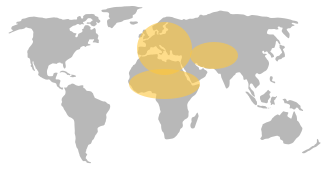
Primary habitat
The Common Nightingale favors temperate forests and dense scrublands across its range, which spans from Europe to central Asia. This bird thrives in areas with rich undergrowth and thickets where it can remain secluded, particularly near rivers and streams. It is commonly found in lowland areas, preferring warmer climates that provide ample vegetation and old secondary forests rich in insects and berries.
Additional range
While preferring forests and scrublands, the nightingale is adaptable and can sometimes be found in more urban environments, such as parks and gardens, especially during migrations. In these settings, they seek out dense shrubs and hedgerows for shelter, demonstrating their ability to adapt to human-altered landscapes. Despite its preference for a warmer climate, occasional sightings occur in cooler, mountainous regions during migration seasons.
Do they migrate?
The Common Nightingale (Luscinia megarhynchos) is a migratory bird. It breeds in Europe and parts of Asia during the spring and summer and migrates to sub-Saharan Africa for the winter. **Migration Route and Timing:** 1. **Autumn Migration:** - Begins late August to October. - Birds leave European breeding grounds and travel south. 2. **Route:** - Birds from Western Europe typically cross the Mediterranean and Sahara directly. - Those in Central and Eastern Europe often take an eastern route, passing through the Middle East or via the Nile Valley. 3. **Wintering Grounds:** - Key locations in West Africa include countries like Senegal, Gambia, and Mali. - East African wintering areas span from Sudan to Kenya. 4. **Spring Migration:** - Begins around March to May. - Nightingales return to their breeding territories in Europe. **Key Locations:** - Breeds across southern and central Europe, up to the Ural Mountains. - Passes through significant stopover sites like the Iberian Peninsula or areas in the Mediterranean for rest and feeding. The migration of the Common Nightingale is a remarkable journey covering thousands of kilometers, showcasing the bird's resilience and adaptability.
What is the role of common nightingales in nature and how to protect them?
Conservation status
The Common Nightingale is currently classified as "Least Concern" by the IUCN, indicating it is relatively common and not at immediate risk of extinction. However, its population has shown declines in some regions due to habitat loss, particularly from agricultural expansion and deforestation. Key conservation efforts focus on habitat protection and restoration. Significant threats include climate change, which affects breeding and migratory patterns, and human activities leading to habitat degradation. Conservationists emphasize the importance of preserving woodlands and scrublands to ensure the species’ long-term survival.
Ecological role of common nightingales
Its role in the ecosystem
The Common Nightingale (Luscinia megarhynchos) plays a vital role in its ecosystem, particularly through pest control and insect consumption. Feeding on a variety of insects and larvae, nightingales help regulate pest populations in their habitats, which includes woodlands, gardens, and public parks. This natural pest control is beneficial for the health of vegetation, helping to maintain plant populations and supporting agricultural activities by reducing the occurrence of harmful insects. Though primarily insectivorous, nightingales might contribute to seed dispersal indirectly. By consuming small fruits or berries occasionally, they could assist in the spread of plant seeds, promoting plant propagation and biodiversity. This activity is crucial for sustaining diverse plant communities and habitat structures that support numerous wildlife species. In terms of nutrient cycling, nightingales contribute through their droppings, which fertilize the soil and enhance its nutrient content, fostering healthier plant growth. Their vocal communications, famous for their melodic singing, play an essential role in their mating rituals but also influence the territorial behaviors of other bird species. These interactions showcase the nightingale's contributions not only to insect population regulation but also to the overall balance and dynamism of its ecological communities.
How to help protect common nightingales
Preservation tips
Habitat preservation strategies
To support the conservation of the Common Nightingale, one crucial approach is ensuring the protection and restoration of its natural habitat. This involves advocating for the protection of hedgerows, scrublands, and forest edges, which are vital nesting and feeding areas for the species. Collaborating with or donating to conservation organizations focused on preserving these habitats can be impactful. These organizations often engage in rewilding projects and land management to maintain the shrub-rich environments nightingales thrive in. Additionally, participating in lobbying efforts to encourage local governments to implement land protection measures can help prevent habitat destruction from urban development and agriculture. Promoting policies that incorporate green corridors can also support biodiversity and species connectivity at a larger scale.
Community science initiatives
Engaging in community science initiatives is a direct way for individuals to contribute to nightingale conservation. Joining bird monitoring programs allows citizens to report sightings, contributing valuable data for tracking population trends and migration patterns. Participating in awareness campaigns, such as educational workshops and social media advocacy, can increase public understanding and support for the species. Organizing or joining local bird walks and habitat clean-up events also raises awareness while directly improving and maintaining areas crucial for the nightingales' survival. By fostering community understanding and engagement, individuals can play a meaningful role in the collective effort to conserve this melodious bird.