
Common Merganser
Common Merganser
Also known as: Goosander
Mergus merganser
Quick Identification guide
Quick Identification guide
Male
- •
dark green head contrasting sharply with the bright white body
- •
long, thin red bill distinctive for its color and shape
- •
Body with a sleek profile, accented by black back and tail
Female
- •
rusty-cinnamon head that is striking against the grey body
- •
slender, serrated red bill, less prominent than the male's
- •
crested head giving a distinctive silhouette
What does a common merganser sound like?
The Common Merganser's vocalizations are generally limited and mostly occur around breeding areas. Males produce low, soft croaking sounds, while females emit harsher, growling or rasping calls, often described as "gruk" or "grr." These sounds are usually given in flight or during social interactions. Ducklings may emit high-pitched whistles or peeps to communicate with their mothers. Overall, the species is not particularly vocal compared to other ducks, with its calls serving primarily for communication during mating or signaling distress.
Description
The common merganser is one precocious bird! Chicks tumble out of their nest hole within more or less a day of hatching, and feed themselves from the start. Mum just stands by and protects them. No wonder they are such expert fishers. Adults will form a semicircle in the water and drive fish to the shallows where they are easier to catch. That's one smart bird!
The common merganser can weigh between 900to2160grams and be from54to71centimeters tall.
The typical lifespan of a Common Merganser is 13 years in the wild. These large ducks, native to North America and parts of Europe and Asia, generally live longer than several other duck species. For comparison, the Hooded Merganser, a related species, averages 7-9 years in the wild, while the Red-breasted Merganser typically lives around 12 years. The longevity of Common Mergansers is attributed to their strong swimming and diving abilities, which help them evade predators and adapt to diverse aquatic environments.
Did you know?
Most popular questions about common merganser
How to recognise a common merganser?
General appearance
The Common Merganser is a large, elegant waterfowl characterized by its streamlined body and long, serrated bill, ideal for catching fish. These birds have a distinctive appearance with contrasting colors. They are mostly white below, with their upper parts varying depending on age and sex. Both sexes possess a sharp red-orange bill.
Male vs female
Males are striking during the breeding season with glossy green heads and brilliant white bodies accented by a black back. Their immaculate appearance contrasts with the less ornate females, which sport gray bodies, a reddish-brown head, and a distinct white throat and chin. Both sexes appear more muted outside the breeding season, though these differences provide a reliable method for identification.
Juvenile
Juveniles resemble females but are duller and lack the mature color saturation. Their plumage is predominantly gray with a hint of brown on the head. They have a less distinct white throat patch, which becomes more pronounced as they mature into adulthood.
Breeding and nesting habits of the common merganser
Mating Behaviors
Common Mergansers engage in elaborate courtship displays which include synchronized swimming and distinct vocalizations. Males often present exaggerated head bobs and loud calls to attract mates, while females evaluate potential partners based on these displays. They are monogamous for the breeding season, forming bonded pairs that remain together until the end of the breeding period.
Nesting Details
Mergansers prefer nesting in cavities of mature trees near freshwater bodies such as rivers and lakes. They may also nest in man-made structures if available. The female selects the nest site, lining it with feathers from her own body. Although rare in gardens, providing nest boxes mimicking tree cavities can encourage nesting.
Eggs and Chick-Rearing
Females lay 6-13 eggs, incubating them for about 28-35 days. Only the female incubates, but once hatched, both parents are involved in rearing. Chicks are precocial and leave the nest soon after hatching, capable of swimming. Parents guide them to feeding areas, and young are adept at catching small fish and invertebrates from an early age. Fledging occurs after 2 months.
What does a common merganser like to eat?
Aquatic animals
Natural Diet
The Common Merganser primarily feeds on aquatic prey, with a significant portion of their diet consisting of fish such as trout, salmon, and minnows. Their serrated bills help them catch and hold slippery fish. Depending on the availability, they also consume aquatic invertebrates like insects, crustaceans, and mollusks. In freshwater habitats, they may eat amphibians and small reptiles. Seasonal changes can affect their diet; during breeding season, they may focus more on fish to provide protein-rich meals for their offspring.
Bird Feeders
Common Mergansers are rarely attracted to traditional bird feeders as they have specialized diets primarily based on hunting live prey in aquatic environments. If seen near a feeder, it is likely a coincidence or a search for water rather than food. To attract these birds, providing access to clean water bodies rich in fish and aquatic life is more effective than offering traditional bird feed such as seeds or nuts. Therefore, they are unlikely to visit feeders unless they mimic their natural aquatic habitats with live fish or other aquatic forms of life.
Understanding the common merganser's habitat preferences
To attract Common Mergansers, consider if your yard is near a body of water, as these ducks prefer open lakes and rivers. Creating a water-friendly environment, like setting up a small pond or a water feature, can increase your chances of seeing them.
Feeding habits of the common merganser
Common Mergansers primarily eat fish, so it's a little tricky to attract them with typical birdseed. However, offering fish-based or seafood treats can help. Consider providing small, fresh fish or fishy snacks as a temptation.
Choosing the right feeder
Instead of a traditional bird feeder, use a ground feeding tray near your water feature. Ensure it's stable and has enough space for a Merganser to land and feed comfortably. Regularly clean and maintain this area to keep it appealing.
Bird buddy seeds for seasonal variety
While Common Mergansers aren't typical seed eaters, using Bird Buddy seeds can attract other bird species to your yard. This activity might draw the curious Merganser to check out the bustling bird scene.
Creating a welcoming atmosphere
Install perches and natural elements like logs or rocks around your water feature or feeding area to provide resting spots. Avoid disturbances and noise, creating a safe and serene environment.
Fun tricks for tempting mergansers
Play recordings of water sounds or other duck calls to encourage Common Mergansers to investigate. Observe quietly from a distance, allowing them to explore and perhaps join in a delightful sing-along with other birds.
Where can you find common mergansers?
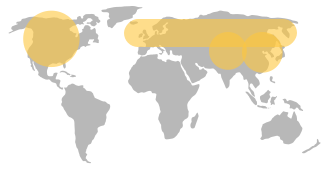
Primary habitat
The Common Merganser typically inhabits freshwater lakes and rivers across North America, Europe, and Asia. They are most comfortable in temperate forests near large bodies of fresh water, which provide ample food supply and nesting sites.
Additional range
During migration, they may extend their range to the coastal regions and brackish waters. They have also adapted to urban environments, where they can be occasionally found in city parks and reservoirs.
Do they migrate?
The Common Merganser (Mergus merganser) is a migratory bird species, though some populations can be resident in certain areas depending on climate conditions. In North America, northern populations breed in the forested areas of Alaska, Canada, and the northern United States. During autumn, typically from September to November, they migrate south to wintering grounds. These areas include the U.S. northeast, mid-Atlantic, and Midwest regions, as well as the Pacific coast, and occasionally as far south as northern Mexico. In Europe and Asia, Common Mergansers breed in northern and central regions and migrate to southern Europe, the Middle East, and parts of Asia during the winter months, typically from October to March. Key wintering locations in Europe include the British Isles, France, and the Netherlands. The birds generally migrate along major river systems, lakes, and coastlines, taking advantage of open water sources which are essential for their feeding habits. Migration timing can vary based on weather conditions and the availability of open water in breeding or wintering habitats. This adaptability helps them find suitable environments throughout the year.
What is the role of common mergansers in nature and how to protect them?
Conservation status
The Common Merganser is classified as a species of "Least Concern" by the IUCN, indicating it is common and not currently at risk of extinction. Its widespread distribution across North America and Eurasia contributes to this status. Key conservation efforts focus on preserving its freshwater habitats, such as rivers and lakes, ensuring they remain clean and undisturbed. Significant threats include habitat degradation, pollution, and climate change, which can affect water quality and availability. Conservationists also monitor populations to ensure early detection of any significant declines.
Ecological role of common mergansers
Its role in the ecosystem
The Common Merganser (Mergus merganser) plays a vital role in freshwater ecosystems, primarily through its diet and interactions with other species. These birds extensively consume aquatic prey, such as fish, insects, and small invertebrates, aiding in the natural control of populations, thus maintaining a balanced ecosystem. The Merganser indirectly contributes to nutrient cycling. By consuming fish and invertebrates, they help in redistributing nutrients across aquatic systems, which can benefit other species. While not directly involved in seed dispersal or pollination, the presence of Common Mergansers can positively impact plant communities in indirect ways. By influencing the populations of prey species that might otherwise harm or overgraze aquatic vegetation, they assist in maintaining plant diversity and health. Interactions with other species include serving as prey for larger predators, such as eagles and foxes, thereby contributing to the food web. The presence of mergansers can also indicate environmental health due to their reliance on clean water bodies for foraging. Overall, the Common Merganser acts as a crucial predator within freshwater habitats, contributing to the control of aquatic species populations, nutrient distribution, and the broader ecological balance of their ecosystems.
How to help protect common mergansers
Preservation tips
Habitat preservation
Protect riparian zones by conserving native vegetation along water bodies. Enforce regulations to minimize pollution and runoff in lakes and rivers where Common Mergansers breed and feed.
Nesting site enhancement
Install nest boxes along suitable water bodies to augment natural nesting sites. Ensure they are predator-proof and properly maintained to support breeding populations.
Community science initiatives
Participate in bird monitoring programs like eBird to track population trends. Engage local communities in citizen science projects to increase awareness and gather data on Merganser distribution.
Public education
Organize workshops and educational programs to inform the public about the ecological significance of the Common Merganser and the importance of wetland conservation.
Collaborative efforts
Form partnerships with local conservation organizations and government agencies to implement wide-ranging conservation strategies and secure funding for ecosystem protection projects.