
Common House Martin
Common House Martin
Also known as: Northern House Martin, House Martin
Delichon urbicum
Quick Identification guide
Quick Identification guide
- •
Exhibits glossy blue-black upperparts contrasting sharply with white underparts
- •
Notable for its forked tail, as well as white rump visible in flight
- •
Features a short, black beak, complementing its streamlined body
What does a common house martin sound like?
The Common House Martin (Delichon urbicum) vocalizes with a variety of calls and songs that are typically soft and twittering. Its calls include a cheerful “prrit” or “trrt-trrt” sound often heard in flight. The song is a rapid series of twittering and chirruping notes that can sound jumbled but melodic. These vocalizations play a crucial role in communication, especially during social interactions within flocks and during the breeding season. The sound is generally more subdued compared to other swallows, contributing to its distinctive auditory presence in its habitat.
Description
Common house martins like to grab their food to go. To fly, to be precise! These migratory birds are known for eating on the wing! Did you know their genus name, Delichon, is actually just an anagram of the Ancient Greek word for swallow? Huh! They are called house martins because they normally attach their nests to houses. Spotted them nesting in the city centre? Congratulations, that means the air in your city is super clean!
The common house martin can weigh between 10.3to23grams and be from13to14centimeters tall.
The Common House Martin typically lives for 2 to 5 years. This lifespan is relatively short compared to some related species, such as the Barn Swallow, which can live up to 8 years. Factors influencing the lifespan of House Martins include predation, environmental conditions, and availability of food resources. Despite their brief lifespan, many House Martins undertake long migratory journeys between Europe and Africa annually. Their close relative, the Sand Martin, has a similar lifespan of about 2 to 5 years, reflecting common challenges faced by small migratory birds in the swallow family (Hirundinidae).
Did you know?
Most popular questions about common house martin
How to recognise a common house martin?
Common house martin identification guide
General appearance: The Common House Martin is a small bird characterized by its sleek silhouette and glossy blue-black upper parts, including the head, nape, and back. Their underparts are predominantly white, contrasting with their dark wings and tail. The tail is forked, giving it a distinctive shape when in flight. They have a short, blunt bill and a white rump patch that is conspicuous when seen from above. Seasonal variations are minimal, as they maintain their plumage throughout the year. Male vs female: In the Common House Martin, the differences between males and females are subtle, making them difficult to distinguish in the field. Both sexes exhibit similar coloration with no notable variations in the pattern or shading of their feathers. Their size and shape are also alike, contributing to the challenge of sex identification based solely on appearance. Juvenile: Juvenile House Martins resemble adults but can be distinguished by their duller plumage. Their upperparts appear more brownish compared to the glossy blue-black of the adults. The white underparts may also be less uniform, and their plumage lacks the sheen observed in mature birds. As they grow, the juveniles undergo molting, gradually achieving the distinctive adult coloration and features.
Breeding and nesting habits of the common house martin
Mating Behaviors
The Common House Martin exhibits fascinating courtship displays involving aerial acrobatics to attract a mate. During the breeding season, males often perform intricate flying maneuvers, sometimes accompanied by a series of chirps, to appeal to potential partners. These birds tend to form colonies, with social interactions playing a key role in their breeding patterns. Once paired, the female and male Martin often remain bonded for several breeding seasons.
Nesting Details
Nesting is an important aspect of the House Martin's life. These birds prefer building their nests under eaves or ledges of buildings and occasionally cliff faces, taking advantage of structures in urban and rural areas. The nest comprises mud pellets mixed with grass and feathers, creating a robust bowl-shaped structure. House Martins typically return to their previous nesting sites each year. To encourage nesting in gardens, provide unobstructed access to entry points beneath roofs and avoid disturbing the existing nest if present.
Eggs and Chick-Rearing
A typical clutch size for the Common House Martin ranges from three to five eggs. The incubation period lasts about 14 to 16 days, with both parents sharing duties. Once hatched, the chicks require significant parental care, with regular feeding and protection from predators. The chicks fledge roughly 22 to 32 days after hatching, during which the parents teach them essential survival skills.
What does a common house martin like to eat?
Insects
Natural diet
The Common House Martin primarily feeds on a diverse range of flying insects, making it an expert aerial feeder. Its diet mainly includes flies, aphids, and other small insects caught on the wing. During breeding season, when energy demands are high, house martins may shift their focus to areas with dense insect populations, such as wetlands or agricultural fields. Seasonal variations in insect populations can influence their food intake, and in some warmer areas, they may supplement their diet with tiny airborne seeds and berries when insects are less abundant.
Bird feeders
House martins are less likely to visit bird feeders compared to other garden birds, as their diet consists mainly of flying insects. However, they might occasionally be attracted to feeders in search of insects or if soft fruits are offered. Presenting mealworms or other insect-heavy foods could entice them momentarily. Generally, they prefer natural sources of insects over stationary feeder offerings. To support martins in your garden, ensure an environment rich in native flowers and plants to promote a healthy insect population, indirectly benefitting these agile flyers.
Choose a high-placement feeder
House Martins usually feed on the wing, capturing insects in mid-air. While they don't typically visit feeders, placing a feeder at a higher elevation mimics their natural feeding habits. Consider mounting feeders on poles or hanging them from tree branches to attract their attention. Ensure the feeder is clearly visible and away from heavy foot traffic to boost attractiveness.
Offer specialized house martin snacks
While House Martins are insectivorous, transitioning them to feeders may require offering suitable food types. Consider offering dried mealworms or crickets as an attractant. Bird Buddy seeds, known for quality, can also draw them in when blended with mealworm crumbles, especially during migration when they need quick energy.
Provide refreshing water features
These birds are naturally drawn to water bodies for drinking and bathing. A small, shallow birdbath or fountain can entice them to your backyard. Ensure water is fresh and regularly cleaned. Adding a drip feature or misting element may increase appeal and make the area more inviting for House Martins.
Create a friendly nesting environment
Nesting is key to attracting House Martins. Consider providing nesting boxes specifically designed for them. Roof overhangs or adding artificial nests can encourage them to settle. Mimicking natural nesting sites using clay or mud mixtures can also draw their interest during the breeding season.
Enhance habitat with natural insects
Promote a natural source of insects by cultivating insect-friendly plants and flowers that attract various bugs for House Martins to feed on. Implementing organic gardening practices ensures a steady supply of prey, keeping the Martins intrigued and loyal to your backyard. Avoid pesticides to maintain this food source and conserve the ecosystem.
Where can you find common house martins?
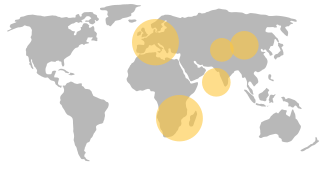
Primary habitat
The Common House Martin (Delichon urbicum) predominantly inhabits open areas across Europe, Asia, and parts of Africa. These birds prefer regions with temperate climates, favoring places with abundant insect populations and proximity to water bodies. They often build their nests in urban areas under the eaves of buildings and rooftops.
Additional range
Despite their usual habitats, House Martins have been spotted in cultivated landscapes and coastal areas. They exhibit adaptability in temporary habitats during migration, occasionally occupying more arid or diverse environments than typically expected.
Do they migrate?
The Common House Martin (Delichon urbicum) is a migratory bird. It breeds across Europe, North Africa, and parts of Asia and migrates to sub-Saharan Africa for the winter. **Migration Route:** - **Autumn Migration:** Starting from late August to October, House Martins leave their breeding grounds in Europe and head south. Specific routes can vary, but many travel through the Western Mediterranean, crossing the Strait of Gibraltar. Others might take a more easterly route through Italy and the Balkans. - **Key Locations:** Important stopover sites include regions in southern Europe, such as Spain and the shores of the Mediterranean, where they rest and feed. **Wintering Grounds:** - They spend the winter months in sub-Saharan Africa, primarily in countries from Senegal and Nigeria to Kenya and Tanzania. **Spring Migration:** - Beginning in March and extending through May, House Martins return to their breeding areas. They follow similar routes northwards, often arriving later than other swallows. Their migration is dependent on weather conditions and food availability, and they typically travel in flocks, often mixed with other swallow species. This migration pattern helps them exploit seasonal insect abundance for feeding.
What is the role of common house martins in nature and how to protect them?
Conservation status
The Common House Martin is currently classified as "Least Concern," indicating it is relatively common and not considered vulnerable or endangered. However, the species faces some threats, primarily habitat loss due to urbanization and changes in agricultural practices. Conservation efforts focus on preserving nesting sites and encouraging urban planning that supports their habitat needs. There have been initiatives to provide artificial nesting sites to counteract the destruction of traditional nesting locations. Monitoring populations through citizen science projects also aids in understanding their trends and informing conservation strategies.
Ecological role of common house martins
Its role in the ecosystem
The Common House Martin (Delichon urbicum) plays a significant role in pest control. By consuming large quantities of insects, such as mosquitoes, flies, and aphids, it helps regulate the populations of these pests, which benefits both human health and agricultural productivity. Although not directly involved in seed dispersal or plant propagation, its nesting behavior can promote the accumulation of organic matter and facilitate nutrient cycling in local ecosystems. The waste material from the nests enriches the soil, encouraging microbial activity and nutrient release. House Martins also interact with other species, particularly in multi-species flocking behaviors, where they facilitate aerial insect hunting. These interactions can bolster the ecological community's stability by maintaining balanced insect populations. While House Martins are not directly involved in pollination, their presence in various ecosystems contributes to biodiversity, which indirectly supports plant reproduction. Their nesting habits, usually under eaves and bridges, can attract other bird species, promoting nesting diversity and enhancing local avian communities. In summary, the Common House Martin contributes to ecosystem health by controlling insect populations, participating in nutrient cycling, and providing interactions that benefit various species throughout its habitat.
How to help protect common house martins
Preservation tips
Habitat preservation strategies
To support the conservation of the Common House Martin, it is crucial to focus on preserving and restoring their natural habitats. One effective method is to engage with local conservation organizations dedicated to protecting bird habitats, such as local ornithological societies or international organizations like BirdLife International. These organizations often undertake projects to protect vital breeding areas and migratory routes. Additionally, individuals can support lobbying efforts that aim to protect land areas critical to the Common House Martin's survival, urging local and national governments to implement sustainable land development practices. Advocating for policies that balance urban development with the preservation of natural habitats can make a significant impact. Finally, active participation in land protection measures, such as community-led initiatives to safeguard local wetlands and open spaces, helps maintain suitable habitats for these birds.
Community science initiatives
Involvement in community science initiatives offers individuals and groups an opportunity to contribute actively to the conservation of the Common House Martin. Participating in bird monitoring programs, such as those organized by local bird clubs or international platforms like eBird, helps gather valuable data on population trends and distribution patterns. Educational campaigns to raise awareness about the importance of these birds and their role in ecosystems can be organized within communities. Collaborating with schools to involve students in nesting box building projects provides practical learning experiences while directly supporting House Martins, as these boxes can serve as alternative nesting sites in areas where natural sites are scarce. Through collective local action, communities can stimulate wider public interest and concern for the survival of this species.