
Common Chiffchaff
Common Chiffchaff
Also known as: Chiffchaff
Phylloscopus collybita

Quick Identification guide
Quick Identification guide
- •
Small bird with olive-brown upperparts and pale underparts, often appearing slightly dull in color
- •
Features a thin, dark beak suitable for insect feeding and dark legs
- •
Carries a slightly round head with a subtly visible eyebrow stripe in pale tones
What does a common chiffchaff sound like?
The common chiffchaff is named for its unique song, a simple, repetitive “chiff-chaff” sound. This small bird also has a soft, sweet “hueet” call often emitted during flight. Its song varies between regions, sometimes incorporating a three-note sequence, “chiff-chaff-chiff", or a double-note "chaff-chaff". The pace of its song increases with excitement. It's common to confuse its song with the willow warbler's but the chiffchaff's song lacks the fluid and descending notes of the latter.

Description
Did you know that the common chiffchaffs' generic name means leaf explorer? These birds are named after their song in several languages: zilpzalp in German and siff-saff in Welsh! These guys are one of the first migrating songbirds to return each spring. Bye-bye winter! They have quite the appetite and eat a third of their bodyweight every day.
The common chiffchaff can weigh between 6to11.5grams and be from11to12centimeters tall.
The common chiffchaff typically has a lifespan of 2-3 years. However, one recorded individual lived to be 11 years and 8 months old. This lifespan is similar to related species such as the willow warbler, which typically lives 2-3 years, with a maximum age record of 11 years and 4 months. Despite facing threats and disturbances, the common chiffchaff exhibits a seemingly average lifespan for its family group.
Did you know?
Most popular questions about common chiffchaff
How to recognise a common chiffchaff?
General appearance
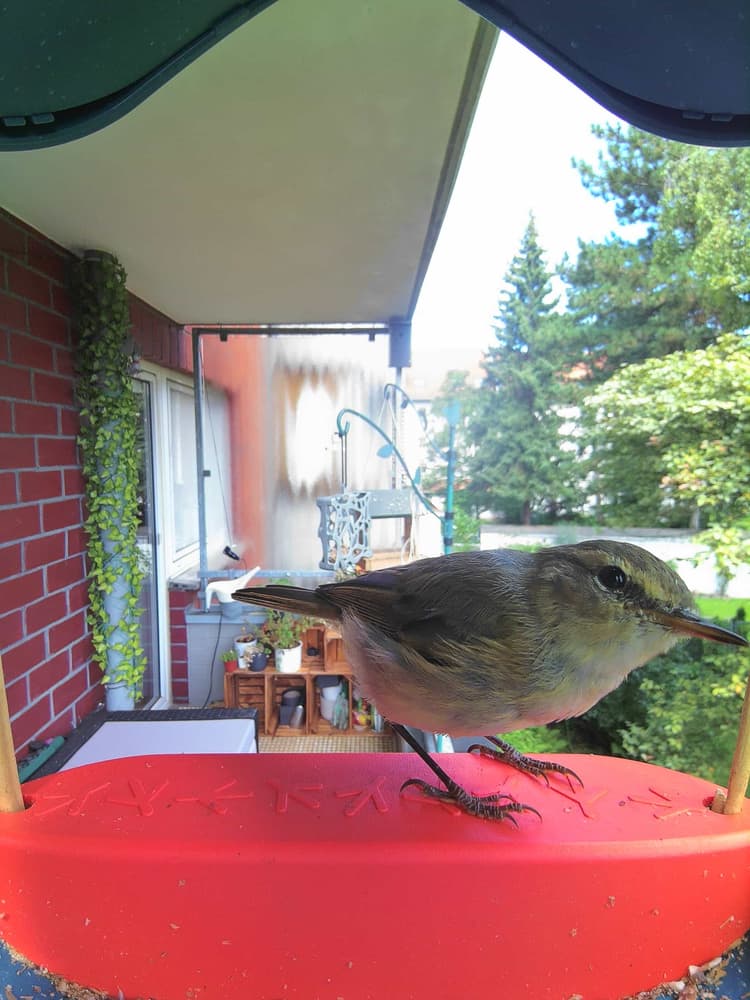
The common chiffchaff is a small, active bird, measuring between 10-12 cm in length. It has a generally dull, olive-brown color, especially noticeable on the wings and tail, and has a dark eye stripe. Its underside is slightly lighter, often appearing yellowish or off-white. It is visually similar to other warblers but is recognized by its signature 'chiff-chaff' song.
Male vs female
Male and female chiffchaffs are similar in appearance, making them difficult to differentiate. Both bear the same olive-brown color. However, during the breeding season, males may showcase brighter plumage and can be distinguished by their repetitive song.
Juvenile
Juvenile chiffchaffs resemble adults but have more prominent yellowish tones to their plumage and a weaker eye stripe. Their ear coverts, the feathers that cover the ears, display pale tips giving them a speckled look. They gain their adult plumage after their first moult.
Breeding and nesting habits of the common chiffchaff
Mating behaviors
Common chiffchaffs engage in vocal courtship displays, with males singing to establish territories and attract females. Courtship involves aerial displays and vocal duets, enhancing pair bonding.
Nesting details
Nests are typically built in low vegetation or shrubs, close to the ground. They use grasses, leaves, and feathers to construct dome-shaped nests with a side entrance. Common chiffchaffs may nest in gardens if suitable dense shrubbery or hedges are available.
Eggs and chick-rearing
Females lay 4-6 eggs per clutch, with incubation lasting 13-15 days. Both parents feed the chicks, which fledge about 15-17 days after hatching. Chicks are fed a diet of insects and larvae, ensuring rapid growth and development.
What does a common chiffchaff like to eat?
Berries
Insects
Sap
Seeds
Snails
Spiders
Natural diet
The common chiffchaff primarily feeds on insects and their larvae, which it gleans from foliage and branches. It actively forages for small insects like caterpillars, aphids, and spiders, often hovering to pick off prey. During the breeding season, its diet is highly insectivorous, providing ample protein for energy and growth. Outside the breeding season, the chiffchaff may also consume some berries and seeds, particularly in late summer and autumn, as it prepares for migration or during times when insects are less abundant.
Bird feeders
Chiffchaffs are not typically attracted to bird feeders as they prefer a diet of live insects. However, in rare cases when natural food is scarce, they may visit feeders that offer suet cakes or mealworms. These high-protein foods can serve as suitable supplements to their diet. Nevertheless, they generally rely on natural food sources found in their habitat.
Attracting common chiffchaffs to your yard
To attract Common Chiffchaffs, start by setting up a bird-friendly environment. Plant native grasses, bushes, and trees that provide plenty of cover and nesting areas. Provide a source of clean water such as a birdbath or a pond for them to drink from and bask in.
Best snacks and feeders for chiffchaffs
Common Chiffchaffs are insectivores, so the best way to attract them is by having a garden that encourages insects. However, you can also provide mealworms, which are a great source of protein. For feeding, traditional bird feeders might not be suitable. Instead, try a ground tray or a mesh bag to hold the mealworms. Remember to always keep the feeding area clean to discourage other pests.
Using bird buddy seeds
Though Chiffchaffs are primarily insect-eaters, they may also forage for seeds. Bird Buddy seeds are chosen by experts for the season and have been known to be favored by a variety of birds. Sprinkle these seeds in your ground tray or mesh bag. The variety in the seed mix might also attract other bird species to your yard.
Fun tricks to encourage chiffchaffs
Common Chiffchaffs are known for their distinctive song. If you have a recording of their calls, play it softly in your yard. The Chiffchaffs may become curious and come to check out the 'new bird' in the area. However, be sure to use this trick sparingly to avoid causing unnecessary stress to the birds.
Where can you find common chiffchaffs?
Primary habitat
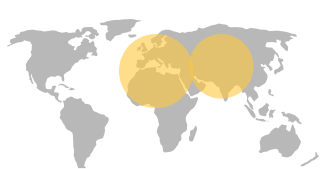
The common chiffchaff mostly occupies woodland, scrub, parks, and gardens across Europe and Asia. It prefers a temperate climate.
Additional range
Unexpectedly, it can also thrive in mountainous regions, migrating to lower altitudes for winter. Its typical range extends to North Africa and the Middle East in winter.
Do they migrate?
The common chiffchaff is a migratory bird in most of its breeding range. It breeds across Europe and into temperate Asia and migrates to southern Europe, North Africa, and parts of South Asia for the winter. Migration typically begins in late August to October, as chiffchaffs leave their breeding grounds. They follow several routes, including across the Mediterranean Sea and through the Middle East. Key locations during migration include southern France, the Iberian Peninsula, and Italy, where the birds may stop to rest and refuel during their journey south. In winter, chiffchaffs are commonly found in the southern parts of Spain and Portugal, across northern Africa from Morocco to Egypt, and in some areas of the Middle East and the northern Indian subcontinent. Some populations, especially those in the milder climates of western Europe, may be resident or only partially migratory. Spring migration back to breeding territories occurs from March to May, with birds gradually moving northwards as temperatures rise and food sources become available. Their migration is influenced by weather conditions, and they prefer routes that offer ample foraging opportunities.
What is the role of common chiffchaffs in nature and how to protect them?
Conservation status
The common chiffchaff is classified as "Least Concern" by the IUCN, indicating it is not currently vulnerable or endangered. This small migratory bird is widespread across Europe and Asia. Key threats include habitat loss due to agricultural expansion and climate change which affects its migratory patterns. Conservation efforts focus on preserving natural habitats and maintaining biodiversity in breeding and wintering areas. Programs promoting sustainable agriculture and reforestation projects also support its conservation. Despite some regional population fluctuations, the common chiffchaff remains abundant overall.
Ecological role of common chiffchaffs
Its role in the ecosystem
The common chiffchaff is a small migratory songbird that has a significant role in the ecosystem. Its main ecological contribution is pest control. Being an insectivorous bird, the chiffchaff naturally keeps insect populations, especially flies, mosquitoes, and other harmful pests in check, thereby balancing the ecology and assisting in the reduction of diseases associated with these pests. This also helps in preserving the vegetation where they live by preventing over-infestation of these insects. Furthermore, while the chiffchaff is not a primary seed disperser, it plays a role in this process through their excretion. They consume fruits and berries along with insects, and as they move from place to place, they help in the spread of these seeds, contributing to the biodiversity of plant species within their habitats. Additionally, as part of the food chain, chiffchaffs provide nutrition for predators such as hawks, owls and other larger birds, again demonstrating their vital role in the ecosystem. Hence, the common chiffchaff is an essential player in maintaining ecological balance and biodiversity.
How to help protect common chiffchaffs
Preservation tips
Habitat preservation strategies
To support common chiffchaff conservation, preserve their natural habitats of woodland, scrub, and countryside. Limit deforestation activities and promote the planting of native plant species that are known to attract insects chiffchaffs feed on. Avoid excessive trimming of shrubs and hedges where chiffchaffs build their nests.
Community science initiatives
Engage in citizen science initiatives like bird population monitoring. Report chiffchaff sightings to local wildlife conservation authorities. Participate in educational programs to learn about common chiffchaffs and their conservation needs. Advocate for legal protections against harmful human activities and promote sustainable land-use practices.