
Cedar Waxwing
Cedar Waxwing
Bombycilla cedrorum


Quick Identification guide
Quick Identification guide
- •
Features a sleek crest and silky gray-brown plumage that blends smoothly from head to tail
- •
Boasts a black mask across the eyes with a short, black beak that's tapered to a fine point
- •
Distinctive yellow-tipped tail and bright red wax-like wing tips contribute to its elegant appearance
What does a cedar waxwing sound like?
The cedar waxwing's vocalizations are complex, characterized by a thin lisp or "tseee" sound. This bird communicates using different call patterns such as falling and flat calls, resulting in various types, including buzz, hi, trill, and whistle. These nuanced sounds serve different purposes, ranging from alarm and mating calls to interacting with their group. Its songs, while less frequent, are melodious and distinctive.


Description
Did you know that waxwings are called that because of the waxy red tips on the end of their secondary feathers, the number and size of which increase as they get older? They adore fruit and can survive for months eating just that. They also know how to party. Sometimes a little too much. They can get drunk from eating overripe berries and drunk flocks will sometimes fly into windows.
The cedar waxwing can weigh between 28to32grams and be from15to18centimeters tall.
The Cedar Waxwing typically lives 6-7 years, although some have been known to live up to 8 years. Compared to its relative, the Bohemian Waxwing, which has a shorter average lifespan of 4-5 years, the Cedar Waxwing tends to live longer.
Did you know?
Most popular questions about cedar waxwing
How to recognise a cedar waxwing?
General appearance
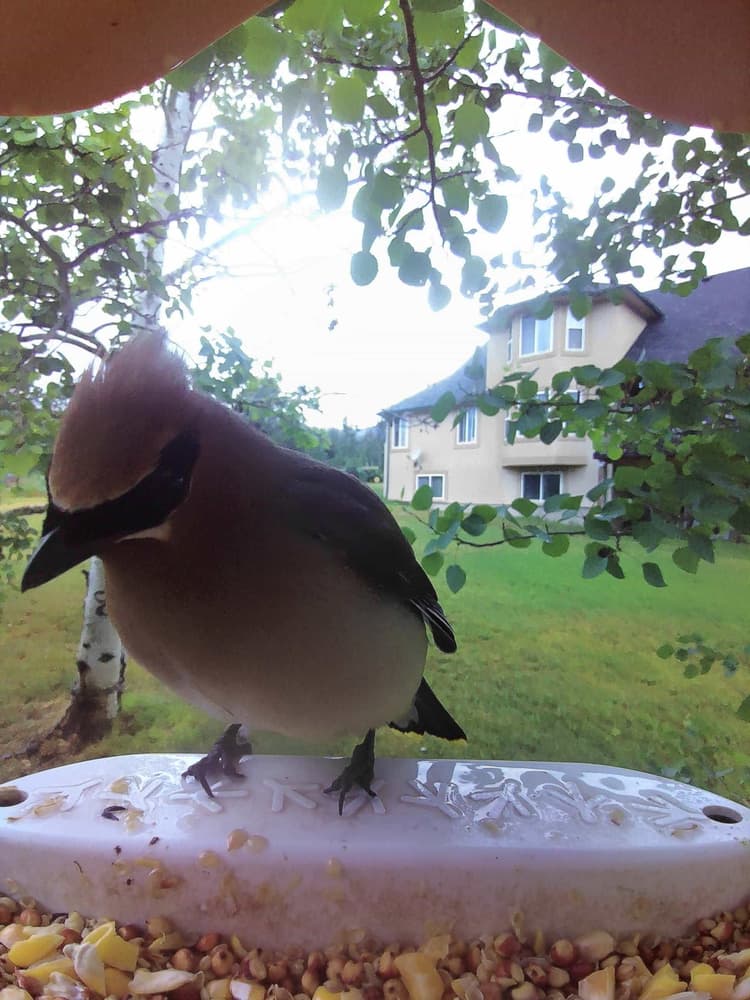
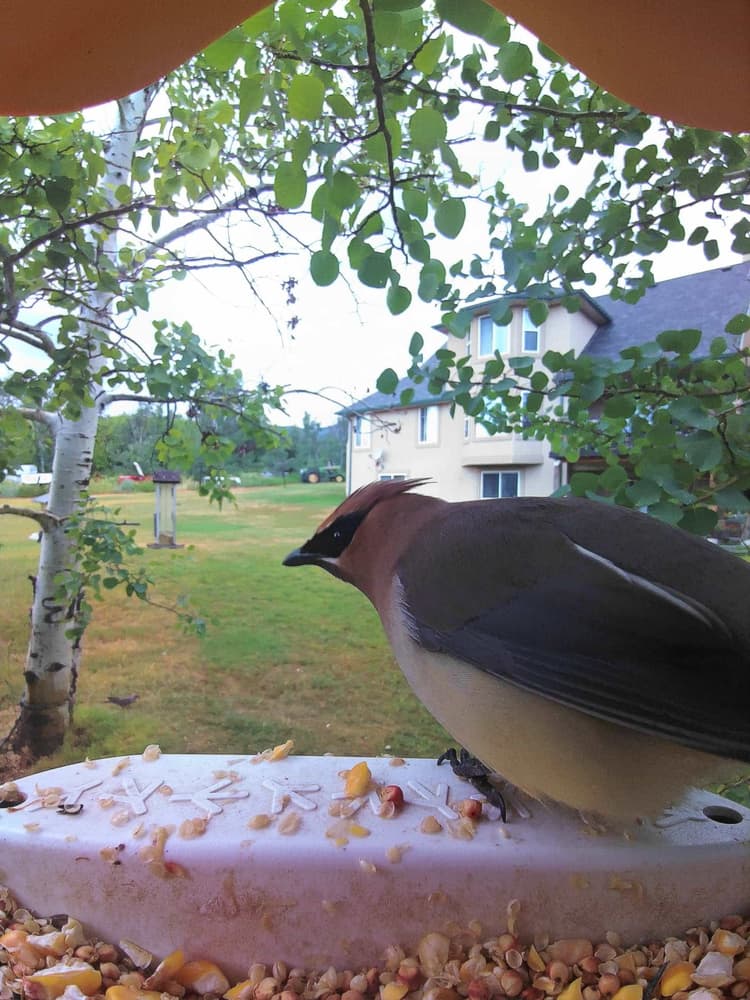
The Cedar Waxwing is bird roughly the size of a Robin or Sparrow, fluctuating between 6 1/2-8 inches or 17-20 cm. The waxwing sports a yellow band on its tail tip and a narrow dark mask on its face which highlights its striking yellow belly. The bird's wings are pointed and its tail has a rounded, short, square shape. The Cedar Waxwing has a short crest atop its head which further accentuates its overall appearance. The bird’s color profile includes shades of black, brown, gray, red, tan, white, and yellow.
Male vs female
The Cedar Waxwing does not exhibit significant sexual dimorphism. This means both male and female individuals share similar coloration and physical traits, making it challenging to distinguish between them based solely on visual appearance. Therefore, the typical characteristics such as the yellow tail band, narrow dark mask, and pointed wings apply to both genders.
Juvenile
In comparison to adults, juvenile Cedar Waxwings have blurry streaks on their plumage. Despite their young age and less defined color patterns, juveniles can still be identified by the diagnostic yellow tail band that is common across all ages and genders of this species. In the far north or in the winter season, their appearance might parallel that of a Bohemian Waxwing.
Often mistaken for
Bohemian Waxwing vs Cedar Waxwing
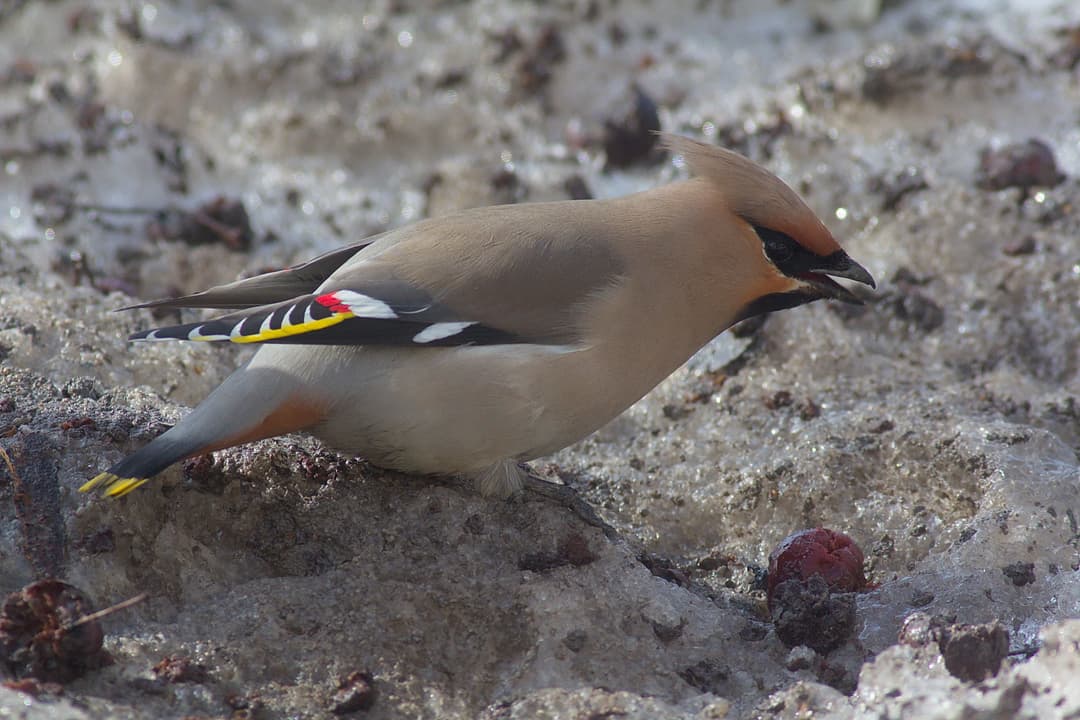
The Cedar Waxwing is smaller than the Bohemian Waxwing and has a paler brown head. Cedar Waxwings have distinct white undertail feathers, whereas Bohemian Waxwings possess a rusty undertail. Additionally, the Cedar Waxwing's bold yellow tail tip distinguishes it from the Bohemian's yellow and white tail. Insiders tip: Both birds feature a black mask, but the Cedar Waxwing's mask is narrower, giving it a more elegant look.
Breeding and nesting habits of the cedar waxwing
Mating behaviors
Cedar waxwings engage in unique courtship activities, including passing small objects like fruit or petals between potential mates. This mutual feeding ritual helps form pair bonds. Both sexes participate in these displays, which are essential precursors to mating.
Nesting details
Cedar waxwings typically nest in trees or large shrubs, often using branches of deciduous or coniferous species. Nests are constructed from grasses, twigs, and lined with softer materials such as feathers. Gardens can attract them by planting a mix of trees and shrubs that provide cover and nesting sites.
Eggs and chick-rearing
Females lay 2-5 eggs, which are incubated for about 12-16 days. Both parents feed the chicks a diet rich in insects and fruit. Chicks fledge approximately 14-18 days after hatching. Providing food sources like serviceberries and cherries in gardens can support chick-rearing.
What does a cedar waxwing like to eat?
Berries
Insects
Plants
Sap
Natural diet
The cedar waxwing primarily consumes berries and insects. It relies on a wide variety of berries, with key sources including juniper, dogwood, and wild cherries. Cedar waxwings also consume flowers and drink oozing sap. Insects form a significant part of their diet in the summer, including beetles, caterpillars, and ants. Young nestlings are initially fed mostly insects, transitioning to a higher proportion of berries after a few days.
Bird feeders
Cedar waxwings are not typically found at bird feeders as they predominantly consume natural food sources like berries and insects in their habitat. To attract cedar waxwings, offering native berry-producing plants in your garden may be more effective than standard birdseed.
Attracting cedar waxwings with their favorite snacks
Cedar Waxwings love to snack on fruits and berries. Plant trees or shrubs that produce these, such as hawthorns, crabapples, and elderberries. If planting is not an option, you can also offer these fruits in your bird feeder. Remember, always have fresh water available, as these birds love a birdbath too.
Ideal feeders for cedar waxwings
To attract Cedar Waxwings, try a platform or tray feeder stocked with their favorite foods. These types of feeders will give them room to perch and enjoy their meal. Include bird-friendly plants around the feeder to create a appealing habitat.
Encouraging cedar waxwings to stay
Cedar Waxwings are flock birds, so if you see one, there's likely to be more! Make your yard more inviting by using mosquito netting or fine mesh bags to simulate a larger flock. Play soft bird songs or waxwing calls to let them know your yard is a friendly place.
Selecting the right seeds
While Cedar Waxwings are more fruit eaters than seed eaters, having quality seeds available at your feeder can help attract a more diverse population of birds. Hashing this, we recommend Bird Buddy seeds. Chosen by experts for every season, these seeds are known to attract a variety of birds and show the best results with Cedar Waxwings.
Where can you find cedar waxwings?

Primary habitat
The cedar waxwing prefers open woodlands, often along forest edges, overgrown fields, edges of swamps, and suburban yards. Its habitat is notably influenced by the availability of fruiting trees and shrubs.
Additional range
In winter, the cedar waxwing occupies a wider range, including towns, and any wooded or semi-open area where berries are abundant, such as orchards and streamsides.
Do they migrate?
The cedar waxwing exhibits nomadic behavior, meaning it does not follow a fixed migration route or timing like many other bird species. Instead, its movement patterns are irregular and highly dependent on the availability of food sources, such as fruiting trees and shrubs. This unique trait means that both its breeding and wintering areas can shift from year to year. Typically, cedar waxwings breed in the northern parts of North America, including southern Canada and the northern United States. As food supplies shift, some waxwings may linger south of their breeding range in regions such as the central and southern United States well into late spring or early summer, demonstrating further flexibility in their movements. In winter, cedar waxwings are commonly found in the southern United States, Mexico, and sometimes even Central America. Because their migration is driven by food rather than specific geographical routes, key locations vary annually. These birds may appear suddenly in large numbers in areas with abundant berries and fruits, only to move on when supplies diminish or conditions change.
What is the role of cedar waxwings in nature and how to protect them?
Conservation status
The cedar waxwing is considered a common species with a stable or increasing overall population, despite local variations. It is not currently classified as vulnerable or endangered. Key conservation efforts focus on preserving their habitats, such as forests and areas with abundant fruit-bearing trees and shrubs. Significant threats to the cedar waxwing include habitat destruction due to urbanization and agricultural expansion. Ensuring the availability of natural food sources and nesting sites is crucial for maintaining its population health and stability.
Ecological role of cedar waxwings
Its role in the ecosystem
The Cedar Waxwing plays a significant ecological role, particularly in seed dispersal and pest control. As a major part of its diet, it feeds on a vast variety of berries, including juniper, dogwood, and wild cherries, contributing to the propagation of these plants. The berries are consumed whole and the seeds pass through the bird intact, facilitating the spread of these plants across various habitats. In terms of pest control, Cedar Waxwings consume many insects, particularly during the summer season. Beetles, caterpillars, and ants make up a portion of their diet, regulating the population of these insects. This not only keeps insect populations in check, but also can protect trees and plants that could be harmed by these pests. Additionally, by drinking sap, they could assist in the management of tree health by preventing excessive sap flow which could attract other pests. Furthermore, their late nesting habits can provide early season birds with additional nesting options, contributing to biodiversity within the ecosystem.
How to help protect cedar waxwings
Preservation tips
Habitat preservation strategies
Preserve and maintain habitats of the cedar waxwing including forest edges, orchards, and suburban gardens. This species is particularly attracted to environments with plentiful berries and insects. Local authorities and private proprietors can protect these locations from deforestation and overdevelopment. Planting native berry-producing vegetation can also establish new habitats for cedar waxwings.
Community science initiatives
Citizens can participate in bird observation initiatives such as the Audubon Society's Christmas Bird Count and eBird to monitor cedar waxwing populations. Documented sightings can enhance scientific understanding of the species' habits and migratory patterns. Contributions can be particularly valuable during breeding season or during migrations. Initiating or sponsoring educational programs to increase public awareness of the cedar waxwing's ecological significance can also support its conservation.