
Brown-Eared Bulbul
Brown-Eared Bulbul
Also known as: Asian Brown-Eared Bulbul, Chestnut-Eared Bulbul, Eurasian Brown-Eared Bulbul
Hypsipetes amaurotis


Quick Identification guide
Quick Identification guide
- •
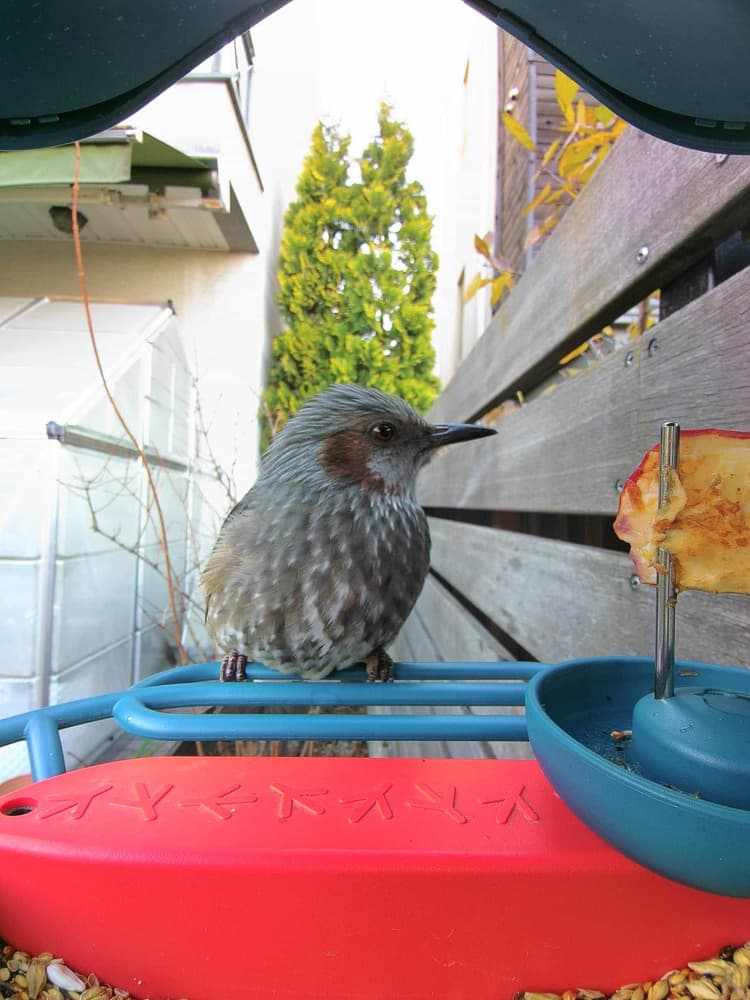
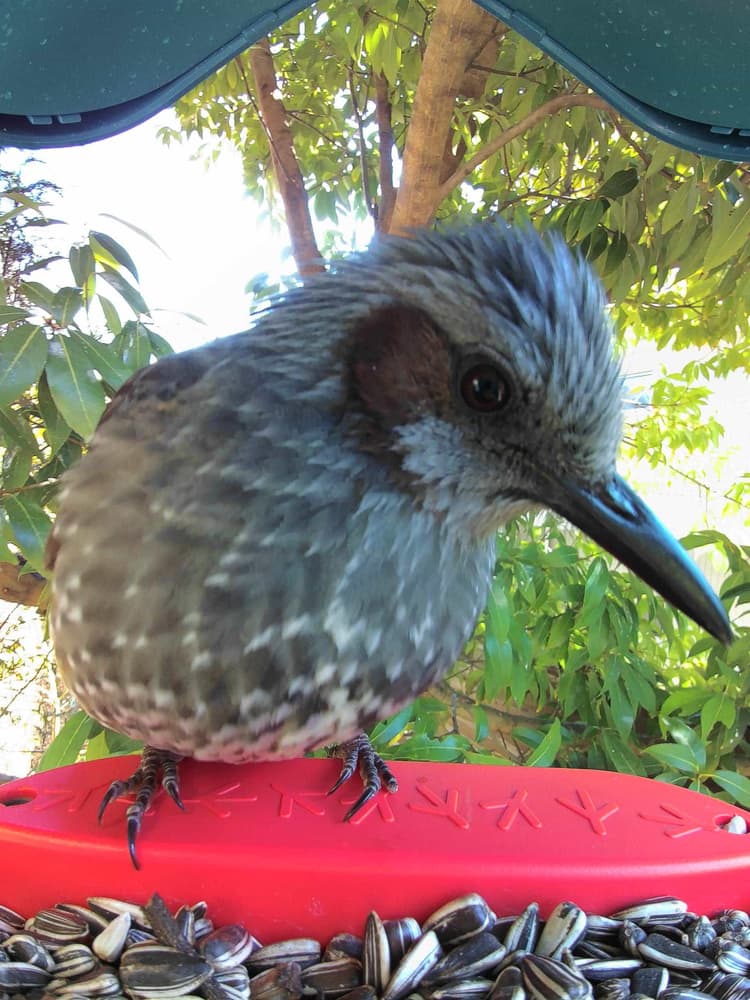
Features distinct brown ear patches contrasting with a generally grayish-brown body
- •
Has a long, slightly curved beak that is well-proportioned to its head
- •
Displays a rounded tail and characteristic ruffled crest on its head
What does a brown-eared bulbul sound like?
The brown-eared bulbul produces a variety of vocalizations, most notably a commanding, repetitive "pip-pip-ee-ee-ee" sound. It can also make mewing noises as well as high-pitched songs incorporating a mixture of short and long notes, often in busy, phrase-filled sequences. These birds are known for their persistent and loud songs, which contribute to their prominence during the breeding season.


Description
Brown-eared bulbuls are hard to miss – both thanks to their loudness and their distinctive, undulating flight. Their plumage does vary, however, depending on where within their range they live. In Japan, they are considered a major agricultural pest. However, they also help agriculture in summer by eating a lot of pesky insects! So, they're not all bad.
The brown-eared bulbul can weigh between 60to90.6grams and be from27to29centimeters tall.
The brown-eared bulbul typically lives up to 11 years in the wild. This lifespan is somewhat average when compared to related species. For instance, the black bulbul can live for up to 15 years, while the grey-cheeked bulbul's lifespan is shorter at only 8 years.
Did you know?
Most popular questions about brown-eared bulbul
How to recognise a brown-eared bulbul?
General appearance
The Brown-eared Bulbul is a medium-sized bird with a body length of 28 centimeters. Its most distinguishing feature is the brown spot situated behind the eye which gives the species its name. It has a greyish-white chest and belly while its back, wings, and tail adopt a brown hue. They possess sharp, slightly curved black bills and piercing white or pale yellow eyes.
Male vs female
Male and female Brown-eared Bulbuls exhibit no significant difference in appearance making them sexually monomorphic. Both genders share the same size and color patterns. Identification between genders is notably difficult and is often determined by observing courtship rituals or other behavioral traits.
Juvenile
Juvenile Brown-eared Bulbuls present a similar look to adults, albeit slightly duller and sootier in coloration. They may lack the distinctive brown patch behind the eye seen in adults. With time, juveniles gradually acquire adult-like plumage, making differentiation between mature and young birds challenging without close examination.
Breeding and nesting habits of the brown-eared bulbul
Mating behaviors
The brown-eared bulbul engages in vocal displays and aerial chases as part of their courtship rituals. Males often sing and show off their plumage to attract females.
Nesting details
They prefer nesting in trees or bushes, with nests made of twigs, grasses, and leaves. These birds adapt well to gardens, and ensuring dense foliage and diverse plant life can encourage nesting.
Eggs and chick-rearing
The brown-eared bulbul typically lays 2-4 eggs per clutch. Both parents participate in incubating eggs and feeding hatchlings, focusing on insects and fruit. Young chicks fledge in about two weeks.
What does a brown-eared bulbul like to eat?
Berries
Fruits
Insects
Nectar
Plants
Spiders
Natural diet
The brown-eared bulbul primarily feeds on a diverse array of natural food sources. Its diet consists of fruits like berries, persimmons, and cherries. It also consumes various insects, including beetles, caterpillars, and spiders, especially during the breeding season when it requires more protein to feed its young. Additionally, the brown-eared bulbul occasionally feeds on nectar from flowers, which provides it with necessary sugars and energy.
Bird feeders
At bird feeders, the brown-eared bulbul is often attracted to foods that mimic its natural diet. These birds commonly consume fruit offerings such as apple slices, raisins, and grapes. They may also eat suet, particularly those that are embedded with pieces of fruit. While not as common, the bulbul might sample seeds from feeders, though they typically prefer softer and juicier food items.
Attracting the brown-eared bulbul
Welcoming the Brown-Eared Bulbul to your yard or feeder can be a delightful experience. These birds are notorious for their love of fruits, especially berries, cherries, and persimmons. Scatter some around your yard or hang them nearby your feeder to encourage a visit. Apples cut in half and hung upside down also make a great treat.
Choosing the right feeder
For feeder types, go for those with wide, shallow platforms as Brown-Eared Bulbuls are not typically perching birds and prefer to forage. Large, sturdy feeders that can hold a decent amount of food and withstand their weight are recommended.
Encouraging continued visits
For fun tricks to keep them coming back for more, consider setting up a bird bath or a gentle water misting system. Not only would this provide a source of water for them, but it would also create an ideal environment for bathing and preening which is an activity they enjoy.
Trusted bird seed brand
Lastly, we highly recommend Bird Buddy seeds. These expert-selected seeds are designed to match the diet preferences of the Brown-Eared Bulbul and are seasonally appropriate for best results. The quality and variety of these seeds will be sure to entice these charming birds to your yard.
Where can you find brown-eared bulbuls?

Primary habitat
The brown-eared bulbul primarily inhabits rural and urban areas in subtropical regions. It favours wooded areas, gardens, farmlands and parks.
Additional range
This bird is native to Eastern Asia, primarily in Japan, Korea and parts of Russia. Unexpectedly, it thrives even within city limits where green cover is moderate.
Do they migrate?
The brown-eared bulbul exhibits varying migratory behaviors across its range in East Asia. Generally, populations in the southern parts of its range, such as Japan, South Korea, and Taiwan, are more sedentary and tend to remain in their local areas year-round. However, populations residing in the northern regions, like parts of northeastern China and northern Japan, show some migratory patterns. In Japan, brown-eared bulbuls from colder northern areas, such as Hokkaido, may move southward to the milder climates of Honshu or Kyushu during the winter months, typically starting their journey in late September to October and returning in the spring around March or April. These movements are often in response to the availability of food and suitable habitat conditions rather than long-distance migrations. Key locations for observing these movements include coastal and lowland areas that provide abundant fruit-bearing vegetation, which is crucial for their winter diet. However, the brown-eared bulbul's migratory behavior is less pronounced than that of other migratory birds and is heavily influenced by local environmental conditions and food availability.
What is the role of brown-eared bulbuls in nature and how to protect them?
Conservation status
The brown-eared bulbul is classified as "Least Concern" and is considered common across its range, primarily in East Asia. The species thrives in various habitats, including urban areas, which aids its stable population. Key conservation efforts are minimal due to its abundance, though habitat preservation indirectly benefits the species. Significant threats are limited, but include habitat loss from urban development and potential climate change impacts. Overall, the brown-eared bulbul faces no immediate major threats to its survival.
Ecological role of brown-eared bulbuls
Its role in the ecosystem
The brown-eared bulbul, a common bird species in East Asia, plays a crucial ecological role in pest control and seed dispersal. With its diverse insectivorous diet, the brown-eared bulbul helps in controlling pests by feeding on a variety of insects and larvae, serving as a natural pest control mechanism. Furthermore, the bird contributes to plant biodiversity because it is a critical agent of seed dispersal. The brown-eared bulbul consumes a wide variety of fruits, and the seeds pass through the bird's digestive tract unharmed. They are then excreted in different locations away from the parent plant, promoting plant propagation and diversification, especially of the fruit trees. Hence, maintaining healthy populations of this bird species is essential for the equilibrium of ecosystems where it exists.
How to help protect brown-eared bulbuls
Preservation tips
Habitat preservation strategies
Reduce deforestation and expand protected terrestrial areas where the brown-eared bulbul resides. Include providing financial incentives for local communities to conserve forests and avoid using pesticides. Implement forest management strategies to maintain a conducive environment for the brown-eared bulbul, such as preserving large, mature trees and reducing human interference.
Community science initiatives
Promote participation in community science projects to monitor and report sightings of the brown-eared bulbul. Engage educational institutions in research about the bird’s behaviour, diet, and population trends. Launch online platforms for real-time reporting of sightings. Arrange workshops and awareness campaigns to sensitize the public about the importance of conserving this species and its habitat. Activating citizen-science initiatives can help create a more active role in its preservation.