
Black-Collared Starling
Black-Collared Starling
Gracupica nigricollis


Quick Identification guide
Quick Identification guide
- •
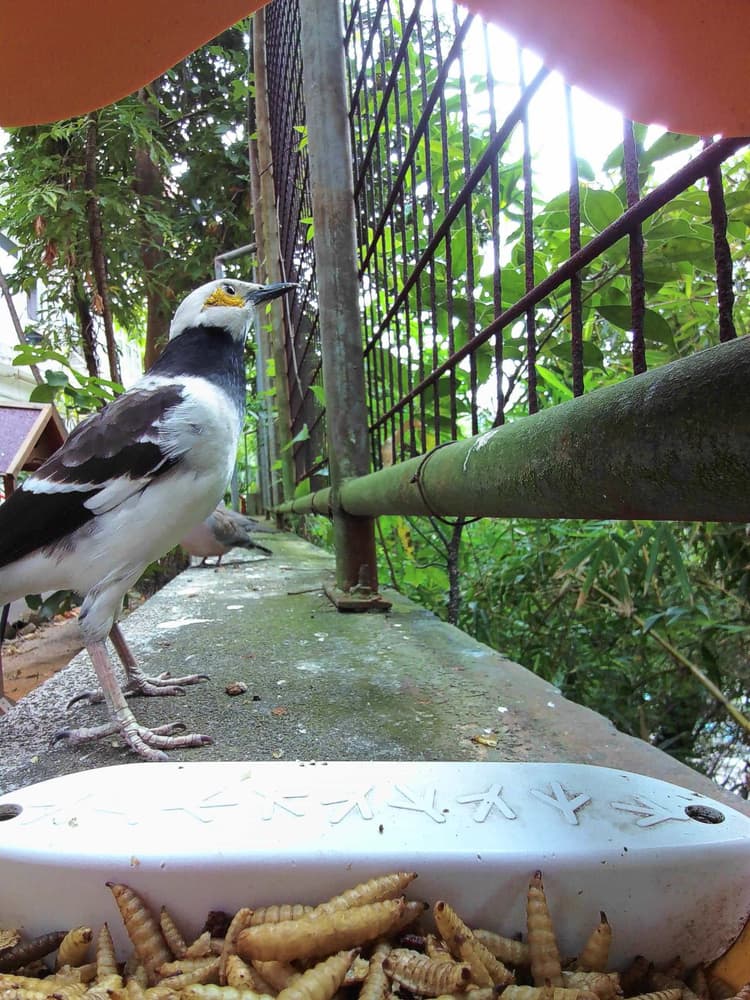
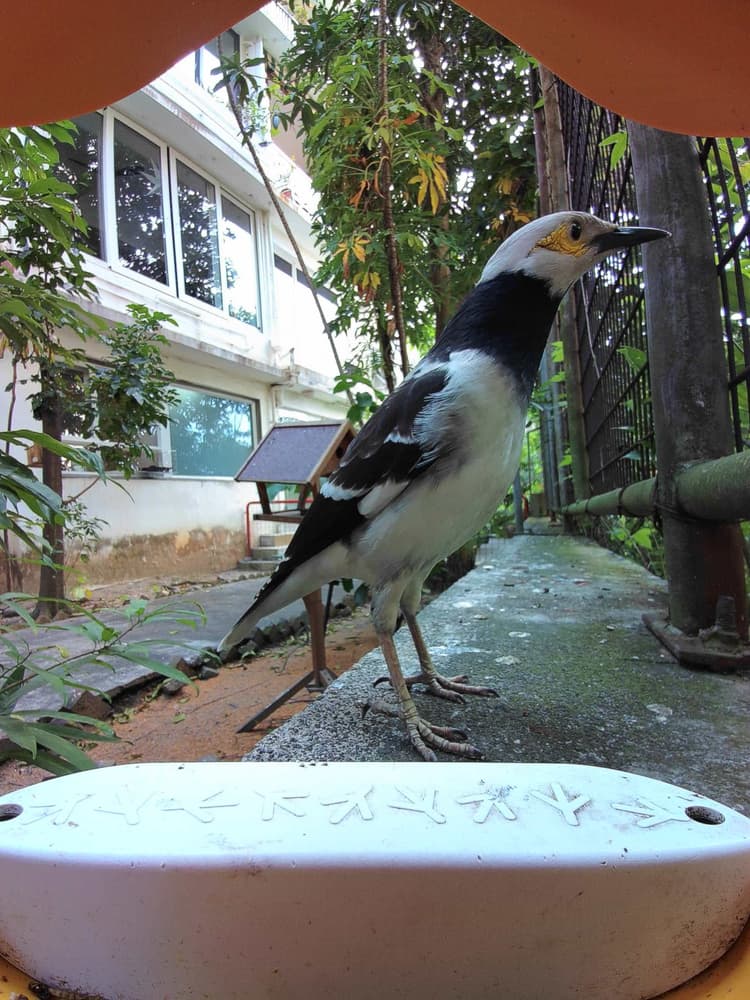
Features a distinctive black collar around the neck set against white plumage on the head and body
- •
Boasts glossy black upperparts contrasting with its white underparts, giving it a striking appearance
- •
Possesses a stout, pointed beak and reddish-brown legs, characteristic of its species
What does a black-collared starling sound like?
The Black-collared Starling produces a variety of clear, loud, melodious calls and whistles. It executes single whistles or series of descending notes, and its song often incorporates imitation of other bird species. Excited birds communicate with raspy screeches. Their vocalizations are most commonly heard at dawn or dusk, particularly during breeding seasons.


Description
Black-collared starlings often live near human settlements. If you're not sure if there is one living nearby, trust us, you would hear them. These birds are known for being very vocal! They are usually found in pairs or small groups, but good luck telling who is who as the sexes look exactly alike!
The black-collared starling can weigh between 122to178grams and be from27to30.5centimeters tall.
The black-collared starling typically lives for up to 10 years. This lifespan is relatively long compared to other species of starlings, such as the common starling which often lives for approximately 2-3 years in the wild. However, it is shorter than the lifespan of larger birds like the Eurasian Jay, which can live for up to 18 years.
Did you know?
Most popular questions about black-collared starling
How to recognise a black-collared starling?
General appearance
The black-collared starling is predominantly small and grey, characterized by a glossy black collar which extends around the neck and breast. The bird's belly region is white while the rest of the body has shades of grey. The black-collared starling has a strong, straight bill and a fairly long, forked tail.
Male vs female
There isn't much difference in appearance between males and females. However, during the breeding season, the males exhibit higher amounts of gloss on their black collars when compared to females. In habitat identification, both sexes are found in open areas, woodland, and human-altered landscapes.
Juvenile
Juvenile black-collared starlings have duller colouring compared to adults. Their bodies are brownish and the distinctive black collar is not yet fully formed or glossy. They acquire the mature grey and black plumage after the first year.
Breeding and nesting habits of the black-collared starling
Mating behaviors
Black-collared starlings perform courtship displays involving vocalizations and physical posturing to attract mates. Mutual preening and food offerings are also observed, strengthening pair bonds.
Nesting details
These starlings build open cup-shaped nests in trees, using twigs, leaves, and grass. They often select nesting sites in urban gardens or parks. To attract them, maintain large trees or install nesting boxes, ensuring availability of natural materials nearby.
Eggs and chick-rearing
Females lay 3-5 eggs, incubated for about 14 days. Both parents feed the chicks with insects and fruits post-hatching. Chicks fledge approximately 20 days after hatching, continuing to receive parental care for several weeks.
What does a black-collared starling like to eat?
Insects
Seeds
Worms
Natural diet
The black-collared starling is an omnivorous bird, primarily consuming a variety of insects, small invertebrates, fruits, and seeds. Insects such as beetles, caterpillars, and grasshoppers form a significant portion of its diet. It also feeds on small snails and worms. The starling frequently forages on the ground, using its beak to search through soil and leaf litter for food. Additionally, it consumes various fruits and berries found in its natural habitat.
Bird feeders
At bird feeders, the black-collared starling is drawn to offerings like suet, mealworms, and mixed seeds. It particularly favors high-protein foods such as mealworms that replicate its natural insect diet. The bird is also likely to eat fruits like apples and bananas if available, as well as sunflower seeds and peanuts. Providing a variety of choices at feeders can maximize their appeal to this adaptable bird species.
Favorite snacks of the black-collared starling
When trying to attract the Black-Collared Starling to your yard, enlist Bird Buddy seeds into your arsenal. As experts carefully curate them for the season, they attract a wide variety of birds, particularly the Black-Collared Starling. These seeds are a favorite amongst this species, offering high nutrition that keeps them energetic and in the best of health.
Feeder types for black-collared starlings
Black-Collared Starlings are often drawn to tray or platform feeders, as these provide the bird an easy access to food, imitating its natural foraging habits. However, they also don't shy away from tube feeders. Just ensure the seeds are visible and easy to access for the bird.
Tips and tricks to encourage black-collared starlings to visit
Hang your feeders near foliage or greenery, mimicking the starling's natural environment. Ensure to frequently replenish and clean your feeders to keep the birds healthy. You may also consider adding a bird bath or a water feature in your yard, for it not only attracts but also enthuses them to spend more time exploring your yard. The sound of running water acts as a magnet for these birds, and they might even treat you with an impromptu sing-along!
Where can you find black-collared starlings?

Primary habitat
The black-collared starling primarily inhabits open woodlands, cultivated areas, and around human dwellings in subtropical or tropical regions.
Additional range
It is native to Southeast Asia, particularly Cambodia, China, Laos, Myanmar, Thailand, and Vietnam. Unexpectedly, it also thrives in urban environments like city parks.
Do they migrate?
The black-collared starling typically does not engage in long-distance migrations and is generally considered a resident bird throughout its range. Primarily found in Southeast Asia, its habitat spans countries such as China, Vietnam, Laos, and Thailand. These birds tend to inhabit open country environments like farmland, grasslands, and urban areas. Although the black-collared starling is mainly sedentary, it may undertake local or short-distance movements in response to environmental conditions, such as food availability or habitat change. These movements are generally not considered true migrations and are less predictable in terms of timing and routes. In summary, the black-collared starling does not partake in significant migratory behavior and largely stays within its established territories throughout the year, making adjustments only as local conditions necessitate.
What is the role of black-collared starlings in nature and how to protect them?
Conservation status
The black-collared starling is currently listed as "Least Concern" on the IUCN Red List, indicating it is common and not facing imminent threats of extinction. Its wide distribution across Southeast Asia contributes to its stable population. However, habitat loss due to agricultural expansion and urban development poses potential future threats. Currently, no significant conservation efforts are specifically targeted at this species, as its adaptability and resilience in diverse environments have kept its population stable. Monitoring habitat changes is crucial to ensure its continued common status.
Ecological role of black-collared starlings
Its role in the ecosystem
The black-collared starling, native to South-East Asia, performs significant roles in maintaining ecological balance. It is a natural pest controller, reducing the number of insects and pests in its habitat, thereby protecting crops and vegetation from insect damage. This species is omnivorous, consuming diverse foods including fruits, seeds, and insects. Their foraging habits assist in seed dispersal which contributes to plant propagation and biodiversity. Additionally, their feces, which may contain undigested seeds, also enhance soil fertility and promote new plant growth. The nests they build in crevices or holes provide spaces for other animal species, fostering biodiversity. Furthermore, black-collared starlings play an important role in the food chain, serving as prey for larger bird species and snakes, thus contributing to the diversity and stability of ecosystems. Their ecological role underscores the importance of conservation efforts to preserve this unique bird species and its habitat.
How to help protect black-collared starlings
Preservation tips
Habitat preservation for black-collared starling
Preserve and restore habitats critical for the starling, with emphasis on wetlands and scrublands. Monitor and control expansion of infrastructure projects that could harm these habitats. Support the replanting of native flora, especially fruit and insect-rich trees which serve as food sources for the starlings.
Community science initiatives
Promote community-led bird watching activities and data collection on Black-collared Starling populations. Use this data to understand changes in population size, distribution, and behavior. Start local education and conservation programs to raise awareness and support for the species. Encouragement of backyard bird-feeding practices is also beneficial.